
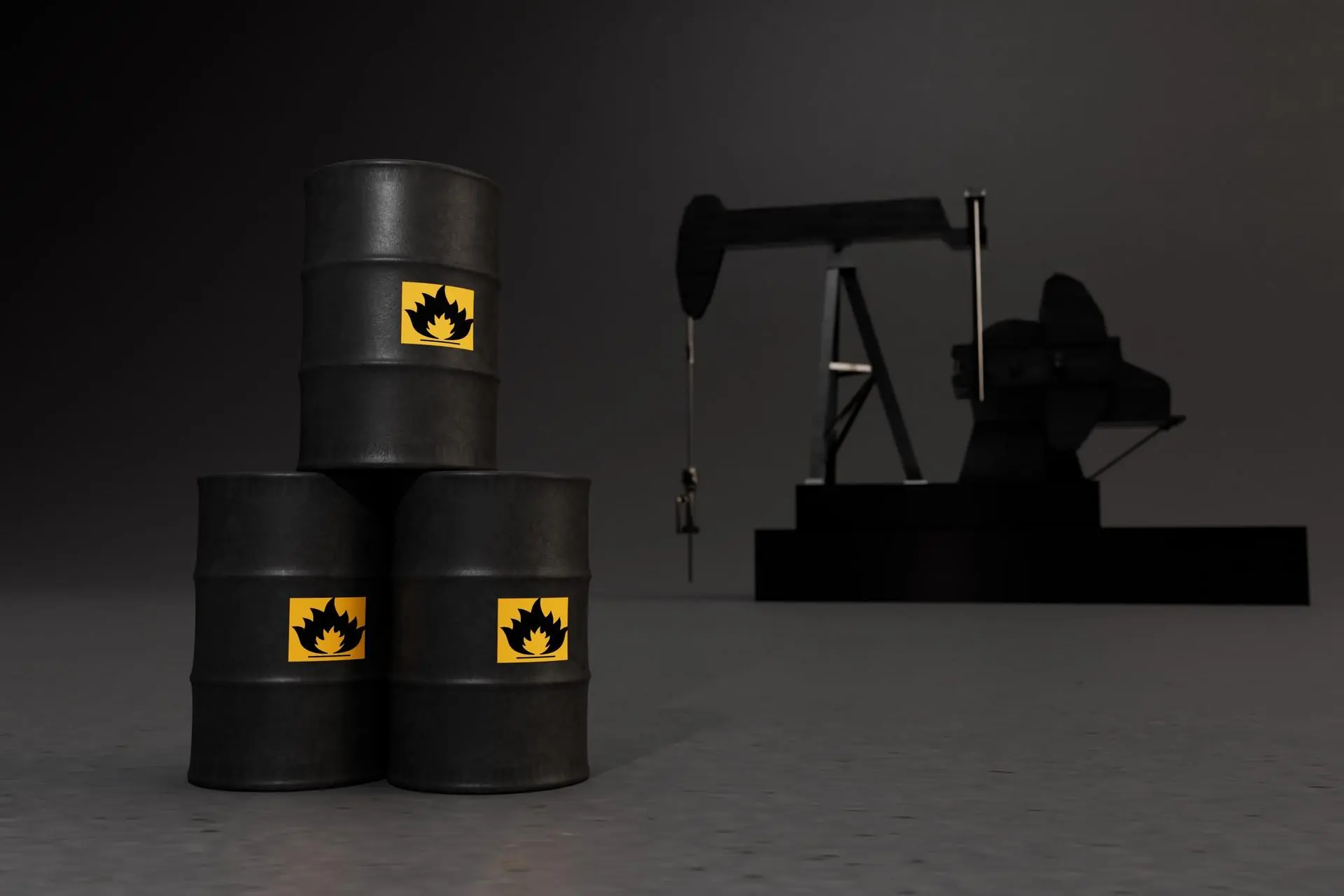
Iran faced the anticipated attack, disrupting supply flows in the Middle East and boosting oil prices
Oil prices surged by as much as 13% on Monday after Iran's retaliatory strikes, following the initial bombing that killed Supreme Leader Ali Khamenei, disrupted shipping through the critical Strait of Hormuz.
Brent crude futures climbed to $82.37 a barrel, the highest level since January 2025, before falling back to $78.28, up $5.41 or 7.4%, as of 06:05 GMT.
WTI crude rose to a high of $75.33, gaining over 12% and reaching its highest level since June; however, it later partially retraced its gains, trading at $71.76, up $4.74 or 7.1%.
Both indicators rose due to damage to tankers and severe disruptions to shipments resulting from reciprocal attacks in the Strait of Hormuz. According to data, hundreds of ships are anchored in the Gulf of the Middle East. Missile attacks hit tankers off the Gulf coast.
Ships carrying oil from Saudi Arabia, the United Arab Emirates, Iraq, Iran, and Kuwait—equivalent to about one-fifth of global demand—pass through the Strait of Hormuz to transport diesel, jet fuel, gasoline, and other products from refineries to major Asian markets, including China and India.
Markets are aware of the seriousness of the conflict; while not yet a systemic crisis, it is a geopolitical shock, some of which has already been priced in. What was expected has happened.
The prolonged de facto closure of the strait will drive up oil prices and cause supply shortages for the largest importers, China and India. Russian oil, already struggling under sanctions, will have to wait and see.
According to shipping data released Sunday, more than 200 vessels, including oil and liquefied gas tankers, were anchored outside the strait. Three tankers were damaged in attacks in the Gulf waters on Sunday.
Asian economies are assessing their available oil stocks and alternative supply routes. South Korea will transfer oil from its stockpiles to local industries should supply disruptions become prolonged, while India is exploring alternative shipping routes. Why not Russia on the stage again?
However, prices pared gains after a sharp rise in early Asian trading, which analysts said buyers were adding a risk premium to prices in anticipation of the conflict.
Brent crude had risen more than 19% year-to-date by Friday's close, while WTI was trading roughly 17% higher.
Riding the winds of the conflict, OPEC+ agreed on Sunday to a modest 206,000 barrels per day increase in oil production for April. Meanwhile, all OPEC+ producers except Saudi Arabia are essentially using their full capacity.
International Energy Agency (IEA) director Fatih Birol stated on Sunday that they are in contact with major producers in the Middle East. The agency coordinates the release of strategic oil reserves from developed countries in emergencies.
A note stated that globally apparent oil stocks stand at 7.827 million barrels, enough to meet 74 days of demand, close to the historical average. Brent crude is expected to trade between $80 and $90 per barrel this week.
The general view is that the new Iranian regime will change significantly enough to halt the war within 1-2 weeks, and the US will decide to de-escalate tensions after seeing a leadership change and, within the same timeframe, put Iran's missile and nuclear programs on hold.
Analysts also warn that retail gasoline prices in the US, the world's largest fuel consumer, could rise above $3 per gallon due to the conflict, a potentially risky outcome for President Donald Trump and the Republican Party ahead of the November midterm elections.
U.S. gasoline futures surged as much as 9.1% to $2.496 a gallon, reaching their highest level since July 2024; they were last trading at $2.381 a gallon, up 4.2%.
Related Articles

Oil prices are rising as supply concerns increase amid expectations of a prolonged conflict in the Middle East

Oil prices continued to rise following US and Iranian attacks on ships serving their respective purposes

Oil prices closed higher this week following renewed US-Iran hostilities
