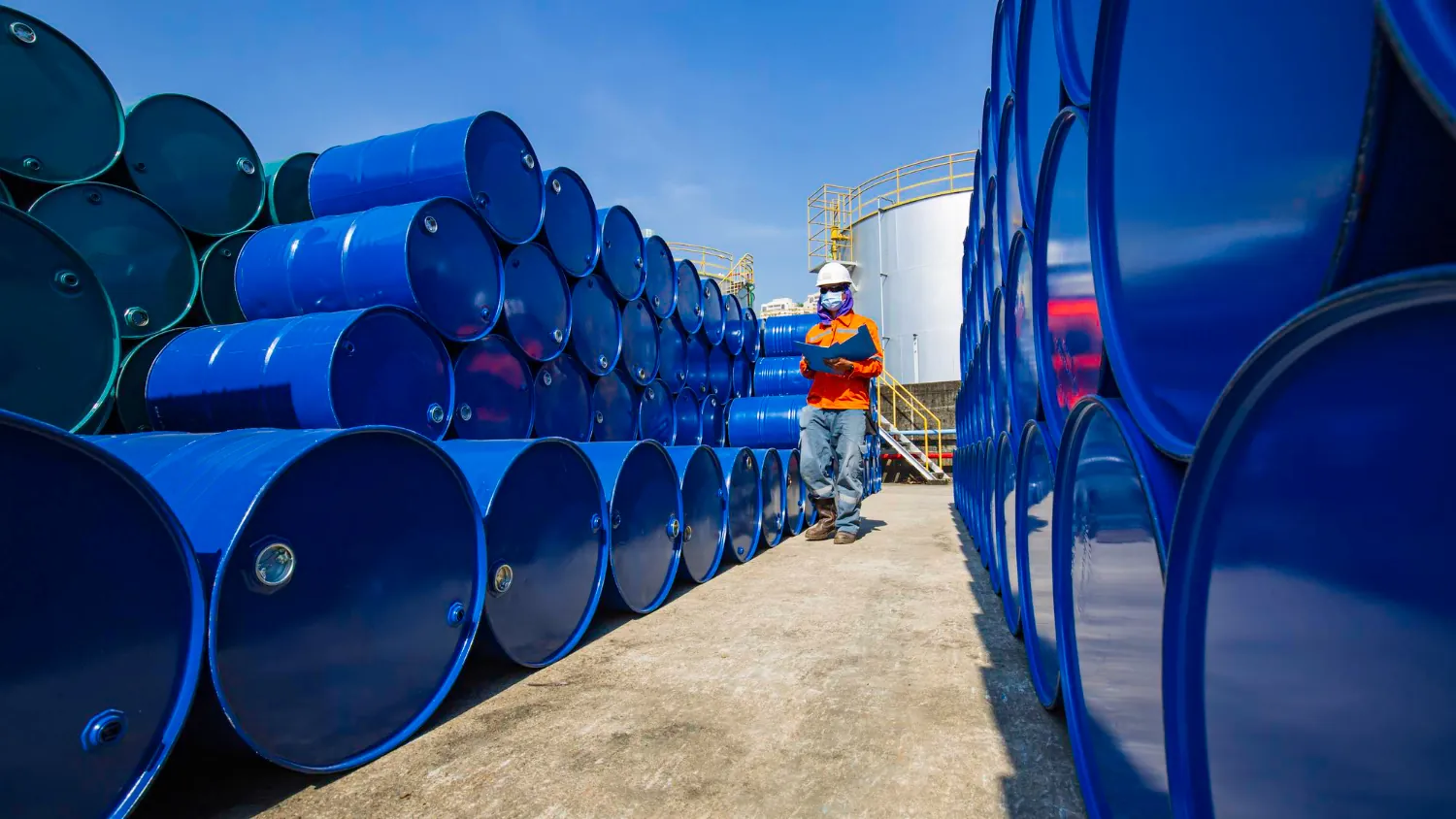
Oil prices retreat from a roughly six-month high
Oil prices, which reached a six-month high last week, fell on Monday amid expectations that the conflict between the U.S. and Iran might ease. Qatari mediators traveled to Tehran in an effort to de-escalate tensions. However, investor caution persists as attacks by the Houthis on key producer Saudi Arabia continue to fuel concerns regarding energy supplies.
As of 04:26 GMT, U.S. West Texas Intermediate (WTI) crude futures were down $2.23 (2.16%) at $101.04 per barrel. Brent crude futures fell $2.21 (1.89%) to $114.51 per barrel.
On Friday, prices had climbed by approximately $3 as Houthi attacks on Saudi Arabia stoked fears about energy supplies. Brent crude ended the week with a 6% gain, while WTI rose by 2.3%.
According to sources, Qatari mediators arrived in Tehran on Sunday as part of an effort, coordinated with the U.S., to reduce regional tensions.
Concerns over the potential for renewed military conflict in the Middle East, which had largely driven last week’s rally in crude oil, fueled by reports of increased U.S. military preparations, have eased this morning.
It remains difficult to say whether this relief will prove lasting. This has not dispelled market expectations that attacks involving Iran could occur following the November 3rd midterm elections.
Consequently, it is undeniable that volatility is likely to remain high, with risks still skewed to the upside.
Indeed, despite mediation efforts, attacks continued over the weekend. The Houthis announced that they had struck an airport and oil facilities in Saudi Arabia on Saturday, while Saudi Arabia reported the neutralization of additional missiles and drones on Sunday.
The repercussions of the conflict initiated by the U.S. and Israel against Iran on February 28th continue to be felt, as companies struggle to adapt to disruptions in commercial maritime shipping through critical chokepoints such as the Strait of Hormuz and the Bab el-Mandeb Strait.
On Monday, the energy ministers of Saudi Arabia and Singapore announced that the state-owned oil company, Saudi Aramco, will begin storing crude oil in Singapore starting in the second half of 2027, a move aimed at strengthening the resilience of its regional supply chain. Such initiatives will help diversify the regional focus.
While supply risks around the Strait of Hormuz remain significant, the current pullback appears to reflect position adjustments and risk management rather than any meaningful improvement in the underlying supply situation.
Fatih Birol, Executive Director of the International Energy Agency (IEA), speaking at an industry event in Singapore on Monday, he stated that he does not expect energy markets to return to their pre-war levels by 2027.
Related Articles

Oil prices fell by 1% as diplomatic efforts focused on Iran eased supply concerns

Oil prices rose by more than 1 percent as attacks on Saudi Arabia kept supply risks in the spotlight
Brent crude oil futures closed at their highest level since April 29, while WTI ended the week with a 2.3% gain