
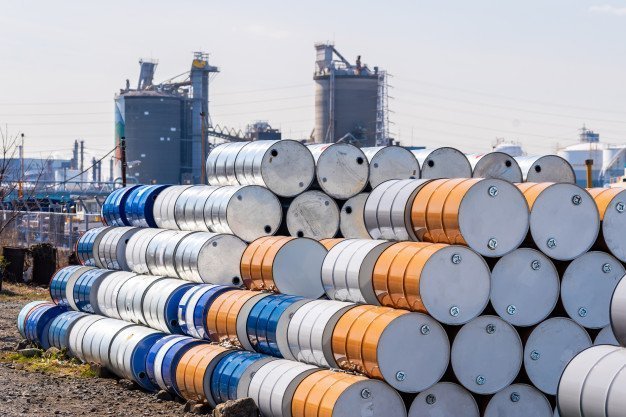
Oil prices drop amid lower fuel demand concerns and weak Chinese data
Oil prices fell on Thursday. It gave back some of the previous day's gains as investors turned a profit on concerns about interest rate hikes that curtailed economic growth and global fuel demand, and weak economic data in China weighed in.
Brent crude futures declined 26 cents or 0.4%, at 0647 GMT to $73.77 a barrel. West Texas Intermediate (WTI) crude futures slipped 22 cents, or 0.3%, to $69.34 a barrel.
Both benchmarks rose nearly 3% on Wednesday after the U.S. Energy Information Administration (EIA) said crude inventories fell 9.6 million barrels in the week ended June 23, well above the 1.8 million barrels analysts had forecast.
The market reversed on renewed concerns about further rate hikes in the US and Europe that would dampen global oil demand.
Leaders of the world's major central banks reiterated on Wednesday that they think further policy tightening will be needed to rein in high inflation.
While US Federal Reserve Governor Jerome Powell did not reject further hikes at the central bank's next meeting, European Central Bank President Christine Lagarde reinforced expectations for a ninth consecutive rise in eurozone interest rates in July.
Adding to the pressure, annual profits by industrial companies in China, the world's second-largest oil consumer, fell by double-digits in the first five months as softening demand margins tightened.
Despite the supply constraints of oil producers, the lack of growth expectation in fuel demand limits the increase in oil prices.
Meanwhile, the impact of the proliferation of electric vehicles and improvements in energy efficiency in tackling climate change in many industries may be starting to affect the underlying demand structure.
In the face of falling prices, Saudi Arabia has pledged to cut output sharply this month in July, in addition to a broader OPEC+ deal to limit supply in the year 2024.
Brent's six-month backwardation (a price structure where early-loaded contracts are traded at higher prices than late-loaded contracts) has hit its lowest level since December but still indicates higher demand for immediate delivery.
Behind the backwardation, there is an expectation that fuel demand will remain strong as the US enters the driving season, but the global economy will slow down towards the second half of this year, reducing oil demand.
Related Articles

Oil prices are rising as supply concerns increase amid expectations of a prolonged conflict in the Middle East

Oil prices continued to rise following US and Iranian attacks on ships serving their respective purposes

Oil prices closed higher this week following renewed US-Iran hostilities
