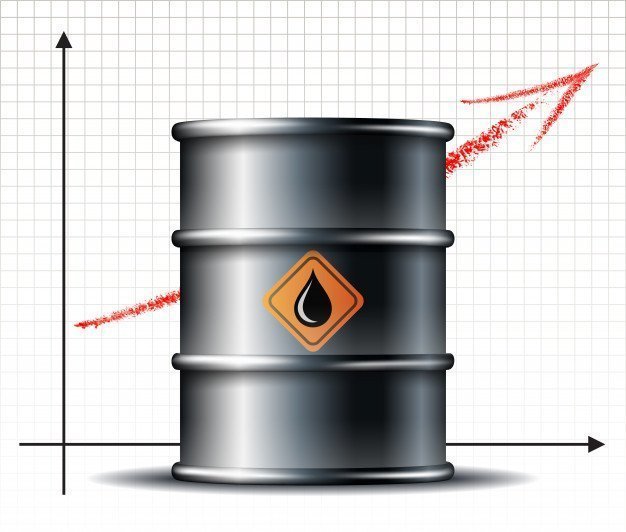
Oil rises as EU assesses Russian oil embargo
While the European Union countries were making calculations to join the US in the Russian oil embargo, an attack on Saudi oil facilities over the weekend caused a temporary decrease in production and increased uneasiness. Oil prices rose $3 on Monday and Brent rose above $110 a barrel.
Brent crude futures rose $3.44, or 3.2%, to $111.37 a barrel as of 0443 GMT, after gaining 1.2% last Friday.
West Texas Intermediate (WTI) crude futures rose $3.54, or 3.4%, to $108.24 after gaining 1.7% last Friday.
Prices rose ahead of talks this week for a series of summits between European Union governments and US President Joe Biden aimed at hardening the West's response to Moscow.
With little sign that the conflict is easing, the focus has returned to whether the market can replace sanctions-affected Russian oil.
Unmanned aerial vehicle attack by Yemeni Houthis on Aramco facilities and Zahran power plant in Jizan, Saudi Arabia, signs of structural shortages in production from OPEC, and a possible European Union oil embargo on Russia have caused oil prices to spike in Asia.
While the EU governments will consider whether to impose an oil embargo on Russia, even if the Ukraine war ends tomorrow, the world will face a structural energy deficit due to the sanctions against Russia.
The latest report from the Organization of the Petroleum Exporting Countries and its allies, including Russia, showed that some producers are still behind their agreed supply quotas. OPEC+ missed its production target of more than 1 million barrels per day (bpd) in February.
Two OPEC countries, Saudi Arabia and the United Arab Emirates, which have the capacity to increase production instantly, have so far resisted calls from major consumer countries to increase production faster to help lower oil prices.
US energy companies are also struggling to keep the number of active oil wells high despite strong prices. US oil rigs are on the decline despite WTI crude prices rising above $100 per barrel.
The weak supply outlook and high prices prompted the International Energy Agency to seek societal measures on fuel consumption on Friday, seeking ways to reduce oil use by 2.7 million barrels a day, from car-pooling to lower speed limits and cheaper public transport.
With the help of an application, it is expected to offset the 3 million bpd of Russian crude and products that the IEA estimated would be off the market by April.
Related Articles
Oil continues to rise as EU members discuss Russia bans

Oil records a second consecutive weekly loss after a volatile trading week
Oil prices rise due to the concerns over global supply shortages and dropping US inventories