The Torrey Canyon Disaster and the Maritime Law It Changed
The Torrey Canyon disaster was the oil spill that began when a Liberian-flagged supertanker carrying about 120,000 tons of Kuwait crude ran onto the Seven Stones reef off Cornwall on 18 March 1967.
The Torrey Canyon disaster was the oil spill that began on the morning of 18 March 1967, when the Liberian-flagged supertanker Torrey Canyon ran onto the Seven Stones reef off Cornwall. She was carrying about 120,000 tons of Kuwait crude, and over the next twelve days the whole cargo was either lost to the sea or burned.[3][15][16] It was the largest oil pollution incident recorded up to that time. It led directly to the creation of the Legal Committee at IMO and to the liability and pollution treaties that still govern tankers.
The Ship and Her Owners
Newport News Shipbuilding in the United States launched Torrey Canyon on 28 October 1958 and completed her in January 1959, with a deadweight of 65,920 long tons. She was later enlarged at Sasebo Heavy Industries in Japan to 118,285 long tons and a length of 297 metres.[12][18] At 17 knots a ship of that size took about a minute to turn through 20 degrees and about five miles to stop.[12] When she was lost she was the largest vessel ever wrecked.[5]
Her ownership ran across several jurisdictions. The registered owner was Barracuda Tanker Corporation of Bermuda, a subsidiary of Union Oil of California. She flew the Liberian flag, had an Italian crew and was on charter to BP.[9][12][17] That spread of nationalities became one of the central problems once anyone had to work out who owed what.
From Kuwait Towards Milford Haven
The last voyage began on 19 February 1967 at the Mina Al-Ahmadi refinery in Kuwait.[17] She was too big for the Suez Canal, so she came round southern Africa, the usual route at the time for 100,000-ton crude carriers running from the Middle East to Europe.[3][19] She reached the Canary Islands on 14 March, bound for the refineries at Milford Haven in Wales.[17]
Sources differ slightly on the cargo. The Marine Biological Association gives 117,000 tons, ITOPF 119,000, Cedre 121,000, and IMO a round 120,000.[1][3][14][15]
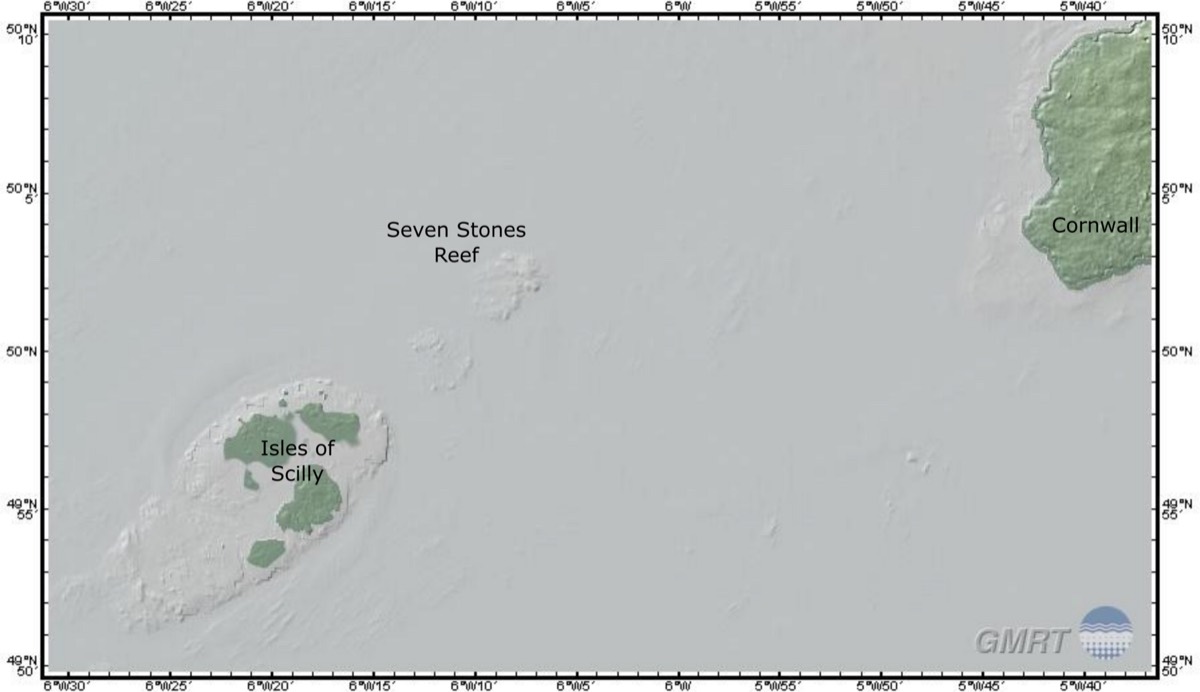
Because she had no scheduled route, she did not carry large-scale charts of the Isles of Scilly.[17] The real pressure came from the calendar. The agent had told the ship she needed to make the high water at Milford Haven at 2300 on 18 March. The earliest possible arrival was 1700, and missing the tide meant waiting nearly a week.[12] One other account puts that tide on the evening of 19 March.[19]
The Morning of 18 March and the Navigation Decisions
The master was Pastrengo Rugiati, 56, of Genoa.[9][13] The course laid from the Canaries would have taken the ship about five miles west of the Scillies, and she was on autopilot. At noon on 17 March Rugiati checked the position and found her on track. Overnight strong currents set her to the north and east. He turned in with orders to be called at 0600, expecting to see the islands on the starboard bow.[12]
While he slept the chief officer altered course from 18 degrees to 12 degrees. At 0600 the islands were on the port bow instead. Rugiati put her back on 18 degrees, which pointed her towards the Seven Stones.[12] He then made the decision that the inquiry would fix on: rather than lose time going round to the west, he would take the deep channel between the Scillies and the reef.[12][13][17] Fishing boats in the way upset the plan. He made corrections of 3 and 2 degrees to reach a course of 13 degrees and left the autopilot in. About two hours later he took her off autopilot, brought her to 0 degrees and engaged it again.[12]
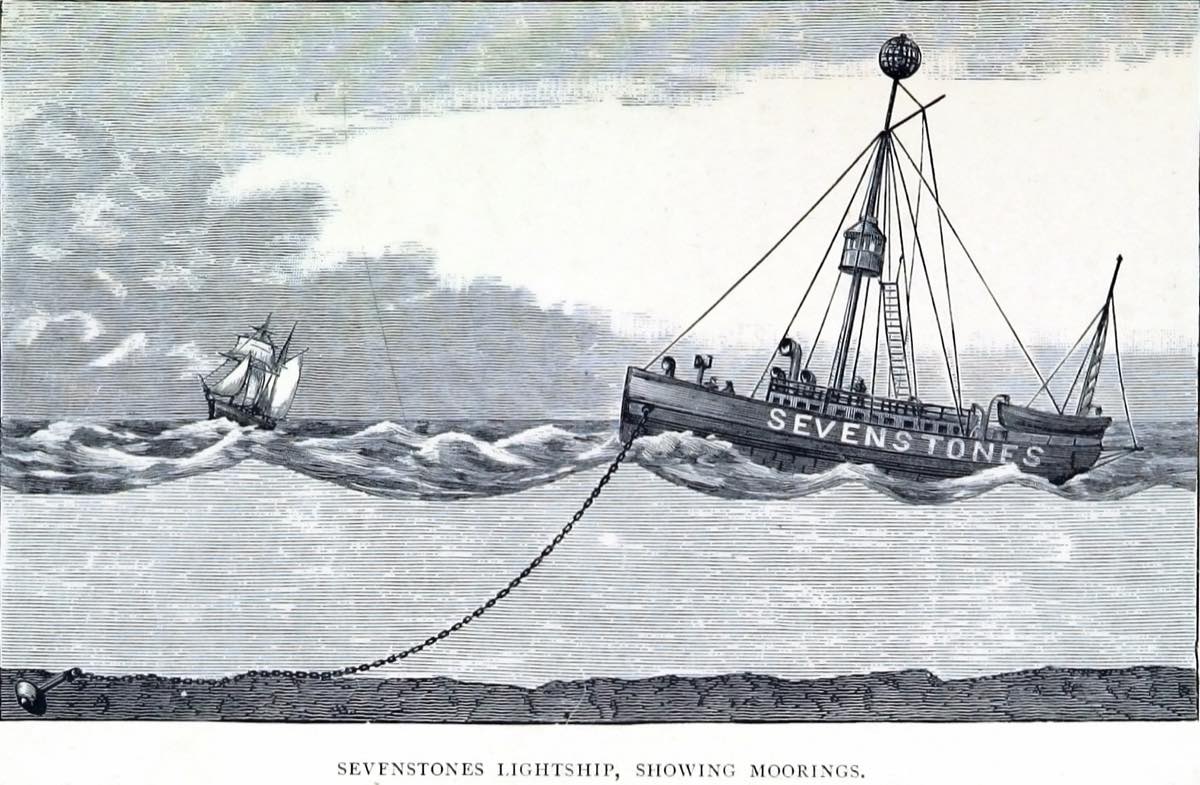
At 0848 the officer of the watch could see the ship was already among the rocks. Rugiati, who had slept three hours, ordered a hard turn to port, and nothing happened because she was still on autopilot. Once he switched to manual she began to answer, too late to clear the rock.[12] The steering arrangement itself was part of the trouble. The selector lever could be moved to a maintenance position that disconnected the rudder from the wheel, and nothing at the helm showed it.[17] The crew of the Seven Stones light vessel had fired rockets and shown signals meaning "you are standing into danger". J. P. W. Mallalieu, President of the Board of Trade, later told the Commons that the main passage ran between the light vessel and the mainland and was safe.[11] A light vessel had kept station near the reef since 1841, replaced by a lighted buoy only during the Second World War.[23]
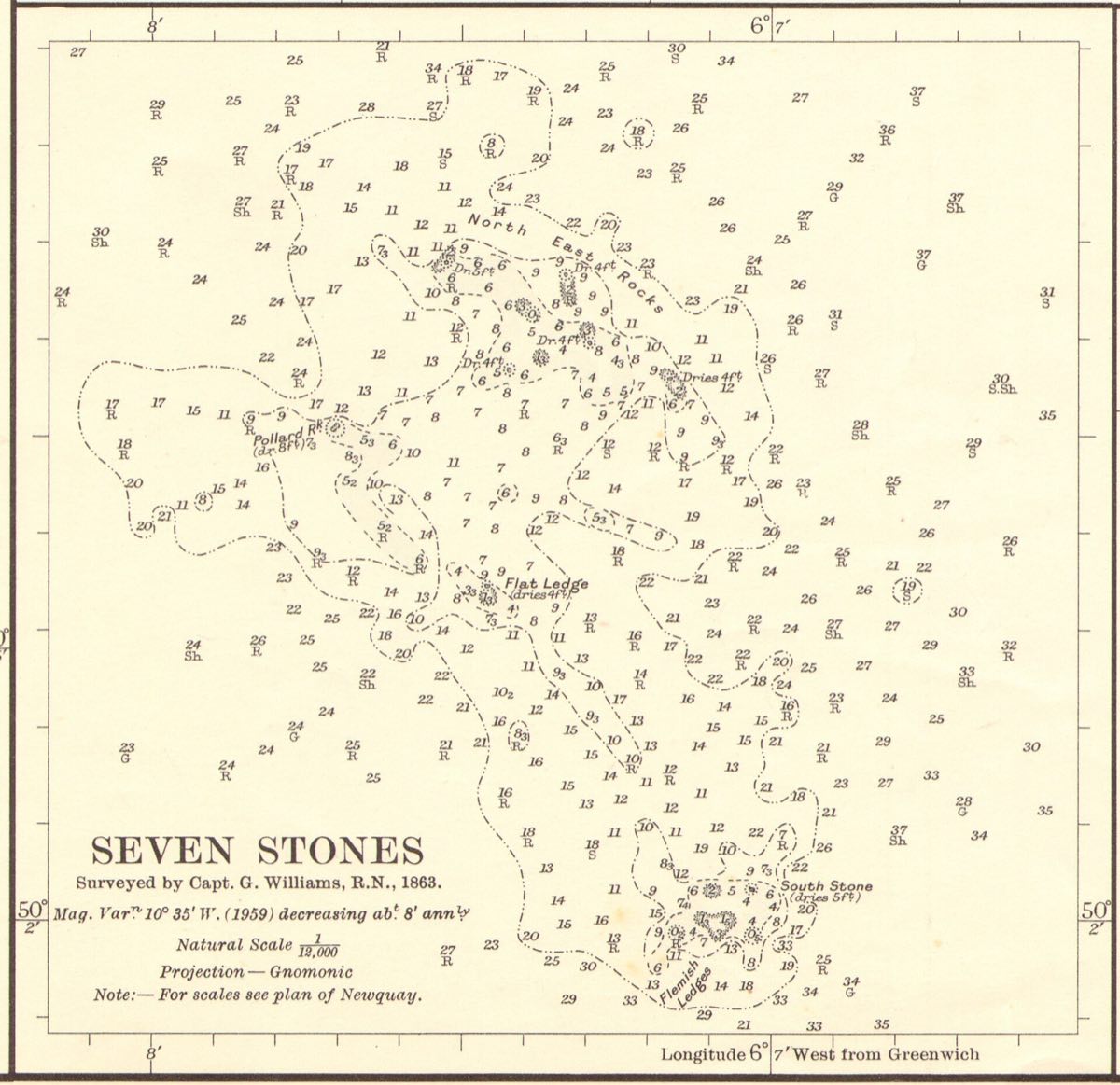
Torrey Canyon hit Pollard Rock, 25 kilometres west of Land's End, at 17 knots. Accounts put the time anywhere from about 0850 to close to 0900. Six of her 18 tanks were first reported torn open, and a later inspection found 14 holed. Full astern on the engines did not move her.[1][2][12][20]
The Inquiry and the Master's Responsibility
As flag state, Liberia held the inquiry. Its board found Rugiati guilty of "a high degree of negligence" and treated his choice of the channel between the Scillies and the reef, in place of the wider water to the west, as the proximate cause.[9][12] It also criticised the first officer's corrections while the master slept, and recorded that safer options were dropped under pressure to make Milford Haven.[17] A report from the Ergonomics and Safety Research Institute at Loughborough took a wider view, listing the ship's handling, the confusing steering lever, the decisions made on board and the time pressure together.[12] The Washington Post reported in 1969 that Rugiati's career and health had been destroyed.[9]
Salvage Attempts and the Broken Hull
Oil started to escape at once. That evening two naval vessels began spraying detergent on it, and within three days 15,000 gallons had gone on. By the evening of 19 March an estimated 20,000 tons had escaped, and almost 30,000 tons a day later. Defence Secretary Denis Healey put the Navy minister Maurice Foley in charge, and a control centre opened at Mount Wise in Devonport.[1]
The plan was to pump compressed air into the hull and lift her off on the spring tides.[1] During the Dutch salvage effort an explosion killed a member of the team, Captain Hans Barend Stal.[17][19] For some days the winds kept the oil offshore, and on 23 March the story had shrunk to a few lines on the front page of The Times. The government did not rely on that, and on 22 March the Chief Scientific Adviser, Sir Solly Zuckerman, convened a committee of scientists.[1]
On 24 March the wind backed to the south-west, and the first thick oil came ashore near St Just on the following morning's tide. Easter Sunday, 26 March, brought a gale. Around 1900 the ship broke her back and released a further 40,000 to 50,000 tons.[1] That ended any hope of saving her. Her owners served notice of abandonment on the underwriters at 0930 on 28 March.[10]
The British Government's Decision to Bomb the Wreck
Prime Minister Harold Wilson had a holiday home on the Scillies and took a personal interest.[2] A meeting with ministers at RNAS Culdrose settled on burning the ship and the slick.[17] According to the estimate Home Secretary Roy Jenkins later gave to Parliament, about 40,000 tons were still on board on 28 March.[10] The reef also lay beyond the three-mile territorial limit of the day, so the government was about to bomb a foreign-flagged ship on the high seas.[21]
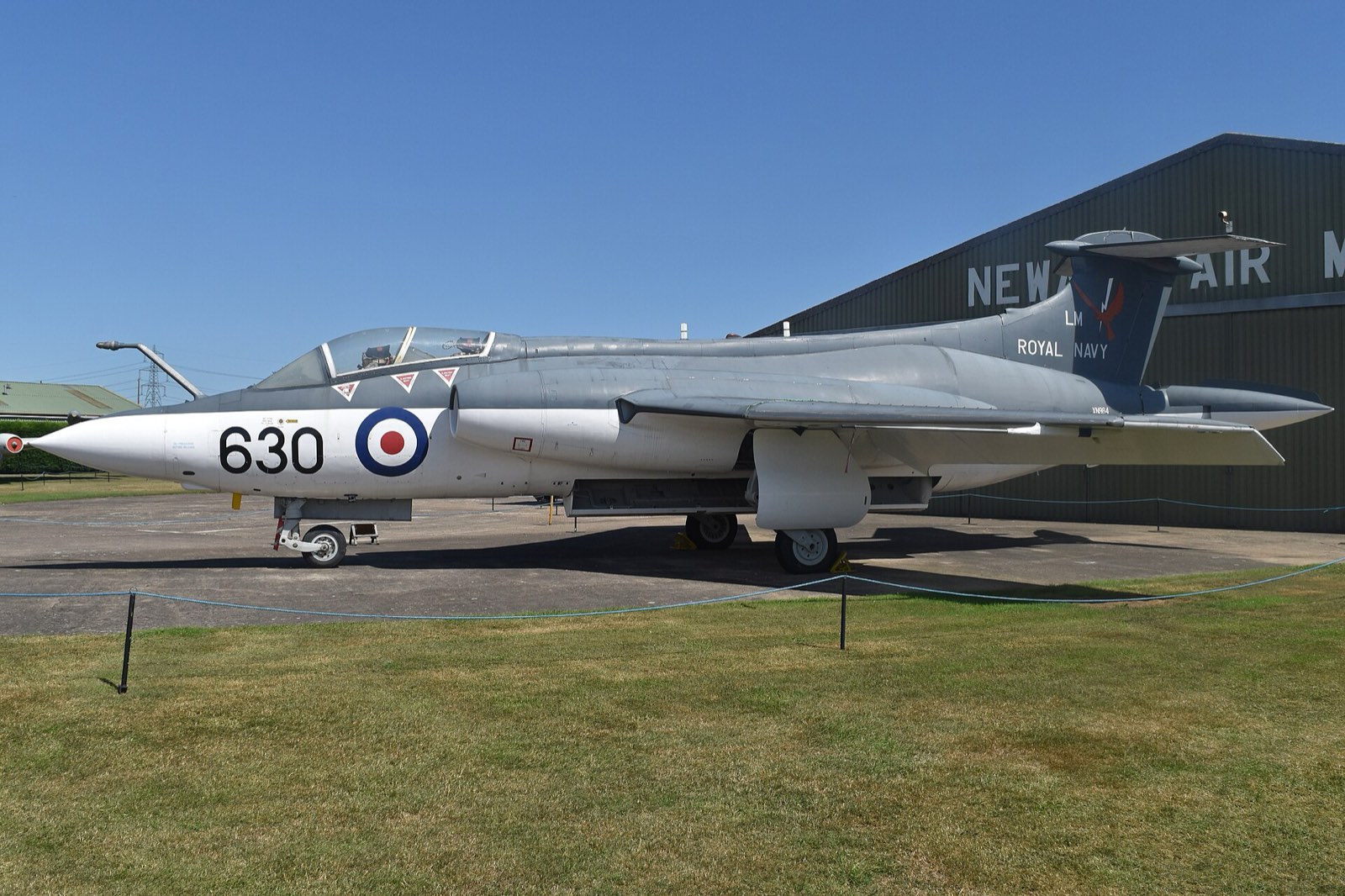
The attack began shortly after 3pm on Tuesday 28 March. Fleet Air Arm Buccaneers from Lossiemouth dropped 1,000-pound bombs, and RAF Hunters from Chivenor followed with cans of aviation fuel to feed the fire. Local records describe eight aircraft with four bombs each, and another figure for the first day is 42 bombs. A share of them reportedly missed the stationary target.[13][17] The raid could be watched from the cliffs of West Penwith. By evening the high tide had put the fire out.[13]
Attacks continued on 29 and 30 March with Sea Vixens from Yeovilton, Buccaneers from Brawdy and Hunters carrying napalm. The totals came to about 161 bombs, 16 missiles and thousands of gallons of kerosene and napalm.[2][17] Parliament was told that nearly all the remaining oil was believed destroyed by 30 March. The wreck itself did not go down in one go. Her three sections settled gradually and were out of sight by the end of April.[1][10] The Buccaneer S.1 XN964 in the cover photograph took part in the raids and is now at Newark Air Museum (image: Alan Wilson, CC BY-SA 2.0, Wikimedia Commons).[22]
The Detergents
On shore the clean-up was doing damage of its own. The "detergents" of 1967 were the first generation of what are now called dispersants, chemicals that break oil into fine droplets. Many had been made for cleaning engine rooms. The most common, BP1002, and its rivals were 66 to 85 per cent organic solvent, with a high aromatic share.[2][17]
More than 25 fishing boats out of Newlyn spread the stuff, and Tom Cotton, clerk to the harbour commissioners, called it "a miniature Dunkirk".[13] On land the priority was the summer tourist trade. About 10,000 tons of dispersant went onto the 14,000 tons of oil that came ashore. Where beaches could not be reached, drums of neat product were rolled over the cliffs to burst on the rocks below.[2] At Sennen Cove the mixture was ploughed into the sand, and oil could still be found there a year later. Elsewhere it turned beaches into temporary quicksand.[2][17]
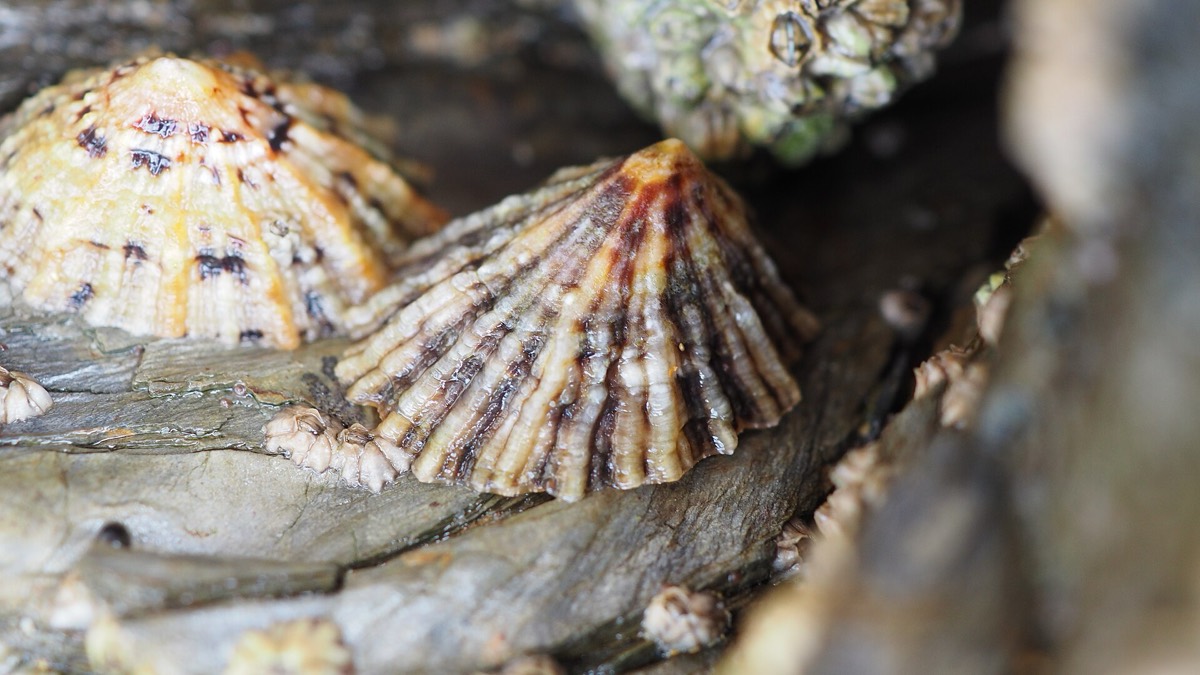
The work of the Plymouth Laboratory made the result clear. Where oil had come ashore and was left untreated, few shore animals and plants died, and limpets (grazing Patella snails that clamp to the rock) even browsed it off the surface. On shores heavily dosed with dispersant, seaweeds, snails, crabs and shore fish died in large numbers.[2]
The Coasts of Cornwall, Guernsey and Brittany
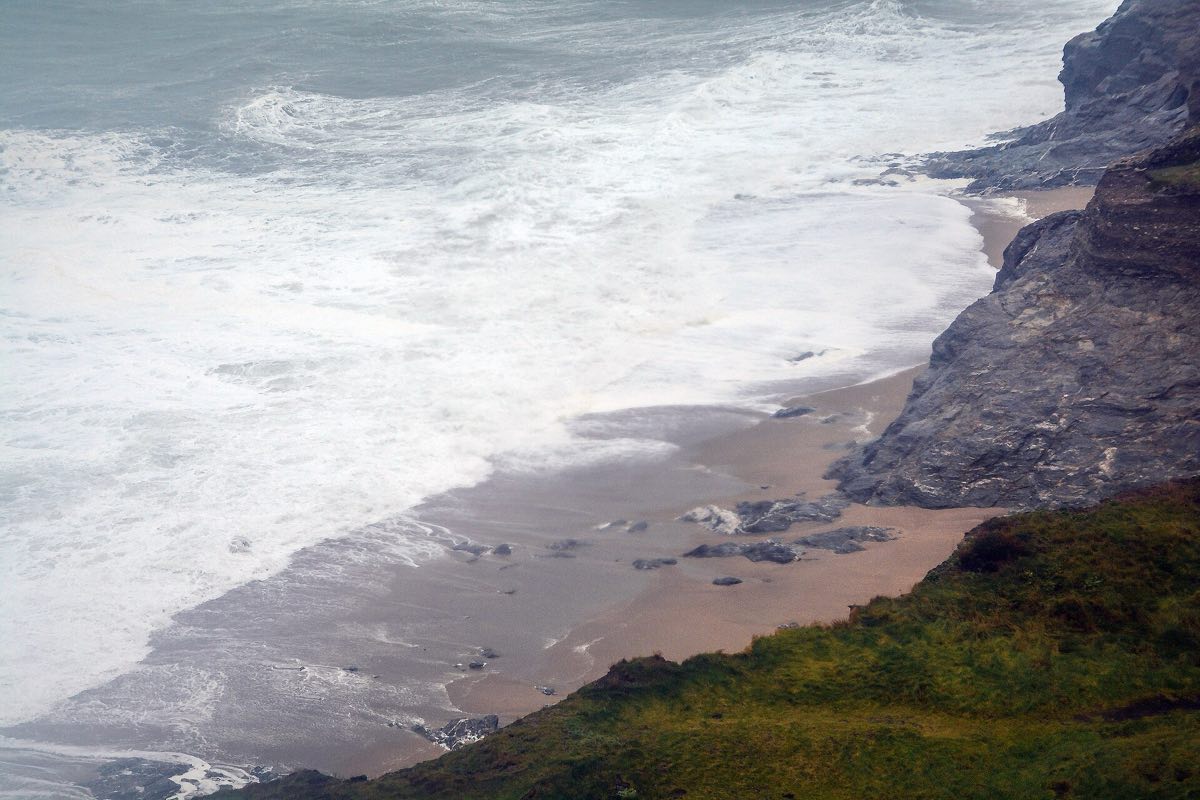
Oil covered the south coast from Land's End to the Lizard and, on the north coast, the stretch from St Ives to Trevone Bay. Marazion and Prah Sands were among the worst hit, with sludge up to a foot deep.[1][21] About 15 per cent of the cargo reached British shores. The 30,000 tons that had drifted south in the first days crossed the Channel, smearing Guernsey on 7 April and reaching Brittany from 11 April.[1] Around 190 kilometres of Cornish coast and 65 to 80 kilometres of French coast were affected.[9][17]
The French had watched Cornwall and took a different line. They used very little dispersant on sandy beaches and gathered the oil with straw and brushwood for disposal. French navy ships treated oil further out at sea with powdered chalk, and much of it was reported sunk.[1][2] Recovered waste came to about 4,000 tons on Guernsey and 4,200 tons in France. Part of Guernsey's went into a quarry on the Chouet headland, where it remains.[14][17]
There is no single figure for seabird deaths, and estimates run from 15,000 to 50,000.[9][14][17] On 28 March alone, 557 birds were taken to the bird hospital at Mousehole and 342 to the back room of a beauty salon at Perranporth. The Seabirds Group put the total above 30,000.[13] Cedre says cleaning saved only about 1 per cent of oiled birds.[14]
Recovery followed the dose of dispersant. At Godrevy, where the National Trust refused it because of the seals, the shore was back to normal in two to three years. At Porthleven the limpets died, seaweed spread, the seaweed canopy brought a dense new generation of limpets, and those limpets grazed it bare and starved, letting the seaweed return. That cycle took up to 15 years to settle.[2] Cedre gives average figures of 5 to 8 years for untreated shores and 9 to 10 for treated ones.[14]
The Legal Gap and the Settlement
The next job was recovering the costs, and the existing rules had not been written with this in mind. Under English and French law the rights of private claimants were unclear. The main difficulties were jurisdiction and security: the ship had sunk, so there was nothing to arrest. The owner could also rely on the 1957 Limitation Convention, which capped liability at a mere £1,500,000.[4] The owners argued for a limit of $4.2 million, and the two governments claimed $22 million.[9] The grounding was off Britain and the damage was in two countries, which made maritime law jurisdiction harder still, and claimants had to prove fault.[4][9]
Britain found its way in through the sister ship. When Barracuda's Lake Palourde called at Singapore for provisions about four months after the spill, the British government had her arrested and so served its writ. France caught up with the same ship in Rotterdam in April 1968.[17][19] Barracuda posted a $7.2 million bond to get her released.[9]
The case never reached a judgment. On 11 November 1969 the parties settled out of court, with Barracuda paying $7.2 million split evenly between the two governments and setting aside another $60,000 for other claimants. Lloyd's sources called it the largest settlement in marine history for oil claims, yet Britain alone was estimated to have spent more than that in 1967.[9] Patrick Griggs credits the cooperation of the P&I club and excess underwriters for getting government and private claims settled.[4]
The British Note to IMCO
Long before the settlement, on 18 April 1967, the British government sent a note to IMCO, as IMO was then called, asking for changes in the international law on oil pollution. The IMCO Council met in extraordinary session and drew up a plan of action on the technical and legal sides of the disaster.[3][4] An ad hoc Legal Committee was formed for the legal questions. On the technical side IMO already had a Subcommittee on Oil Pollution, set up in 1965 under its Maritime Safety Committee.[3] The Comité Maritime International also set up a subcommittee under Lord Devlin to look at the private law aspects.[4]
The Intervention Convention and the CLC
The question opened by the bombing was answered by the Intervention Convention.[21] Adopted on 29 November 1969 and in force from 6 May 1975, it gives a coastal state the right to act on the high seas against the threat of oil pollution after a casualty. Action has to be limited to what is necessary and follow consultation with the flag state and with ship and cargo interests, and a state that goes beyond those limits pays for the damage. A 1973 Protocol extended the regime to substances other than oil.[6]
The Civil Liability Convention (CLC), adopted at the same Brussels conference in November 1969, dealt with compensation. It brought in strict liability for tanker owners, compulsory liability insurance and a direct right of action against the insurer. It entered into force on 19 June 1975. The industry meanwhile ran a voluntary scheme, TOVALOP.[4][5] Strict liability was so new to maritime law then that some argued it was immoral to hold someone liable who was not at fault.[4]
The Fund Convention
CLC put the first layer of compensation on the shipowner, which would not cover a big casualty. The Fund Convention, adopted in December 1971, added a second layer. It is financed by entities that receive certain oils by sea, in proportion to what they receive, so cargo interests share the bill. It entered into force on 16 October 1978, with an initial ceiling of 450 million francs (30 million SDR) that was raised over time. Protocols adopted in 1992 rewrote the system, and the 1992 CLC and 1992 Fund took effect on 30 May 1996. A Supplementary Fund followed on 3 March 2005. The 1971 Fund ceased to be in force in 2002 and was wound up on 31 December 2014.[5]
MARPOL
IMO still saw routine operations as a bigger pollution threat than accidents. In the 1950s tankers normally washed out their cargo tanks and pumped the mixture overboard. The 1954 OILPOL Convention had restricted this, but it was falling behind events.[3] A 1969 amendment brought in load on top, where tank washings settle in a slop tank, the water is pumped out, and the next cargo is loaded on top of the remaining oil. A 1971 amendment limited cargo tank sizes on new tankers.[3]
The IMO Assembly decided in 1969 to call a conference for an entirely new convention. Delegates from 71 countries adopted MARPOL on 2 November 1973.[3][7] Annex I required continuous monitoring of oily water discharges and reception facilities in ports, and created special areas with stricter limits, including the Mediterranean, the Red Sea, the Gulf and the Baltic. Regulation 13 required segregated ballast tanks on new tankers over 70,000 dwt, so that ballast water would not be contaminated by cargo. A United States proposal for double bottoms failed.[3]
The convention took a decade to come into effect. A run of tanker accidents in 1976 and 1977 produced the 1978 Protocol, and the combined MARPOL 73/78 entered into force on 2 October 1983.[7] Double hulls came only with the 1992 amendments, after the Exxon Valdez.[3] The later Annex VI covers air pollution from ships, including the fuel sulphur limit behind IMO 2020.[7]
The IMO Legal Committee
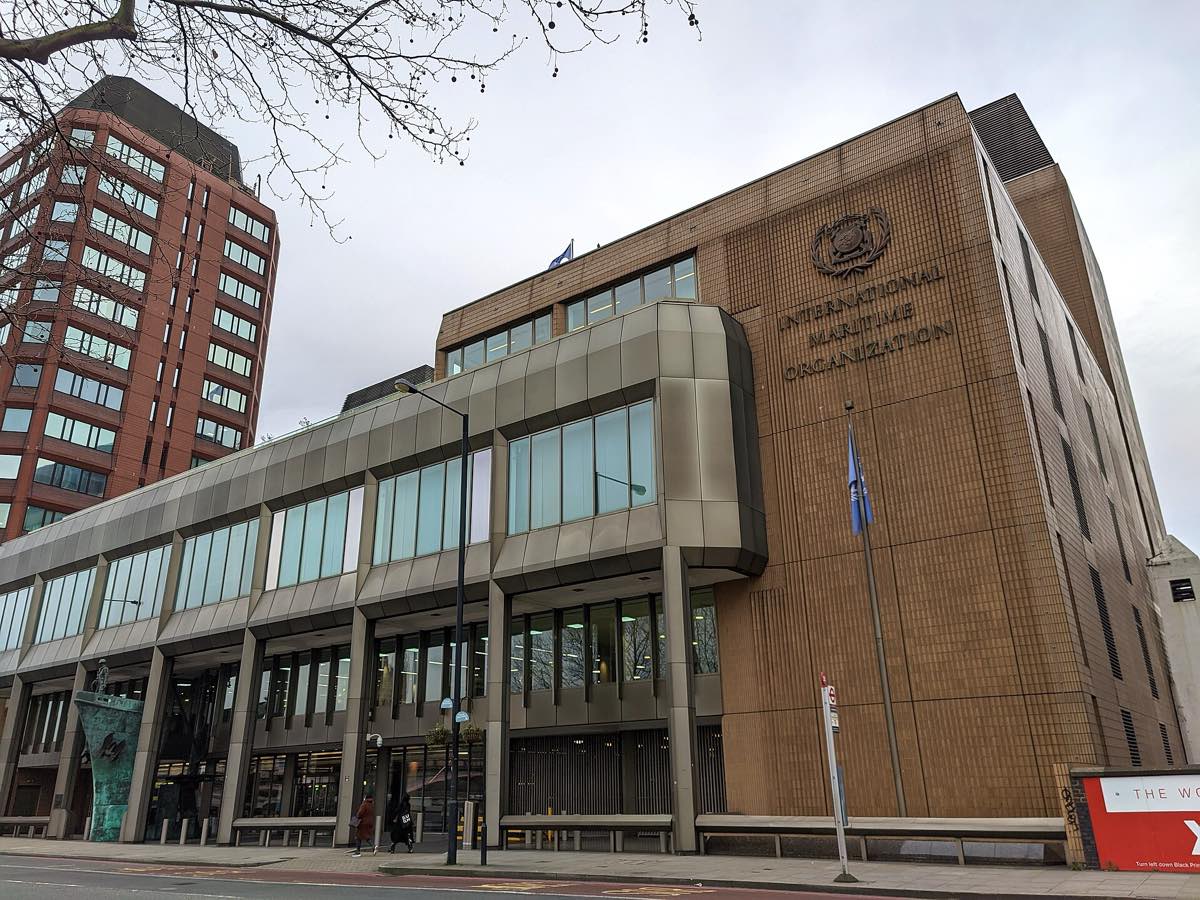
Neither pollution nor legal matters appeared among the purposes in IMO's founding convention of 1948, and for more than 70 years private maritime law conventions had been the work of the Comité Maritime International.[3][4] Torrey Canyon changed that. The ad hoc committee of 1967 soon became a permanent subsidiary organ of the Council.[3][8] Patrick Griggs records that the CMI was a little put out, then settled into producing early drafts. The committee went on to prepare instruments such as the 1976 limitation convention and the 1989 Salvage Convention.[4] Amendments adopted in 1975 and in force in 1982 added marine pollution and legal matters to IMO's stated purposes, and changed its name from IMCO.[3]
Frequently asked questions
What was the Torrey Canyon disaster?
It was the oil spill that began when the Liberian-flagged supertanker Torrey Canyon ran aground on Pollard Rock, on the Seven Stones reef off Cornwall, on 18 March 1967. The whole cargo of about 120,000 tons was lost.
Why did Britain bomb the Torrey Canyon?
Once the ship broke her back on 26 March she could not be salvaged. The British government had Navy and RAF aircraft bomb the wreck on 28, 29 and 30 March to burn the roughly 40,000 tons of oil still on board.
Which conventions came out of the Torrey Canyon disaster?
The Intervention Convention and CLC in 1969, the Fund Convention in 1971 and MARPOL in 1973. IMO also set up its Legal Committee in 1967.
Sources
- J. E. Smith (ed.). Torrey Canyon Pollution and Marine Life, chapter 1: A Brief Chronology of Torrey Canyon Events. Marine Biological Association, Cambridge University Press, 1968.
- S. J. Hawkins et al. From the Torrey Canyon to Today: A 50 Year Retrospective of Recovery from the Oil Spill. International Oil Spill Conference, 2017.
- IMO. Focus on IMO: MARPOL, 25 Years, October 1998.
- CMI News 1-2/2013. P. Griggs, Comité Maritime International and the Legal Committee; M. Jacobsson, Bridge over Troubled Water: The Legal Committee's Voyage in a Changing World.
- IOPC Funds. History and About Us pages.
- IMO. International Convention Relating to Intervention on the High Seas in Cases of Oil Pollution Casualties, 1969.
- IMO. International Convention for the Prevention of Pollution from Ships (MARPOL).
- IMO. Legal Committee.
- U.S. Congressional Record, Senate, 12 November 1969, p. 33854 (Mr Muskie's remarks and the Washington Post report).
- UK Hansard. HC Deb 4 April 1967, vol 744, c19W, Torrey Canyon.
- UK Hansard. HC Deb 26 April 1967, vol 745, c1590, Torrey Canyon.
- Professional Mariner. Torrey Canyon Alerted the World to the Dangers That Lay Ahead.
- Penwith Local History Group. On This Day: 18th March 1967.
- Cedre. Torrey Canyon incident information sheet.
- ITOPF. Torrey Canyon, United Kingdom, 1967.
- NOAA IncidentNews. Torrey Canyon; Lands End, England.
- Wikipedia. Torrey Canyon oil spill.
- Wikipedia. SS Torrey Canyon.
- Pop History Dig. Torrey Canyon Seven Stones Reef.
- Safety4Sea. Torrey Canyon: The World's First Major Oil Tanker Disaster.
- Veus Shipping. Supertanker Torrey Canyon Grounding and Oil Spill, 18 March 1967.
- Wikimedia Commons. Blackburn Buccaneer S.1 XN964 LM-630, file description by Alan Wilson.
- Wikipedia. Seven Stones Reef.