
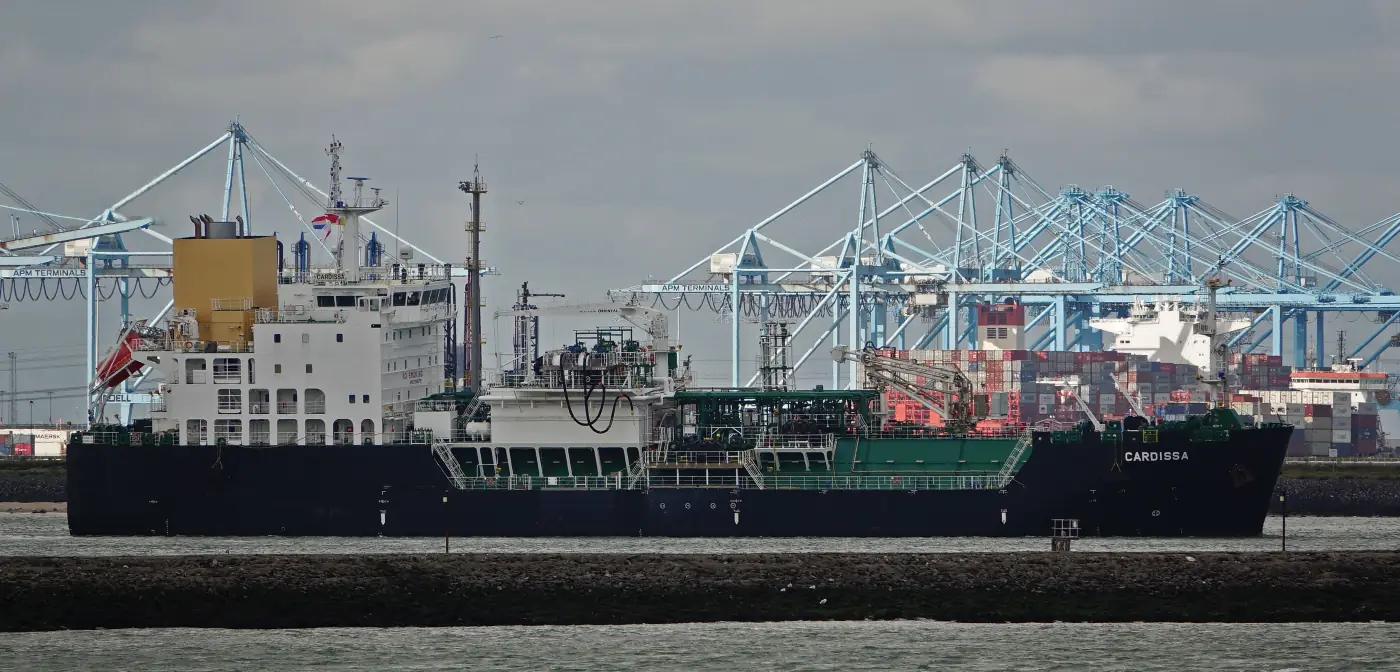
Netherlands, 51°57′N 4°08′E
Bunker Supplier in Rotterdam
Bunkering at Rotterdam is done by licensed bunker vessels, mass flow meters have been mandatory since 1 January 2026, and every operation is reported to Portbase in advance. The port is in the North Sea ECA, so the limit is 0.10%.
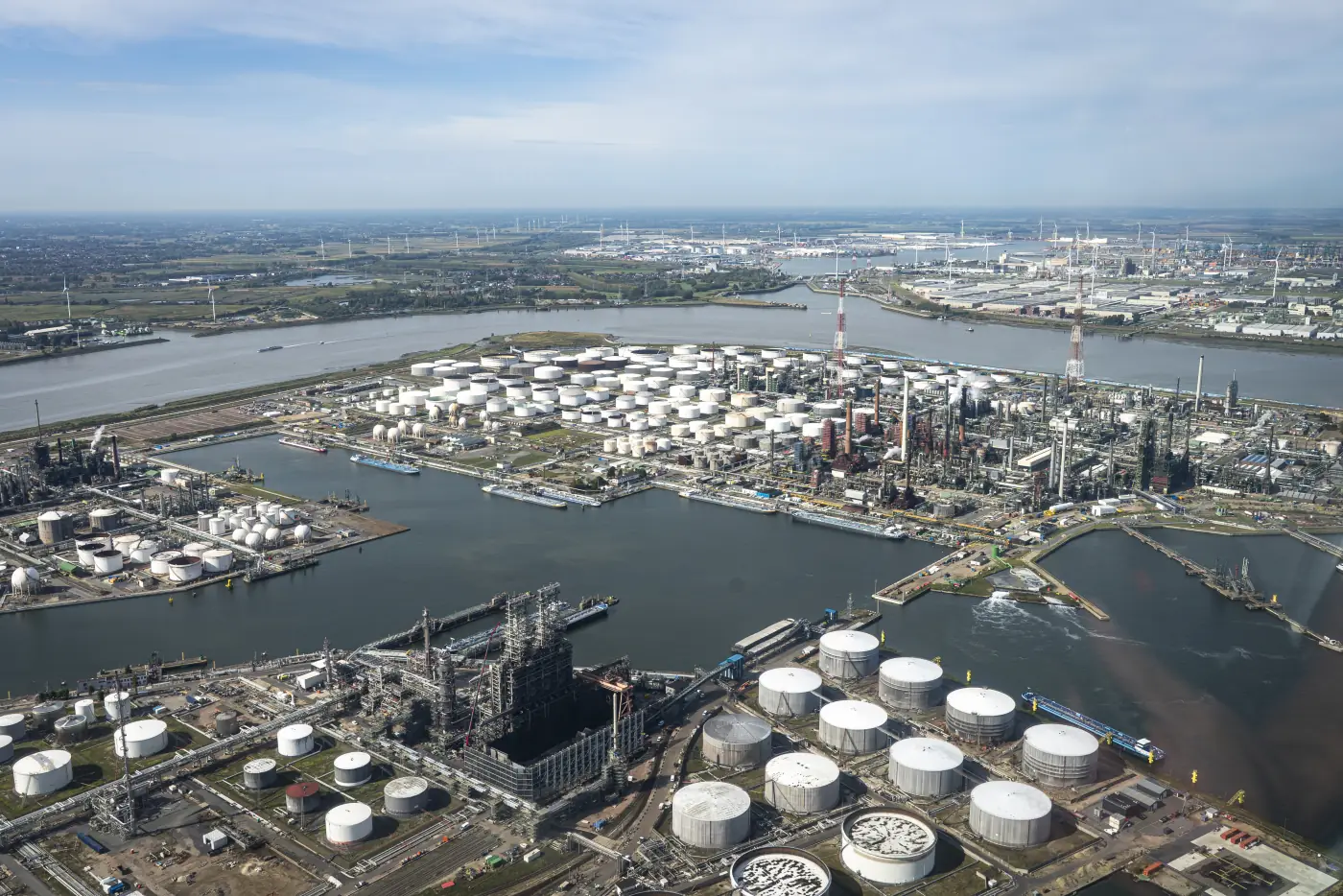
Photo: kees torn, CC BY-SA 2.0, Wikimedia Commons
- Sulphur
- 0.10% (North Sea ECA)
- Quantity
- Mandatory meter since 2026
- Notice
- Through Portbase
- Volume
- About 10 million tonnes a year
Bunkering in Rotterdam
The port of Rotterdam says it loads about 10 million tonnes of fuel a year and is Europe's largest bunkering port. Port data show about 9.2 million tonnes of conventional fuels in 2025: 3.4 million of HSFO, 2.9 million of VLSFO, 1.6 million of MGO and 865,000 of ULSFO. LNG reached 447,000 tonnes.
The rules are written down and tied to a licence. Article 8.1 of the Rotterdam Port Bye-Laws 2020 requires a permit for bunkering, and the 2024 licence sets out the details. The coming change is on scrubbers: an OSPAR decision bans open-loop discharge in ports and internal waters from July 2027 and closed-loop discharge from January 2029.
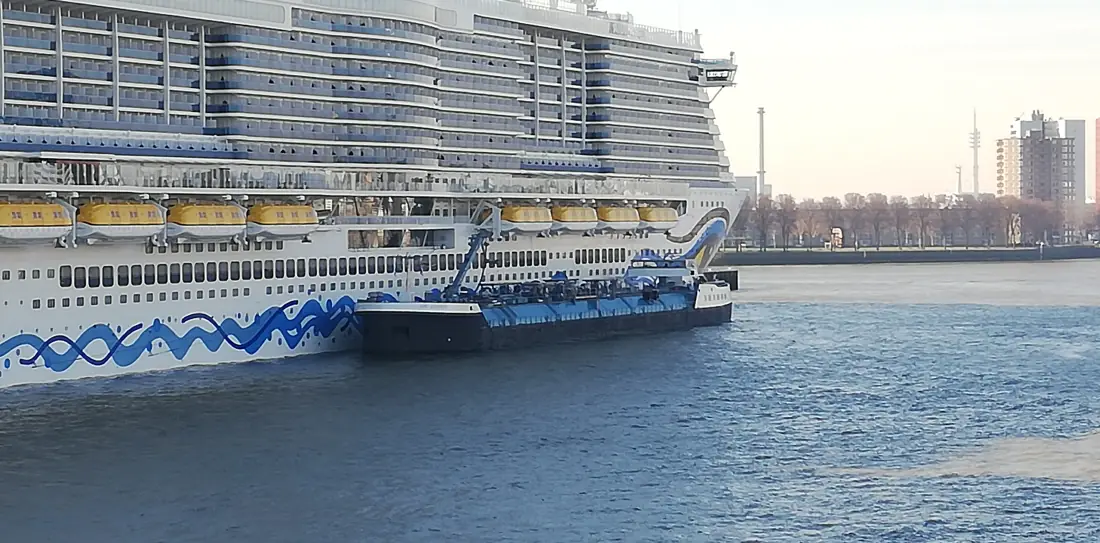
Bunkering Process in Rotterdam
Berth
Vessel name, IMO, berth, ETA, grades and quantities. The berth is also needed for notification.
Portbase Notification
All bunkering is reported and registered through Portbase in advance.
Metered Delivery
Since 1 January 2026 bunker vessels use a mass flow meter when delivering residual fuels, distillates and biofuels. Samples follow ISO 13739, and the ISGOTT checklist is used.
Documents
The licence holder keeps records for at least five years. On the ship side, the BDN is kept for three years and the sample for at least 12 months.
Bunkering Requirements in Rotterdam
Rules change. Confirm current practice with the port agent.
Bunker Licence
The 2024 licence covers residual fuels, distillates and biodiesel, and the holder is the bunker vessel's owner.
New Fuels
Bio-methanol and bio-ammonia are outside the 2024 licence and licensed separately.
OSPAR Scrubber Decision
Open-loop discharge in ports and internal waters is banned from July 2027 and closed-loop from January 2029 (West P&I summary). Ask your agent about the Dutch implementation schedule.
EU Rules
Directive 2016/802 applies 0.10% at berth and requires the changeover time in the logbook, with exemptions for ships at berth under two hours and ships on shore power. FuelEU Maritime covers ships above 5,000 GT calling at EU ports under any flag: well-to-wake GHG intensity must be 2% below the 2020 baseline in 2025 and 6% below in 2030.
Products and Quotes for Rotterdam
We quote for fuel oil (including VLSFO), gas oil (MGO) and marine lubricants. For details see Fuel Oil and Gas Oil and Marine Oils.
Rotterdam Bunker Supply: Common Questions
Are meters mandatory in Rotterdam?
Yes. They have been mandatory on bunker vessels since 1 January 2026, as in Antwerp-Bruges.
Which ECA is Rotterdam in?
The North Sea ECA, so the limit is 0.10% under way and at berth.
Is LNG available in Rotterdam?
Yes, about 447,000 tonnes were sold in 2025.
Sources (8)
- Port of Rotterdam: Bunkering in Rotterdam
- Rotterdam Port Bye-Laws 2020
- Bunker licence 2024
- Port of Antwerp-Bruges: mass flow meter mandatory from 1 January 2026
- ENGINE: Rotterdam bunker volumes 2025
- West P&I: phased banning of scrubbers in North-East Atlantic waters (Temmuz 2025)
- Directive (EU) 2016/802, Article 7
- European Commission: FuelEU Maritime
This page is general information, not legal advice. Last checked: 4 November 2026.