Scrubber Systems and Their Use on Ships
A ship's scrubber system washes sulphur oxides out of the exhaust with water. How it works, the main types, washwater bans and the investment case.
A scrubber system, also called an exhaust gas cleaning system (EGCS), is the equipment on a ship that washes sulphur oxides out of the engine exhaust with water before the gas leaves the funnel. Under Regulation 4 of MARPOL Annex VI, a scrubber approved by the flag state counts as equivalent to low-sulphur fuel. A ship can therefore burn high sulphur fuel oil (HSFO) and still meet the 0.50% and 0.10% limits. The debate today centres on whether the washwater can go into the sea.[1]
Operating Principle
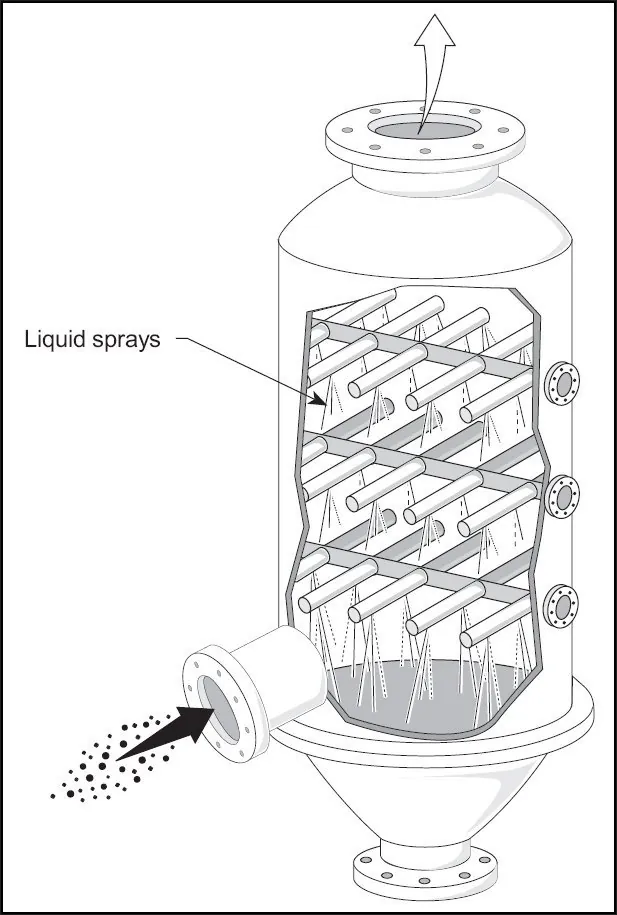
As exhaust gas passes through a tower, seawater or fresh water with chemicals is sprayed over it. Sulphur dioxide dissolves in the water and forms acid, which is neutralised by the natural alkalinity of seawater or by added caustic soda. The outgoing gas is measured continuously, because compliance is shown by the ratio of SO₂ to CO₂ in the exhaust and not by the sulphur in the fuel.
IMO's 2021 guidelines, MEPC.340(77), set out what this ratio means for petroleum fuels: 21.7 is equivalent to 0.50% sulphur and 4.3 to 0.10% (SO₂ ppm divided by CO₂ %). Recorder data are kept for at least 18 months. The system's manuals and record book stay on board and may be examined in port state control.[2]
Open-Loop, Closed-Loop and Hybrid Systems
| System | Washing liquid | Waste | Main constraint |
|---|---|---|---|
| Open-loop | Seawater, passed through and returned | Washwater goes to sea continuously | Waters with discharge bans; lower efficiency in low-alkalinity water |
| Closed-loop | Fresh water and alkali, recirculated | Small treated discharge; sludge goes ashore | Needs chemicals, tanks and sludge reception |
| Hybrid | Works in both modes | Depends on the mode | Zero discharge requires a holding tank |
Most installed systems are open-loop. In 2019 DNV GL reported that about 80% of systems installed or on order were open-loop and 17% hybrid.[3] The figure is old, but it explains why discharge bans have such reach: they target the most common system.
The guideline limits for open-loop systems are clear. pH must not fall below 6.5 at 4 metres from the discharge point. Polycyclic aromatic hydrocarbons (PAH) may not exceed the inlet water by more than 50 µg/L. The rise in turbidity may not pass 25 FNU. Sludge may not go overboard and must be landed at a reception facility.[2]
Washwater Discharge Bans
MARPOL allows scrubbers. The UN Convention on the Law of the Sea, however, gives a coastal state the right to restrict discharges in its ports and internal waters. The result is a picture that changes from country to country.
| Place | Rule | Date |
|---|---|---|
| Denmark | Open-loop discharge banned within 12 miles; separate date for closed-loop | 1 July 2025; closed-loop 1 July 2029 |
| Sweden, Finland | Open-loop discharge banned in territorial waters | 1 July 2025 |
| OSPAR countries | Open-loop first, then all discharge banned in internal waters and port areas | 1 July 2027; all 1 July 2029 |
| Türkiye | Open-loop washwater discharge banned in territorial waters | 6 April 2021 |
| IMO | No global ban; further discharge proposals under discussion at the PPR sub-committee | Ongoing |
Sources: notices from DNV, West P&I and UK P&I.[4][5][6] The OSPAR decision lets member states delay implementation by three years, and extension to the 12-mile territorial sea is due to be decided in 2027, so national practice should be checked before the voyage.
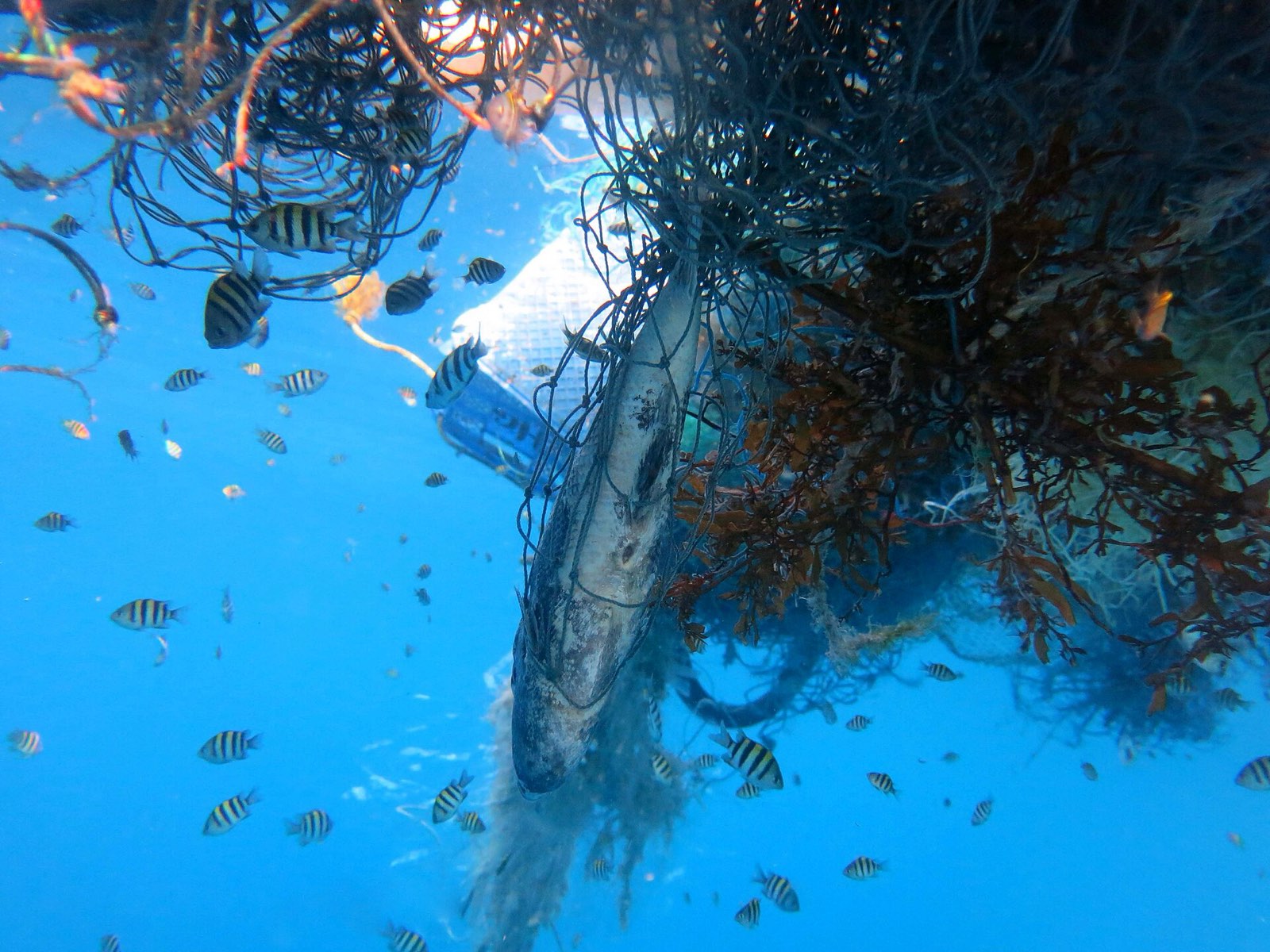
The argument is about what the washwater contains. Industry bodies object to treating water that meets the guidelines as a pollutant. Coastal states worry about accumulation, especially in enclosed waters and ports, and bring in bans on precautionary grounds.
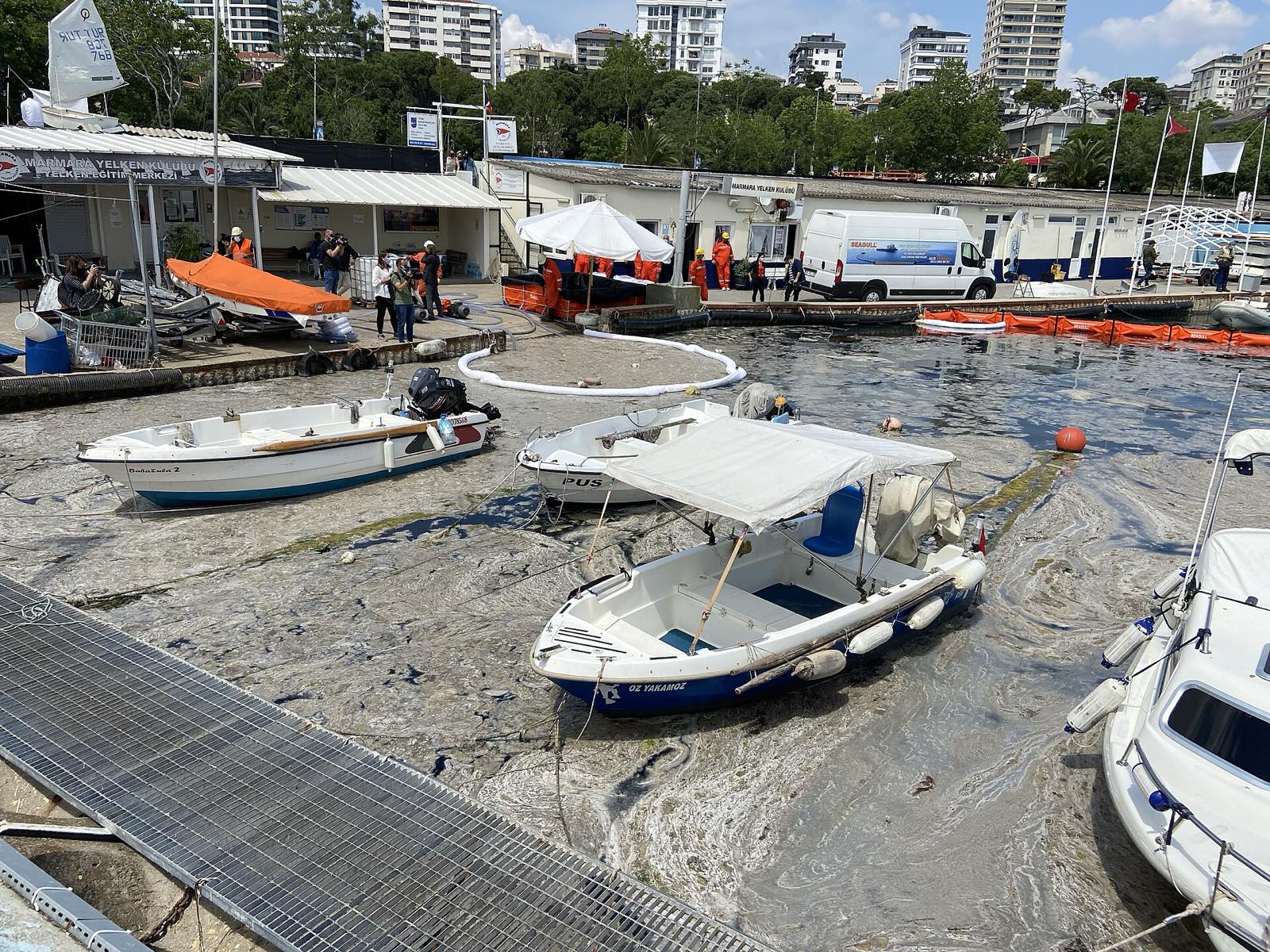
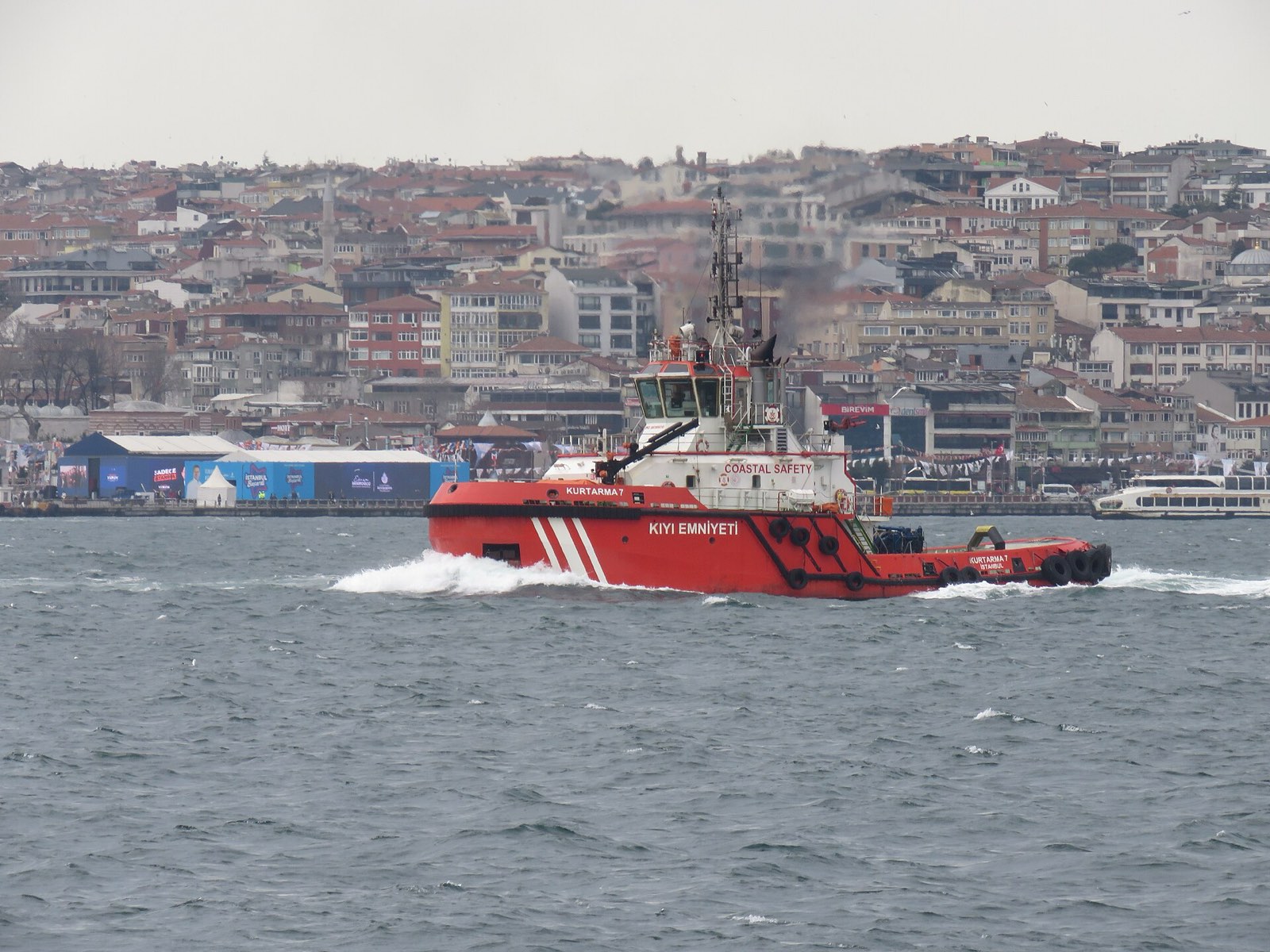
In Türkiye, a letter from the Ministry of Environment and Urbanisation dated 6 April 2021 bars open-loop washwater from territorial waters. An open-loop ship therefore switches to compliant fuel before entering Turkish waters. A system that can hold its washwater may be used. Marmara, the Straits and Istanbul ports also apply the 0.1% sulphur rule to ships at berth. The current position should be confirmed with the agent and P&I club before the voyage.[6]
The Economics of a Scrubber
The calculation turns on the Hi5, the per-tonne price gap between VLSFO and HSFO. This gap is volatile. It fell to a record low of $44.21 in Singapore on 29 October 2020 and reached a record $420.50 on Ship & Bunker's G20 average in 2022.[7] Ports can also move in opposite directions: in September 2026 the gap widened from $201 to $285 in Fujairah while narrowing from $207 to $164 in Singapore. A calculation from one day's price therefore misleads. HSFO availability counts too, and that same month recommended HSFO lead times in Singapore stretched for a while to 10 to 19 days.[8]
The second factor is how many days a year the ship can run in open-loop. As the list of bans grows, the price gap applies to fewer days. The third is cost: installation, the energy used by pumps, maintenance and lost tank space. In 2018 Maersk's chief operating officer put a retrofit at $5 million to $10 million per ship.[12] This is why high-consumption large tankers, bulk carriers and container ships lead. A 2023 report put scrubbers on 13% of these three ship types.[9] Trading area changes the answer as well: a ship running between Northern Europe and the Mediterranean may earn less than one crossing oceans.
Scrubbers and Carbon Accounting
A scrubber washes out sulphur but does not capture CO₂. Under EU ETS, FuelEU Maritime and CII, a ship burning HSFO is counted at the fuel's own emission value, and the energy used by the pumps comes on top. The decision today therefore weighs the ship's remaining life and trading area. These rules are covered in our article on marine fuel management.
System Failure
The scrubber exception to the MARPOL ban on carrying fuel above 0.50% sulphur, in force since 1 March 2020, assumes a working system. Under IMO circular MEPC.1/Circ.883/Rev.1, a malfunction goes into the EGCS record book with its date, start time and duration. One that cannot be fixed counts as a breakdown: if the system is not compliant again within one hour at most, the ship changes over to compliant fuel. A ship without enough compliant fuel on board puts its plan for bunkering or repair to the flag state and the relevant port state for their agreement.[10] Ships with scrubbers therefore keep some VLSFO or MGO on board. Fuel types are summarised on our Fuel Oil and Gas Oil page.
Origins Ashore: Flue Gas Desulphurisation
Scrubber technology began ashore. The first large flue gas desulphurisation (FGD) installation was at London's Battersea power station in 1931. Large-scale units spread in the 1970s, in the United States under the influence of the Clean Air Act of 1970.[11] Wet systems usually use lime or limestone as the sorbent, and the calcium sulphite slurry can be oxidised into gypsum. On a ship seawater is at hand, so open-loop needs no chemicals, which is the main reason it spread.
Frequently asked questions
What is a scrubber system?
A scrubber system, or exhaust gas cleaning system (EGCS), is ship equipment that washes sulphur oxides out of the engine exhaust with water.
How does a scrubber system work?
Exhaust passes through a tower where water is sprayed over it. Sulphur dioxide dissolves and forms acid, which seawater's alkalinity or added caustic soda neutralises, and the outgoing gas is measured continuously.
What are the types of scrubber system?
Open-loop systems use seawater once and return it to the sea. Closed-loop systems recirculate fresh water with alkali. Hybrid systems can work either way.
How much does a scrubber system cost?
It depends on the ship and engine power. A 2018 figure from Maersk put a retrofit at $5 million to $10 million per ship, and that number is now dated.
Can a ship with a scrubber burn HSFO in an ECA?
Yes, if the exhaust ratio meets the 0.10% equivalent. Washwater rules are checked locally as a separate matter.
Is closed-loop allowed everywhere?
No. Under the Danish and OSPAR timetables, closed-loop discharge also ends after 2029. Ships holding the water in a tank are not affected.
Can scrubbers be used in Türkiye?
Under the 2021 ministry letter, open-loop washwater may not enter territorial waters. A system that can hold its washwater may be used.
Sources
- International Maritime Organization (IMO). IMO 2020: Cutting Sulphur Oxide Emissions; MARPOL Annex VI, Regulation 4.
- International Maritime Organization (IMO). MEPC.340(77), 2021 Guidelines for Exhaust Gas Cleaning Systems.
- DNV GL data, Seatrade Maritime: 80% of Scrubbers Are Open Loop, 2019.
- DNV. Ban on Discharge of Water from Open-Loop EGCSs in Coastal Waters of North West Europe from 1 July 2027, 2025.
- West P&I. The Phased Banning of Scrubbers in the Northeast Atlantic, 2025.
- UK P&I Club. Discharge of Open-Loop Scrubbers Prohibited in Turkish Waters, 2021; Britannia P&I, 2021.
- Argus Media. Singapore Scrubber Spread Hits New Low on HSFO Strength, 3 November 2020; Ship & Bunker. Quarter of Global Tonnage Now Using HSFO at Record Discount to VLSFO, 2022.
- ENGINE. Fujairah's Hi5 Spread Widens as VLSFO Remains Scarce, 25 September 2026.
- BIMCO data, Maritime Professional: Share of Ships with Scrubbers, 2023.
- International Maritime Organization (IMO). MEPC.1/Circ.883/Rev.1, 15 December 2021.
- Wikipedia. Flue-gas Desulfurization (secondary source).
- Oil & Gas 360, reprinting The Wall Street Journal. Ship Owners' Multibillion-Dollar Quandary: Buy Cleaner Fuel or a Fuel Cleaner, 20 March 2018.