Ship Registration and Its Practice in Türkiye
The legal basis of a ship's nationality, the registration steps, open register data, the two Turkish registers and the problem of fraudulent registration.
Ship registration is the entry of a vessel in a state's register, which gives it that state's nationality and the right to fly its flag. The register records the ship's identity, its owner and encumbrances such as mortgages. Under the UN Convention on the Law of the Sea (UNCLOS), each state sets its own conditions for registration, and a ship may sail under one flag only.[1] Türkiye keeps two main registers, the National Ship Register and the Turkish International Ship Register (TUGS) created by Law No. 4490, and vessels on both fly the Turkish flag.[2][3]
The International Legal Basis
Part VII of UNCLOS holds the basic rules. Every state, coastal or landlocked, may sail ships under its flag on the high seas (Art. 90). Each state fixes the conditions for granting nationality and registration, and there must be a "genuine link" between state and ship (Art. 91). A ship sails under one flag and falls under that state's exclusive jurisdiction on the high seas, and a ship using several flags according to convenience may be treated as stateless (Art. 92).[1]
Article 94 lists the flag state's duties. It must exercise effective control over administrative, technical and social matters, keep a register, and take measures on construction, equipment, crewing and training. Ships must be surveyed before registration and at intervals afterwards, and a report from another state that proper control is lacking must be investigated.[1] The flag state guide goes through these responsibilities in detail.
Registration and ownership are separate concepts. The register records title and matters to third parties, while the flag shows whose law and oversight apply. Classification is a further distinction. A register is a state record, whereas class is a technical assessment, though classification societies carry out many surveys on behalf of flag states.
How Registration Generally Works
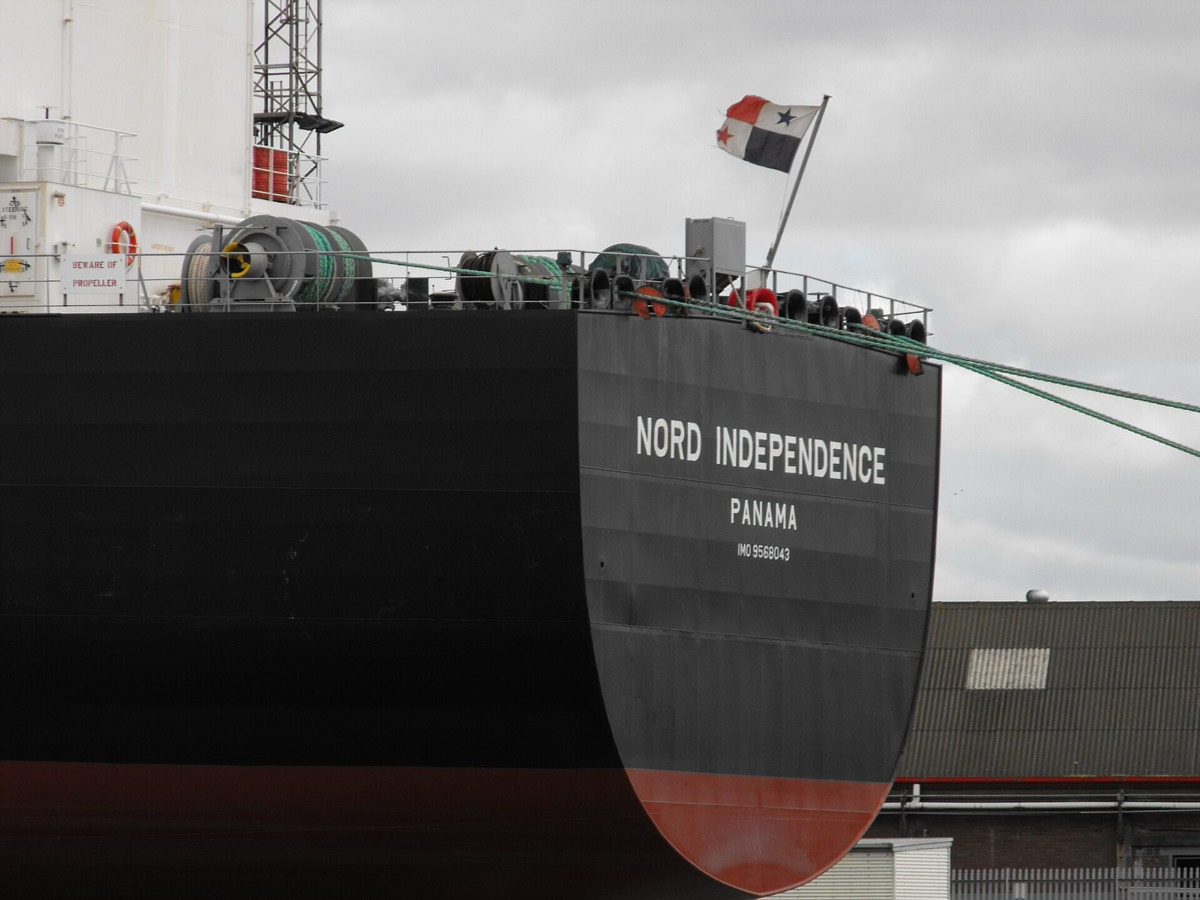
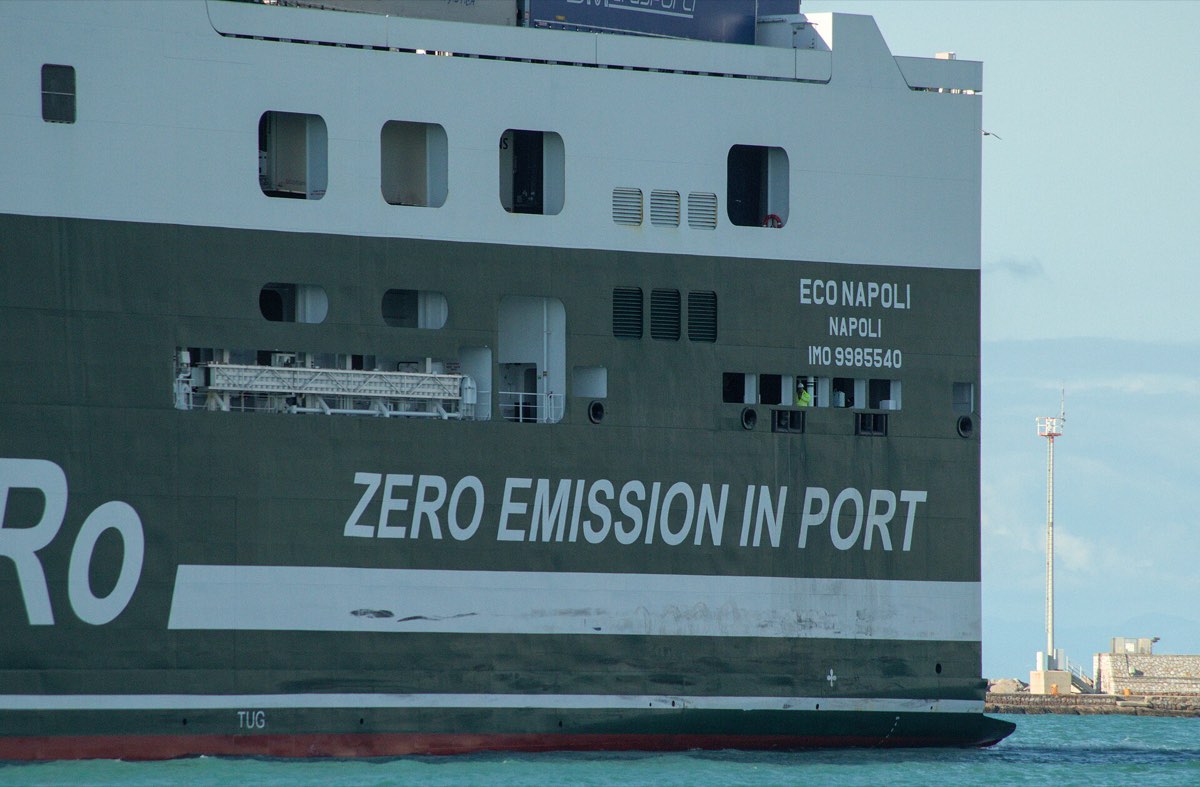
Details differ by country, but the steps tend to be similar. The applicant reserves a name, then submits ownership and corporate documents, the tonnage certificate and the IMO number. A ship transferring from another flag needs a deletion certificate from its previous register, and a new ship needs a builder's certificate. Provisional registration may come first, with the permanent document following. Name and port of registry are marked on the stern. The ship's flag, name and ownership history builds up in its Continuous Synopsis Record (CSR), which stays on board.
Bareboat charters can involve temporary dual registration. The ship stays on its underlying register and flies the flag of the charterer's country for a set period. Whether this is available depends on the laws of both countries.
National and Open Registers
A national register is generally reserved for ships owned by its citizens and companies. An open register accepts foreign-owned ships as well, and the common term for this is a flag of convenience. By ISL's reckoning the ten largest open registers hold 1.30 billion dwt, about 55% of the world merchant fleet.[4] UNCTAD data for 1 January 2026 place Liberia first (447 million dwt), followed by Panama (350 million) and the Marshall Islands (318 million). With Singapore and Hong Kong, the top five account for 58% of global capacity.[5]
| Criterion | National register | Open register |
|---|---|---|
| Who may register | Mostly national owners | Foreign owners as well |
| Tax | National tax system | Often tonnage-based |
| Crew | Nationality rules may apply | More flexible |
| Application | Registrar within the country | Consulates, agents or branch networks |
Choosing a flag means weighing tax, speed of service, crewing freedom, finance and reputation together. A cheap register can carry a hidden cost, because a flag with a poor inspection record may push its ships into a higher risk group under port state control. Large operators therefore tend to favour flags on the white lists of the Paris and Tokyo Memoranda.
Ship Registers in Türkiye
National Ship Register
The Turkish Commercial Code No. 6102 provides the basis, with the right to fly the flag at Article 940 and the register provisions from Article 954 onward. Commercial ships of 18 gross tons or more must be registered, while smaller commercial ships and non-commercial craft may register at the owner's request.[2] The owner or one of the co-owners applies, the registry office serving the home port handles the entry, and its decisions may be challenged before the local commercial court within eight days.[2]
Applications go electronically through the Maritime Portal and the GESBİS system. The Ship Register Regulation of 12 May 2023 (Decision No. 7283) replaced the 1956 and 1957 regulations and covers ship and flag certificates, the keeping of the register and the recording of encumbrances.[6] There is also a construction register for ships being built and a special register for foreign ships temporarily permitted to fly the Turkish flag.[2]
Turkish International Ship Register
TUGS was created by Law No. 4490, adopted on 16 December 1999 and published five days later, with the aim of making ships easier to acquire and operate and so developing Turkish shipping. It covers ships on the National Register, ships built in Türkiye and imported ships above 3,000 dwt (300 gross tons for passenger and special-purpose ships).[3]
Article 12 exempts profits from operating and transferring these ships from income and corporate tax and exempts the related contracts from stamp duty and fees. Registration and annual tonnage fees are set by reference to US dollars. The master is in principle a Turkish citizen, and where the owner is Turkish at least 51% of the remaining personnel must be Turkish citizens.[3] The law has been amended several times, so the current position should be checked against the official text.
The registers also connect to cabotage: the law states that ships without the right to fly the flag cannot benefit from cabotage rights.[3] With foreign shareholders the result can depend on the structure of company and ship, and specialist maritime law advice is advisable.
Changing Flag
A flag may change when a ship is sold or its operating plan shifts. Under UNCLOS a ship may not change flag during a voyage or in a port of call, save in the case of a real transfer of ownership or change of registry.[1] A change involves deletion from the old register, dealing with mortgages, new statutory documents and an updated synopsis record. Lenders usually have to consent, so finance agreements often make reflagging subject to approval.
The Problem of Fraudulent Registration
The number of ships trading on unauthorised or non-existent registers has grown in recent years. At its 113th session, on 13 to 17 April 2026, the IMO Legal Committee approved guidelines on ship registration covering who may operate a register, quality assurance, checks on ownership and ship identity, and information sharing between registries. IMO notes that no binding international framework regulates ship registration. The same announcement reports 529 ships falsely flying another country's flag over the previous year, with nearly 40 member states' flags used without their knowledge.[7]
For suppliers and ports the practical lesson is to confirm a ship's registration with the registry itself. Sanctions screening rests on the IMO number for the same reason, and it is partly why a bunker enquiry asks for both the ship's name and its IMO number.
Frequently asked questions
What is ship registration?
Ship registration is the entry of a vessel in a state's register, which gives it that state's nationality and the right to fly its flag.
Can a ship have two flags?
Under UNCLOS a ship sails under one flag. Temporary dual registration under a bareboat charter applies where both states' laws permit it, and even then only one flag is used at a time.
What is a flag of convenience?
It is the common term for registering a ship in the open register of a state other than the owner's own. "Open register" is the more neutral expression.
Which ships must register in Türkiye?
The law requires registration for commercial ships of 18 gross tons or more. The current conditions should be checked in the Turkish Commercial Code.
Sources
- United Nations. Convention on the Law of the Sea (UNCLOS), Part VII, Articles 90, 91, 92, 94.
- Kulaçoğlu Law Office. Gemi Sicili ve Sicile Tescil, summary of Turkish Commercial Code No. 6102.
- Law No. 4490 on the Turkish International Ship Register, Official Gazette, 21 December 1999, No. 23913.
- ISL (Institute of Shipping Economics and Logistics). Review of the world fleet and open registers.
- UNCTADstat. Maritime and Other Transport, fleet data, 1 January 2026.
- Ship Register Regulation, Decision No. 7283, Official Gazette, 12 May 2023, No. 32188.
- IMO. IMO Approves New Guidelines on Ship Registration, 17 April 2026.