The First Steamships Across the Atlantic: Savannah, Sirius and Great Western
Savannah made the first steam-assisted Atlantic crossing in 1819, while Sirius and Great Western opened the way for crossings under steam in 1838.
Savannah made the first steam-assisted Atlantic crossing in 1819, while Sirius and Great Western opened the way for crossings under steam in 1838. Savannah ran her engine for only 80 hours of her 29 days and 11 hours at sea.[3] Nineteen years later, in April 1838, Sirius and Great Western reached New York a day apart. What separated them was a sum about coal.[1][2]
Moses Rogers and the Savannah Company
The story starts with a captain from New London. Moses Rogers was born in Connecticut in January 1779 and from 1809 to 1817 commanded steamboats around New York, including vessels for Robert Fulton. In 1809 he was master of the Phoenix on her run from New York to the Delaware, counted as the first steam voyage on the open sea in American waters.[5]
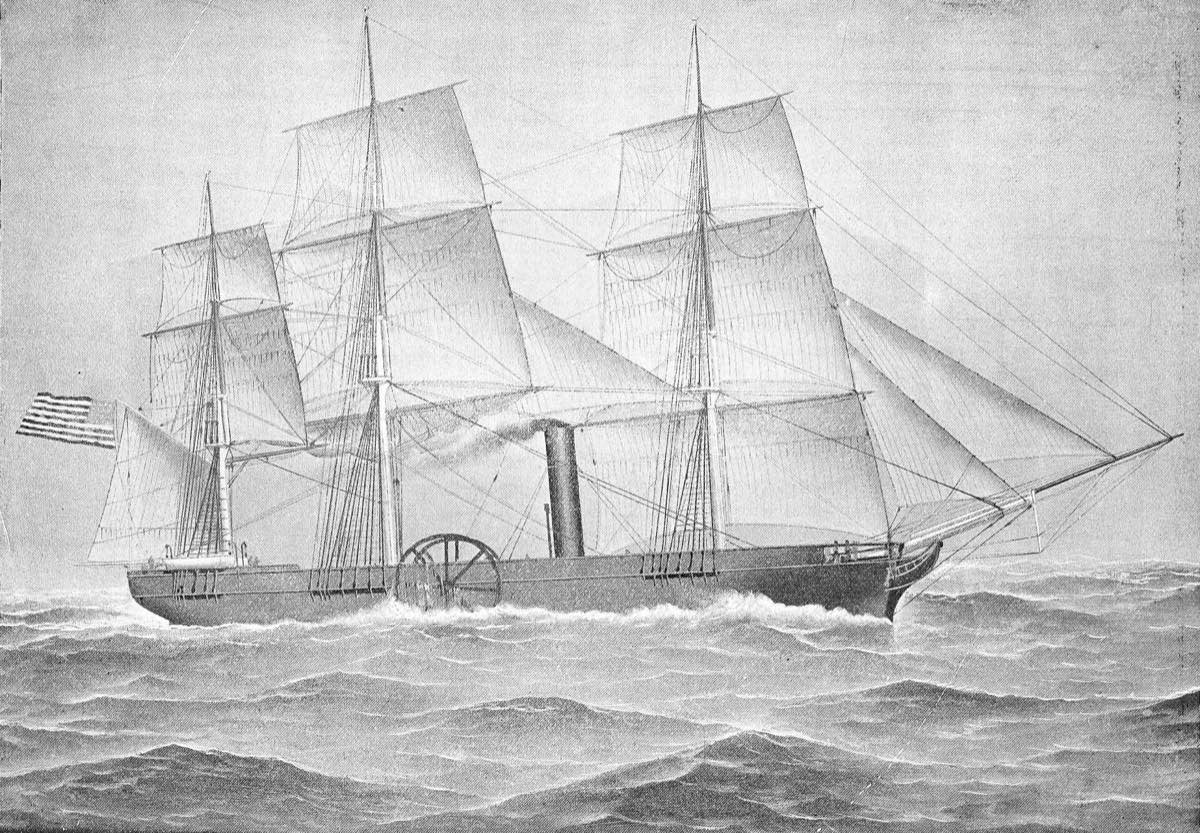
After the War of 1812, businessmen in Savannah, Georgia, wanted to start an ocean steam service. William Scarbrough led them. They formed the Savannah Steam Ship Company and hired Rogers to run it.[3][5] In 1818 Rogers bought a sailing packet still on the slipway at Fickett & Crockett in New York. She was launched on 22 August 1818 and given a 90 horsepower engine and side wheels that folded onto the deck. Allaire Iron Works made the cylinder, Speedwell Ironworks in New Jersey made the rest, and Daniel Dod supplied a copper boiler.[3]
Crew were hard to find. New Yorkers called the ship a steam coffin, so the seamen had to be recruited in New London.[3] Scarbrough also invited President James Monroe, who came aboard on 11 May 1819, went out as far as Tybee Light and liked the machinery. No one bought a ticket.[3]
The 1819 Voyage
She left Savannah on 22 May 1819 and put to sea from Tybee at 5 a.m. on the 24th, with no passengers, 75 tons of coal and 25 cords of wood. That was nowhere near enough for the whole trip, so Rogers ran the engine only when needed, about 11 percent of the time.[3] On 19 June off Ireland the British cutter Kite saw the smoke, took her for a sailing ship on fire and chased her for hours. Warning shots brought Rogers to a stop, and the British sailors came aboard to look.[3] She reached Liverpool the next day.
The aim was to sell her to a government, so she toured Europe. She spent five days in quarantine at Elsinore, reached Stockholm on 22 August and became the first steamship in the Baltic. Sweden made an offer and Rogers thought it too low. She was at St. Petersburg on 13 September, and he turned down the Russians for the same reason. She left Kronstadt on 10 October and was home at Savannah on 30 November, six months and eight days after she had left.[3]
The great Savannah fire of January 1820 hit Scarbrough and his partners hard and they had to sell. The engine came out and went back to Allaire for $1,600. As a plain sailing packet she worked between New York and Savannah until she went ashore on Long Island on 5 November 1821 and broke up. Moses Rogers died of typhoid in South Carolina ten days later.[3][5] The US Post Office issued a 3-cent stamp for her on 22 May 1944, and a piece of timber that washed up on Fire Island in October 2022 is thought likely to be from her.[3]
Curaçao and Royal William
Other attempts followed, but they still leaned on sail or never became a regular service. The Dutch government bought a steamer built at Dover in 1825 as Calpe and put her in the navy as Curaçao. She left Hellevoetsluis on 26 April 1827 and reached Paramaribo on 24 May, and one source says she used steam for 11 days of the 27-day passage.[8]
Canada's Royal William went further. Built in Quebec, she left Pictou in Nova Scotia on 18 August 1833 with seven passengers and reached the Thames in 25 days. She stopped once for a day to clean her boilers and did nearly all the distance under steam. One of her owners was the Halifax merchant Samuel Cunard.[7] She was sold in England, so this voyage did not start a regular service either.[7]
How the Race Began
One of the first to argue for a regular line was the American lawyer Junius Smith. In 1832 he spent 54 days crossing on a sailing packet and then published a plan for a steamship line between London and New York. It became the British and American Steam Navigation Company.[6]
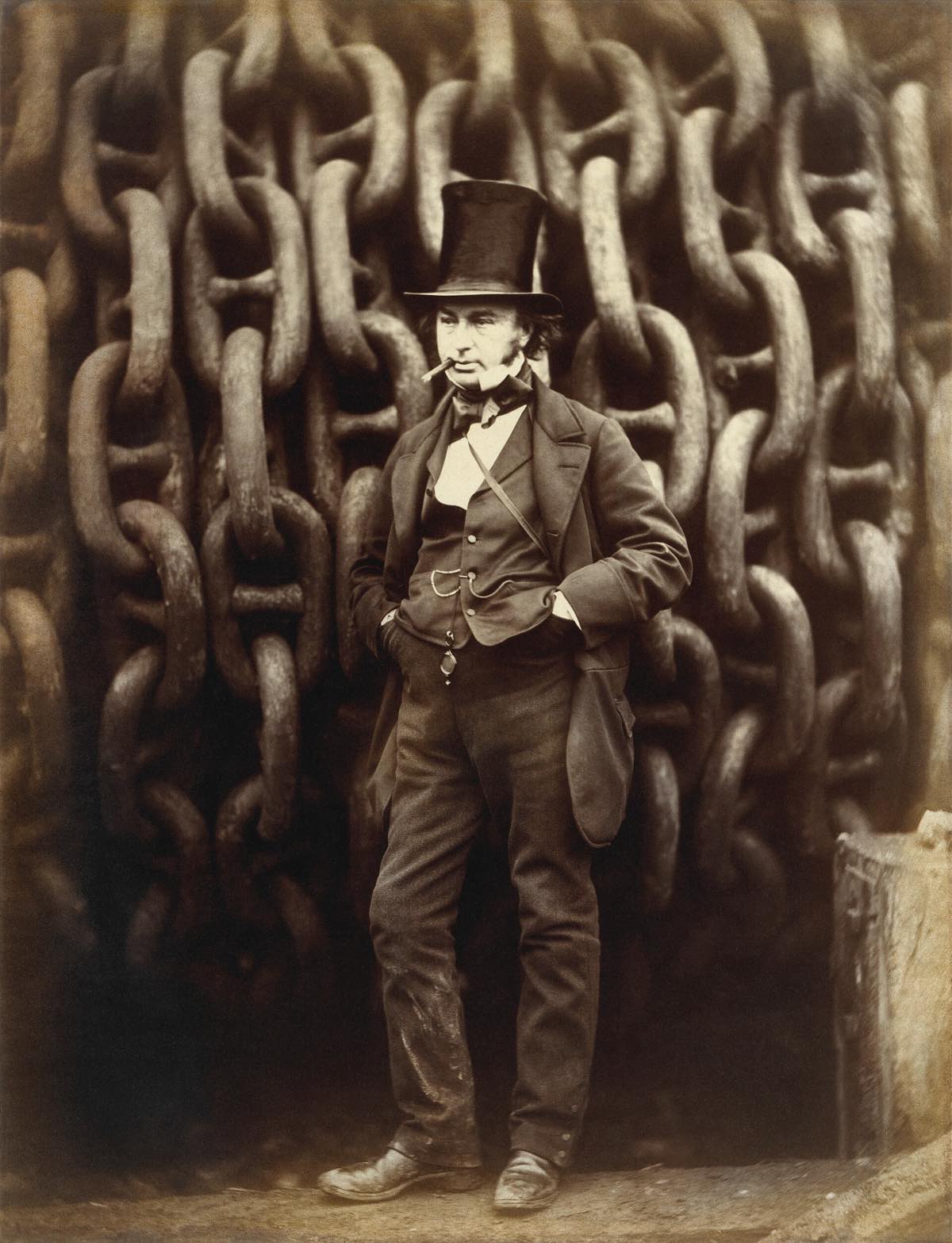
In Bristol another group was getting ready. Isambard Kingdom Brunel, engineer of the Great Western Railway, formed the Great Western Steamship Company in 1836 with his friend Thomas Guppy and Bristol investors. Coal was the obstacle, because a ship carrying enough for the ocean had little room left for cargo. Critics said the proposed ship was too big. Brunel's sum pointed the other way, since capacity rises with the cube of a ship's dimensions and resistance only with the square. A bigger ship would burn proportionally less.[1]
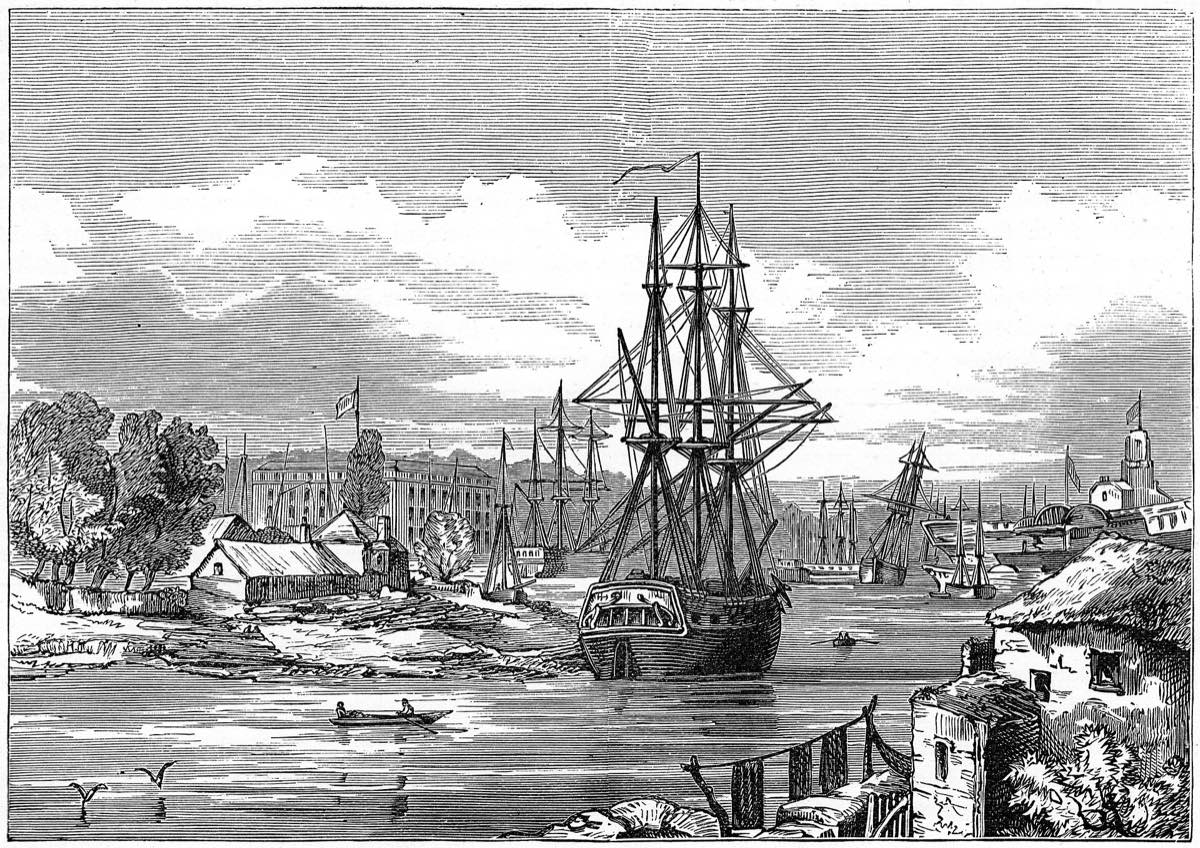
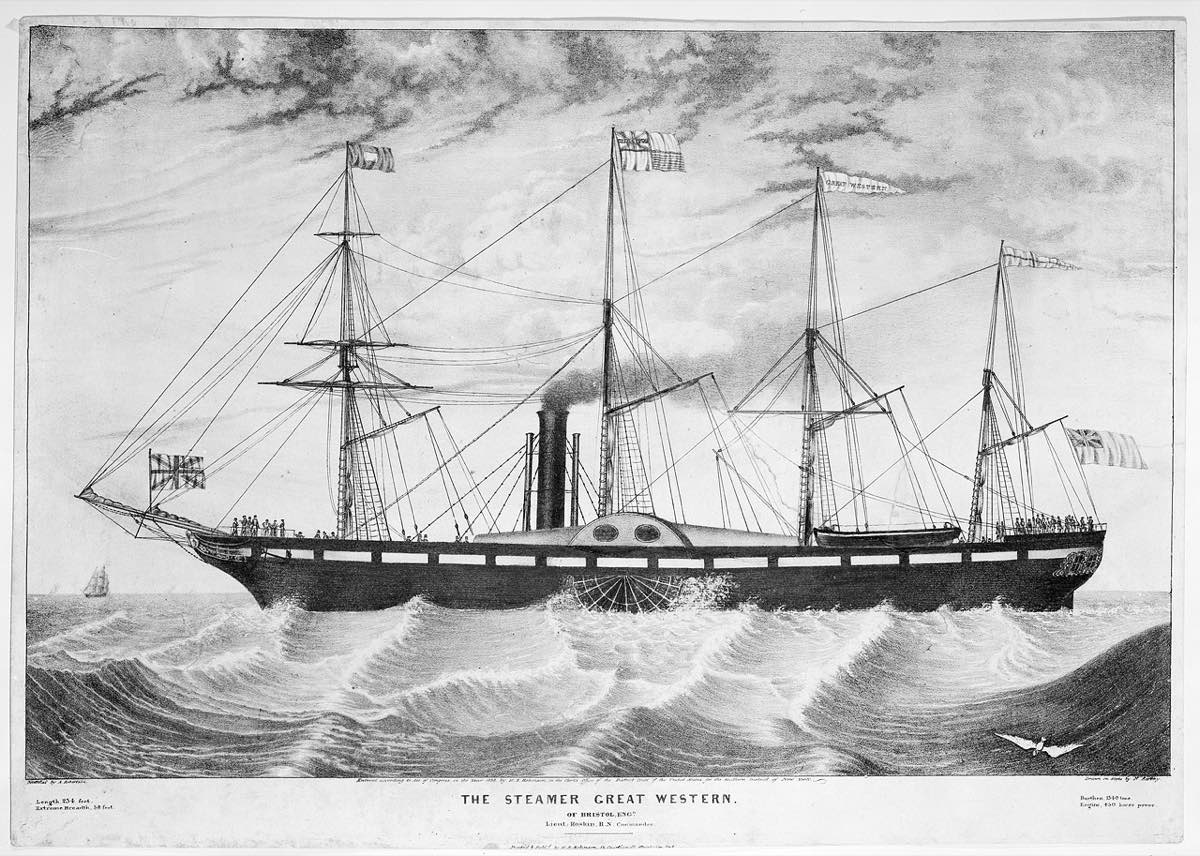
She was laid down at Patterson & Mercer's yard in Bristol on 26 June 1836 and launched on 19 July 1837, with a shipwright killed during the launch. She was 71.6 metres long and 1,700 gross tons, with an oak hull and side wheels. Maudslay, Sons and Field's engines gave 750 horsepower. She had a crew of 60 and room for 128 first-class passengers and 20 servants, and her commander was Lieutenant James Hosken.[1]
Sirius Is Chartered
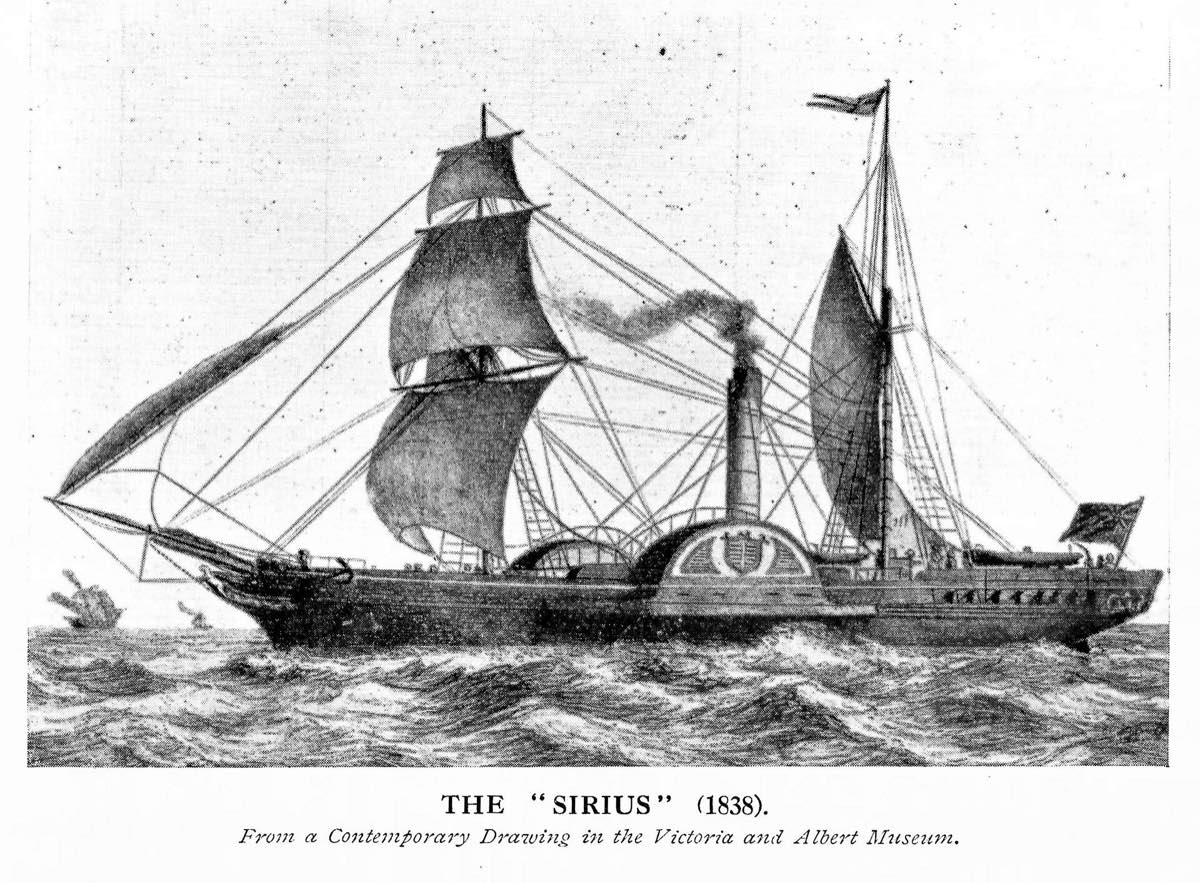
British and American's own ship, British Queen, was running late. The firm that was to build her engine had collapsed, which cost the company 18 months. To get ahead of Great Western it took Macgregor Laird's suggestion and chartered a ship for two voyages.[6] This was Sirius, belonging to the St. George Steam Packet Company of Cork. Built by Robert Menzies & Sons at Leith in 1836, she was a 703-ton ship on the Cork to London run with a 500 horsepower engine and a crew of 36. She could take up to 450 tons of coal, and her maximum range of 2,897 miles at 6.7 knots was very close to the distance from Cork to New York. Command went to Richard Roberts of Waterford, a former Royal Navy lieutenant.[2][4]
On 31 March 1838, as Great Western came down the Thames for Bristol, a fire broke out in her engine room. Brunel fell about six metres going to look at it, was hurt and was put ashore on Canvey Island. More than fifty passengers cancelled on hearing the news.[1] Sirius left Cork on 4 April with 45 passengers, five over her capacity, and extra coal. Great Western left Avonmouth on 8 April with seven passengers.[1][2]
Arrival in New York and the Coal Legend
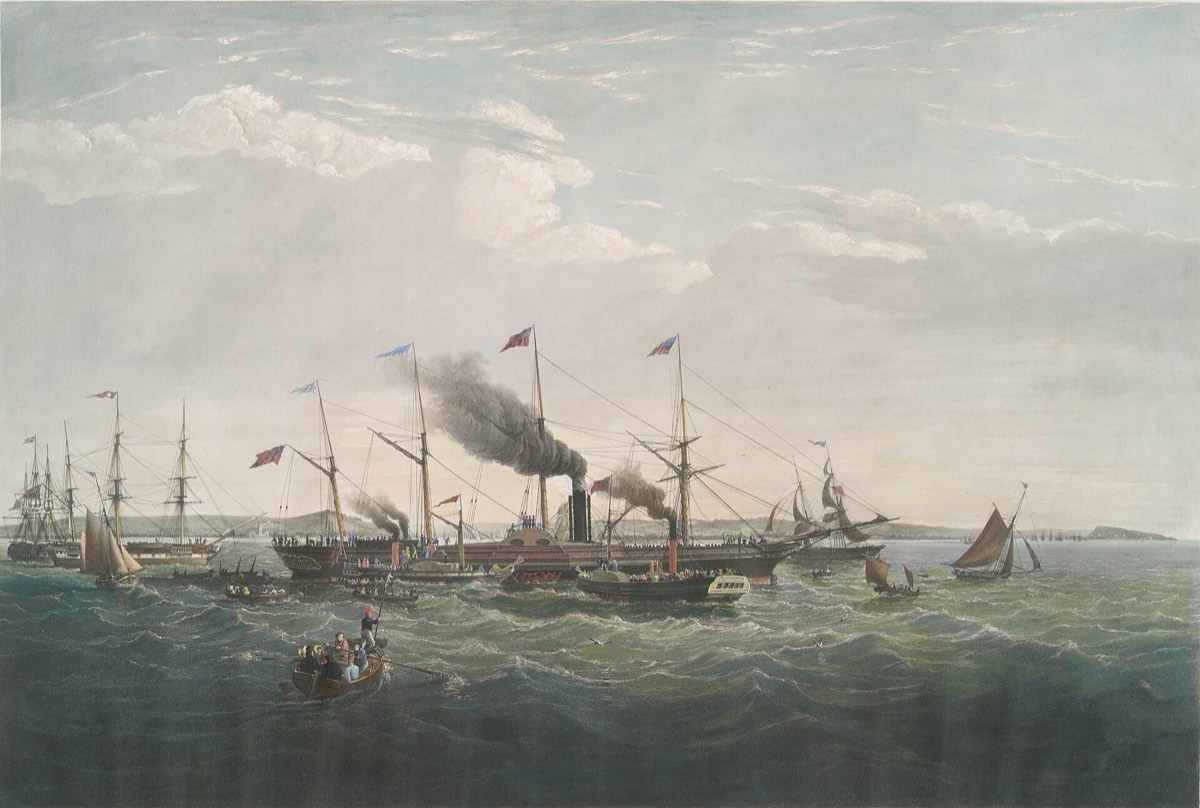
Sirius reached New York on 22 April 1838 after 18 days, 4 hours and 22 minutes, averaging 8.03 knots. The papers were soon saying that the coal ran out and the crew fed the cabin furniture, spare yards and a mast into the boilers, a tale said to have inspired a scene in Jules Verne's Around the World in Eighty Days. The record shows she burned four barrels of resin and arrived with 15 tons of coal.[2] Her condenser, an early system that gave the boilers fresh water and cut down on trouble with salt, also pushed up her coal consumption.[2]
Great Western came in the next day, took the record at 8.66 knots and had nearly caught a rival that left four days ahead of her. She still had 200 tons of coal on board.[1][2] The gap between those two coal figures was Brunel's sum proved. The small ship had arrived at the limit, and the big ship could do it again.
Regular Service and After
Between 1838 and 1840 Great Western averaged 16 days westbound and 13 days 9 hours eastbound. A sailing packet going west could take up to 40 days.[1][2] The company gave up Avonmouth for Liverpool in 1843. When its bigger ship Great Britain ran aground in September 1846, sailings stopped and the company folded. Great Western went to Royal Mail on 24 April 1847, worked the West Indies and South America, carried troops in the Crimean War and was broken up at Millbank on the Thames in 1856.[1]
British Queen finally entered service in 1839, and Roberts was given the 2,350-ton President. She left New York in March 1841, was seen struggling in a gale the next day and never seen again. All aboard were lost, including Roberts and the well-known actor Tyrone Power, and the company went with her.[4][6]
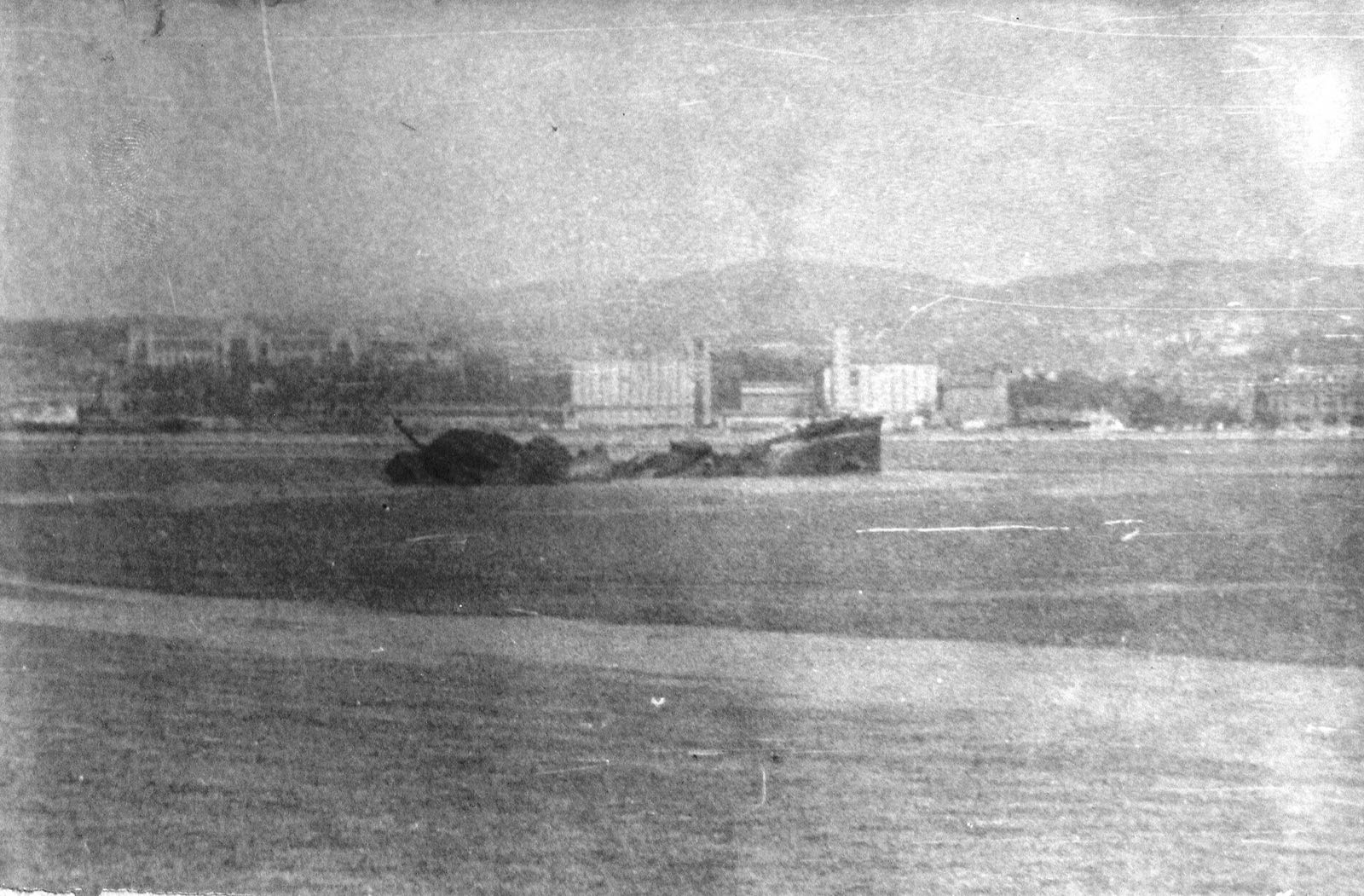
Sirius went back to her owners and short routes. In 1839 they bid for the Atlantic mail contract, the Admiralty turned them down, and it went to Samuel Cunard.[2] From late 1840 she spent over two years at Hull waiting for new boilers. On 16 January 1847, on a run from Glasgow to Dublin and Cork, she hit rocks in fog near Ballycotton, filled and broke up on Smith's Rocks, and 20 people died. The wreck led to the lighting of Ballycotton lighthouse in 1851.[2]
The same reckoning, how much fuel to sail with and how much cargo space to give up for it, is made today around marine fuel types and bunkering ports.
Frequently asked questions
What was the first steamship to cross the Atlantic?
Savannah made the first steam-assisted crossing in 1819. Sirius and Great Western opened the way for crossings under steam alone in 1838.
Did Sirius really burn its furniture?
Newspapers of the day said so. The record shows she burned four barrels of resin and reached New York with 15 tons of coal.
Why does Great Western matter?
She proved Brunel's argument for bigger ships. She reached New York with 200 tons of coal left and showed that regular steam service could work.
Sources
- Wikipedia. SS Great Western.
- Wikipedia. SS Sirius (1837).
- Wikipedia. SS Savannah.
- Wikipedia. Richard Roberts (Sea Captain).
- Wikipedia. Moses Rogers.
- Wikipedia. British and American Steam Navigation Company.
- Wikipedia. SS Royal William.
- Warship Research. Dutch Paddle Steamship Zr.Ms. Curaçao; Royal Museums Greenwich. Z.M. Stoomschip Curaçao, collection record.