Types of Marine Fuel and Their Properties: A Guide
Quality parameters, energy and emission values of conventional and alternative marine fuels, and the rules that apply to them.
Marine fuels fall into two broad groups: conventional petroleum fuels and alternative fuels. The conventional group covers residual fuels (HSFO, VLSFO, ULSFO) and distillates (MGO, MDO). The alternative group covers LNG, LPG, methanol, ethanol, ammonia, hydrogen and biofuel blends. Three things decide which fuel a ship uses: the sulphur limit in force, the technical design of its engines and tanks, and whether the fuel can be bought at the ports on its route.
The world fleet still runs overwhelmingly on petroleum. According to data the International Maritime Organization (IMO) collects from ships of 5,000 GT and above, 211 million tonnes of fuel were consumed in 2023, and 93.52% of that was heavy fuel oil, light fuel oil or diesel and gas oil. In the same year LNG consumption was 12.9 million tonnes, biofuel 390,846 tonnes, LPG 242,292 tonnes and methanol 93,876 tonnes.[2] Alternative fuels attract most of the attention, but conventional fuels still do most of the work.
Marine Fuel Types Compared
The table below brings together the basic properties of the main fuels. Calorific values and carbon dioxide (CO₂) factors are the default values in the EU's FuelEU Maritime Regulation, and a measured value for an actual parcel may differ. The CO₂ column shows combustion emissions only.
| Fuel | Type | Sulphur | Lower calorific value (MJ/kg) | CO₂ (t/t fuel) | Main use |
|---|---|---|---|---|---|
| HSFO | Residual | Above 0.50% | 40.5 | 3.114 | Ships with scrubbers |
| VLSFO | Residual or blend | Max 0.50% | 40.5 | 3.114 | Voyages outside ECAs |
| ULSFO | Residual or blend | Max 0.10% | 40.5 to 41.0 | 3.114 to 3.151 | Voyages inside ECAs |
| MGO, MDO | Distillate | As ordered, within the legal limit | 42.7 | 3.206 | ECAs, port stays, small vessels |
| LNG | Liquefied gas | Very low | 49.1 | 2.750 | Dual-fuel ships |
| LPG | Liquefied gas | Very low | 46.0 | 3.000 to 3.030 | Mostly LPG carriers |
| Methanol | Alcohol | Very low | 19.9 | 1.375 | Container ships, ferries |
| Ammonia | Carbon-free fuel | None | 18.0 to 18.6 | 0 | First vessels |
| Hydrogen | Carbon-free fuel | None | 120.0 | 0 | Short-range pilot projects |
Source: FuelEU default values.[5] The sulphur column describes the character of each fuel. The legal limit depends on where the ship is.
The Properties That Define a Marine Fuel
Judging a fuel choice properly starts with its quality parameters. The reference standard for petroleum marine fuels is ISO 8217. It sets categories and limits, and it leaves the maximum sulphur to statutory requirements, with the purchaser expected to define the value.[3]
Viscosity
Viscosity is a fuel's resistance to flow, measured in mm²/s (cSt). It is determined at 50 °C for residual fuels and at 40 °C for distillates, so a 380 cSt fuel oil and a 3 cSt gas oil are not being compared at the same temperature. Viscosity also gives a fuel its name: the 380 in RMG 380 is the maximum viscosity. On its own, it says nothing about quality or sulphur.
Density
Density is given in kg/m³ at 15 °C. It is used to calculate tonnage and has a direct effect on fuel treatment, because centrifugal separators remove water by density difference. ISO 8217 therefore caps RMG at 991 kg/m³ and allows the more viscous RMK up to 1,010 kg/m³.[3] High-density fuel requires suitable treatment equipment on board.
Ignition Quality and CCAI
The ignition behaviour of residual fuels is assessed with CCAI, the calculated carbon aromaticity index. It is derived from density and viscosity:
CCAI = D − 81 − 141 × log₁₀[log₁₀(V + 0.85)] − 483 × log₁₀[(T + 273) / 323]
Here D is density (kg/m³ at 15 °C), V is viscosity (mm²/s) and T is the temperature at which viscosity was measured (°C). An RMG 380 fuel at its limits (991 kg/m³, 380 mm²/s at 50 °C) gives a result of about 852. ISO 8217:2017 sets the maximum for this grade at 870.[3] A higher index means a greater risk of ignition delay. Distillates use the cetane index for the same purpose, with a minimum of 40 for DMA.[3]
Flash Point
Flash point is the lowest temperature at which fuel vapour can catch fire from an ignition source. As a general rule SOLAS requires at least 60 °C for marine fuels. LNG, LPG, methanol, ethanol and hydrogen fall below that value, so they come under separate safety provisions.[1][11] DMX, with a flash point of 43 °C, is not used as a main fuel in the engine room for the same reason.[3]
Stability and Sediment
The asphaltenes in residual fuels can precipitate under certain conditions. ISO 8217 limits aged total sediment to 0.10% by mass.[3] Exceeding it can block filters and separators quickly. Two fuels that are each stable can still be incompatible when mixed, which is why mixing different stems in one tank should be avoided.
Catalytic Fines, Vanadium and Sodium
Aluminium and silicon reach the fuel from catalysts used in the refinery. These hard particles wear fuel injection equipment and cylinder liners. The ISO 8217 limit for RMG and RMK is 60 mg/kg.[3] Engine makers ask for much less at the engine inlet: Gard reports their recommendations as 10 to 15 ppm.[10] The ship's fuel treatment plant has to close that gap. Vanadium and sodium can cause hot corrosion after combustion. For RMG 380 the vanadium limit is 350 mg/kg and the sodium limit 100 mg/kg.[3]
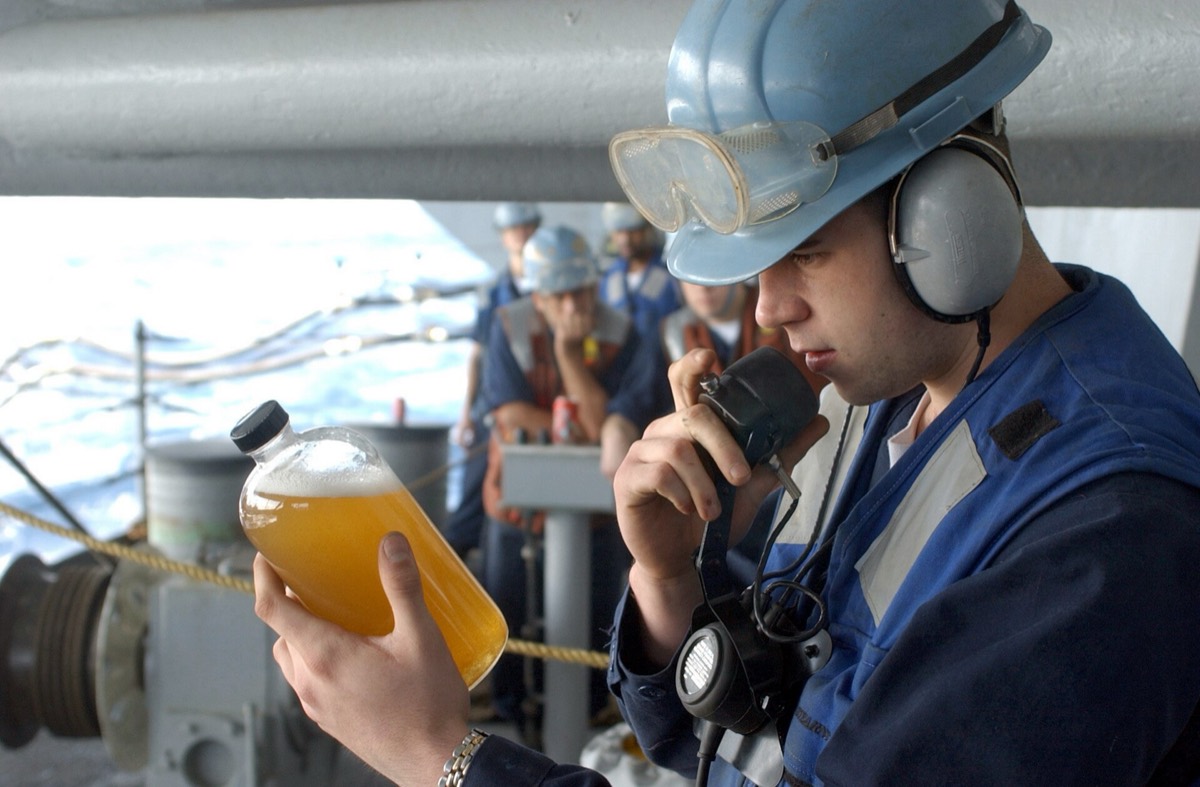
Residual and Distillate Fuel in the Refinery
A distillation column separates crude oil by boiling point. Lighter products come off the upper levels, gas oil and diesel from the middle, and the heavy fraction remains at the bottom as residue. Distillate marine fuel takes its name from this process. Residual fuel is made from the heavy components left after distillation, with lighter streams added to adjust viscosity.
That difference shapes how the fuel is handled on board. Residual fuel is very thick at room temperature. It has to be heated, left in a settling tank, passed through separators and brought to the right viscosity for injection. Distillates need little of this, although they bring problems of their own, such as low viscosity and cold flow. Our article on the oil refinery covers the process in more detail.
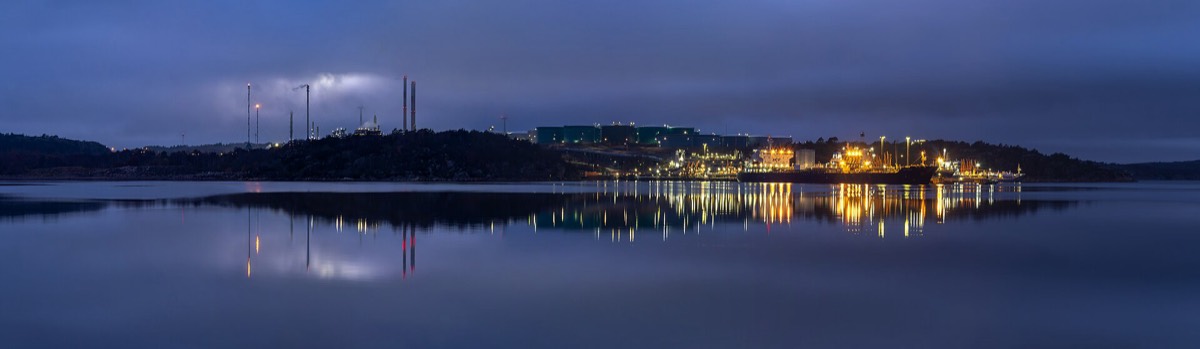
Residual Fuels: HSFO, VLSFO and ULSFO
The main difference between these three fuels is sulphur content, and ISO 8217:2024 reflects this in its tables. Residual fuels up to 0.50% sulphur are in Table 2, bio-residual fuels in Table 3 and residual fuels above 0.50% sulphur in Table 4.[4]
| ISO 8217:2024 example | Viscosity at 50 °C (mm²/s) | Sulphur group | Market name |
|---|---|---|---|
| RMG 380H | 120.0 to 380.0 | Above 0.50% | HSFO 380 |
| RMK 500H | 150.0 to 500.0 | Above 0.50% | HSFO 500 |
| RMG 380-0.5 | 120.0 to 380.0 | Max 0.50% | VLSFO |
| RMA 20-0.1 | 2.000 to 20.00 | Max 0.10% | ULSFO |
| RME 180-0.1 | 20.00 to 180.0 | Max 0.10% | ULSFO |
Source: Moeve's summary of the ISO 8217:2024 tables.[4] The full standard is a paid document, so exact limits should be checked against the original text.
HSFO
HSFO (high sulphur fuel oil) is residual fuel above 0.50% sulphur. Since 1 January 2020 it can only be used with an equivalent compliance method, even outside emission control areas. In practice that means an exhaust gas cleaning system, or scrubber. Under the carriage ban in force since 1 March 2020, a ship without a scrubber may not keep HSFO in its tanks for its own use.[1] The case for a scrubber depends on the price gap between HSFO and VLSFO and on the ports where the system can be used. Some ports and coastal states restrict open-loop scrubber discharge.
VLSFO
VLSFO (very low sulphur fuel oil) has no more than 0.50% sulphur and has been the main fuel outside ECAs since the IMO 2020 limit. There is no single VLSFO product. Low-sulphur residues and distillate streams are blended in varying proportions, so two parcels can differ markedly. When paraffinic and aromatic parcels are mixed, asphaltenes may precipitate. That is why ships commonly load a new stem into an empty tank and run a compatibility test.
ISO 8217:2024 added a minimum viscosity for residual VLSFO. For RMG 380-0.5 it is 120 mm²/s.[4] The rule limits very thin parcels that could upset heating and treatment settings.
ULSFO
ULSFO (ultra low sulphur fuel oil) is a residual or blended fuel with no more than 0.10% sulphur. It offers an alternative to MGO inside ECAs. Its advantage is that it can use the existing fuel oil line, which reduces the ship's reliance on separate distillate tanks and a changeover. Availability varies by port, so the port and the grade should be checked together before ordering.
Distillates: MGO and MDO
The distillate categories in ISO 8217 are DMX, DMA, DMZ and DMB. In the market, MGO usually means DMA or DMZ, and MDO usually means DMB.
| Category | Viscosity at 40 °C (mm²/s) | Density, max (kg/m³) | Flash point, min (°C) | Cetane index, min |
|---|---|---|---|---|
| DMX | 1.400 to 5.500 | No limit | 43 | 45 |
| DMA | 2.000 to 6.000 | 890 | 60 | 40 |
| DMZ | 3.000 to 6.000 | 890 | 60 | 40 |
| DMB | 2.000 to 11.00 | 900 | 60 | 35 |
Source: ISO 8217:2017 Table 1; cetane values match the 2024 summary.[3][4]
Needing no heating makes distillates simpler to run, but two technical issues call for attention. The first is cold flow. Paraffin crystals forming in the cold can block filters. ISO 8217:2024 requires cloud point and cold filter plugging point to be reported for DMA and DMZ and has dropped the winter and summer distinction.[4] The second is low viscosity. Fuel thins as it warms and lubrication in the fuel pumps falls, so the engine maker's inlet viscosity limit is watched and the fuel is cooled where necessary.
LSMGO is not a separate ISO category. It is a trade name for MGO with no more than 0.10% sulphur. An order should therefore state the category and the sulphur together, for example "DMA, max 0.10% S, ISO 8217:2024".
Biofuel Blends
Biofuel blends are regarded as the easiest transition option because they can be used in existing engines and tanks without major changes. ISO 8217:2024 brought the biggest change here. It removed the 7% limit on fatty acid methyl ester (FAME) in distillates and added RF categories for residual fuels. Distillates containing FAME are classed as DFA, DFZ and DFB. These categories require FAME content and net heat of combustion to be reported, with a minimum oxidation stability of 8 hours.[4]
FAME can absorb water, oxidises more readily and may degrade in long storage, so tank cleaning and consumption time should be planned. The standard measures physical quality and does not show sustainability. Claiming an emissions benefit needs a separate sustainability certificate. According to Lloyd's Register, biofuel was delivered at 90 ports over the past year, with more than a quarter of those deliveries in Singapore.[8]
Alternative Fuels
With alternative fuels, emissions are only part of the decision. Tank volume, storage temperature, toxicity and port infrastructure all shape the ship's design. The values below show how much of each fuel is needed to carry the same energy as heavy fuel oil.
| Fuel | Mass needed (HFO = 1) | Tank volume needed (HFO = 1) | Liquid density (t/m³) | Boiling point (°C) | Flammable range (vol %) |
|---|---|---|---|---|---|
| Heavy fuel oil | 1.00 | 1.00 | 0.96 | Liquid at normal temperature | 0.7 to 5 |
| LNG | 0.84 | 1.91 | 0.42 | −161 | 4.4 to 17 |
| Propane | 0.87 | 1.67 | 0.50 | −42 | 1.7 to 10.8 |
| Butane | 0.88 | 1.41 | 0.60 | −0.5 | 1.4 to 9.4 |
| Methanol | 2.02 | 2.45 | 0.79 | 65 | 6 to 50 |
| Ethanol | 1.50 | 1.82 | 0.79 | 78 | 3.1 to 27.7 |
| Ammonia | 2.16 | 3.04 | 0.68 | −33 | 15.4 to 33.6 |
| Liquid hydrogen | 0.34 | 4.59 | 0.07 | −253 | 4 to 77 |
Source: ClassNK, Alternative Fuels Insight, Version 3.3.[6] The tank figures compare the volume of the fuel alone. Insulation, pressure tanks and safety distances raise the real requirement further.
In practical terms, about 840 tonnes of LNG carries the energy of 1,000 tonnes of heavy fuel oil, but it takes up about 1.9 times the volume. The same energy requires about 2,020 tonnes and 2.45 times the volume in methanol, and about 2,160 tonnes and 3.04 times the volume in ammonia.
LNG
LNG is natural gas liquefied by cooling to about −161 °C. It is carried on board in Type A, B or C tanks or in membrane tanks.[6] The IGF Code provides the safety framework. Sulphur oxide and particulate emissions are very low. CO₂ per unit of energy is also lower than for heavy fuel oil, at about 56 g/MJ against 76.9 g/MJ.[5]
The main drawback of LNG is methane slip. FuelEU default values assume that 3.1% of the fuel by mass escapes in a medium-speed Otto engine, 1.7% in a slow-speed Otto engine and 0.2% in a slow-speed diesel-cycle engine.[5] Engine choice therefore changes the climate effect of LNG directly. Its infrastructure is the most developed among alternative fuels: DNV data for mid-2026 show 914 LNG-fuelled ships in operation and 654 on order, and LNG can be bunkered at 222 ports.[7][8] For more, see our articles on LNG and LNG propulsion ships.
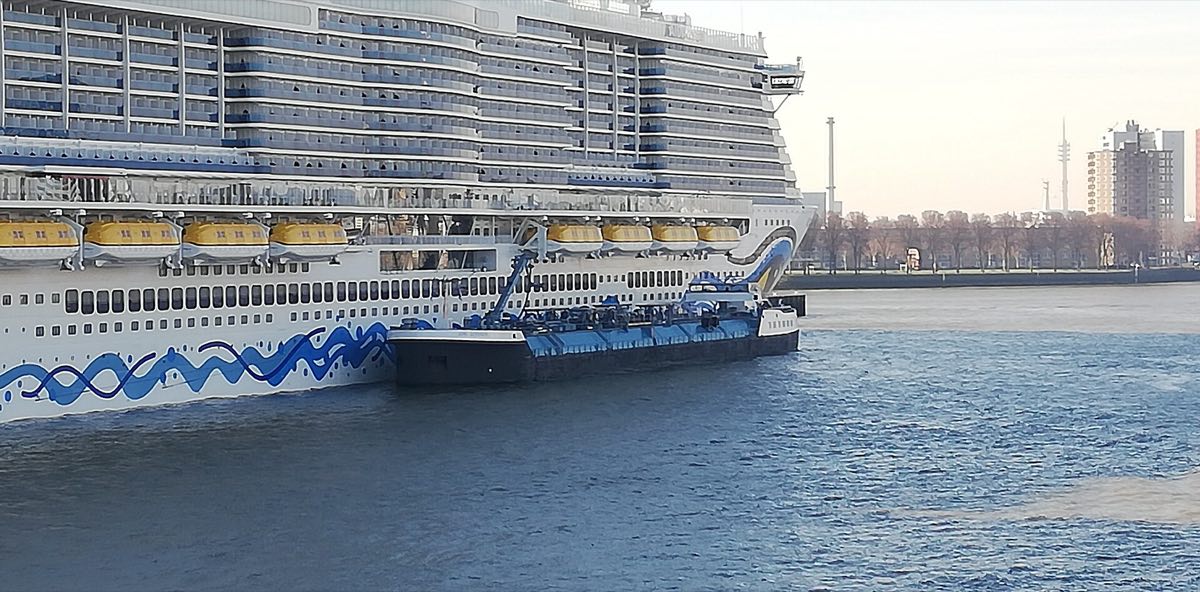
LPG
LPG is a mixture of propane and butane. It is easier to carry than LNG: propane liquefies at −42 °C and butane at −0.5 °C. IMO's interim guidelines MSC.1/Circ.1666 apply to its use on board.[6] LPG carriers, which already have the fuel on board as cargo, are the natural users. DNV data for mid-2026 show 172 LPG-fuelled ships in operation and 147 on order.[7] More detail is in our article on LPG as an alternative fuel.
Methanol
The great advantage of methanol is that it is liquid at room temperature. It needs no cryogenic tank and can be carried in normal tanks.[6] On the other hand, at 19.9 MJ/kg it takes about twice the mass for the same energy. Its flash point is 9 °C and its toxicity limit (TLV-TWA) 200 ppm.[6] Ships are therefore designed under IMO's interim guidelines MSC.1/Circ.1621.[11]
The climate effect of methanol depends on how it is made. Using FuelEU default values, methanol from natural gas reaches 103.2 gCO₂e/MJ well-to-wake, which is above heavy fuel oil. The benefit appears only with certified biomethanol or e-methanol. At the start of 2026, 385 methanol-capable ships were on order, and methanol was available at 25 ports.[8]
Ammonia
Ammonia contains no carbon, so burning it produces no direct CO₂. Its toxicity is the most serious obstacle: the TLV-TWA limit is 25 ppm and the 15-minute short-term limit 35 ppm.[6] It is hard to ignite, so engines need a pilot fuel. Combustion can also form nitrous oxide (N₂O), a powerful greenhouse gas that FuelEU counts with a 100-year global warming potential of 298.[5] The climate benefit of ammonia therefore depends on combustion control as well as production route.
Design follows the interim guidelines in MSC.1/Circ.1687.[11] In mid-2026 only 4 ammonia-fuelled ships were in operation and 43 were on order. Commercial ammonia bunkering began in April 2026 at Ulsan in South Korea.[7][8]
Hydrogen
Hydrogen has the highest energy per unit of mass (120 MJ/kg). Its density, however, is very low: 0.07 t/m³ as a liquid at −253 °C, which means about 4.6 times the volume of heavy fuel oil for the same energy.[6] A wide flammable range (4% to 77%) and very low ignition energy make safety measures harder. For these reasons hydrogen is mostly used today in short-range demonstration projects. IMO's interim guidelines are in MSC.1/Circ.1701.[8][11] Production methods are explained in our article on green hydrogen.
Well-to-Wake Emissions Compared
Comparing fuels only by the CO₂ leaving the funnel gives a misleading result, so two stages are assessed together. Well-to-tank covers production and transport, and tank-to-wake covers use on board. The total is known as well-to-wake emissions. The values below are calculated from FuelEU default factors and apply to the fossil production routes of each fuel.
| Fuel and engine | Well-to-tank (gCO₂e/MJ) | Tank-to-wake (gCO₂e/MJ) | Total (gCO₂e/MJ) |
|---|---|---|---|
| Heavy fuel oil (HFO, VLSFO) | 13.5 | 78.2 | 91.7 |
| MGO, MDO | 14.4 | 76.4 | 90.8 |
| LNG, medium-speed Otto | 18.5 | 70.7 | 89.2 |
| LNG, slow-speed Otto | 18.5 | 64.4 | 82.9 |
| LNG, slow-speed diesel | 18.5 | 57.6 | 76.1 |
| LPG, propane | 7.8 | 66.4 | 74.2 |
| Methanol from natural gas | 31.3 | 71.9 | 103.2 |
| Ammonia from natural gas, combustion engine | 121.0 | 3.0 | 124.0 |
| Hydrogen from natural gas, fuel cell | 132.0 | 0 | 132.0 |
The calculation follows the method in the FuelEU guidance, with a 100-year warming potential of 25 for methane and 298 for N₂O.[5] The guidance gives no default slip for LPG or ammonia, so slip is taken as zero here; the actual value is set by certificate.
Two conclusions follow. The advantage of LNG varies considerably with engine type. And methanol, ammonia and hydrogen made from natural gas may look clean at the funnel, yet their total emissions exceed those of heavy fuel oil. They offer a climate benefit only when produced by renewable or low-carbon routes.
The Rules That Shape Fuel Choice
MARPOL Annex VI and Sulphur Limits
MARPOL Annex VI Regulation 14 has set the global sulphur limit at 0.50% since 1 January 2020. In emission control areas (ECAs) the limit is 0.10%.[1] These areas include the Baltic Sea, the North Sea, North America and the US Caribbean. The limit took effect in the Mediterranean on 1 May 2025. It will apply in Canadian Arctic waters and the Norwegian Sea from 1 March 2027, and in the North-East Atlantic from 1 September 2028.[1][9]
The Mediterranean ECA ends in the Strait of Çanakkale, so the Sea of Marmara and the Bosphorus lie outside it.[9] Türkiye's national rules apply separately, however. Article 7 of its regulation on reducing the sulphur content of certain fuels bars fuel above 0.1% sulphur on ships at berth.[12] A letter from the Directorate General of Maritime Affairs dated 31 January 2020 also applies this limit to ships moored or anchored for more than two hours in inland waters and harbour master areas.[13]
FuelEU Maritime
The EU's FuelEU Maritime Regulation limits the greenhouse gas intensity of the energy used on board, on a well-to-wake basis. The reference value is 91.16 gCO₂e/MJ. The reduction targets are 2% in 2025 (89.34), 6% in 2030 (85.69), 14.5% in 2035 (77.94), 31% in 2040 (62.90), 62% in 2045 (34.64) and 80% in 2050 (18.23).[5] On the table above, a ship using only HFO is over the 2025 limit. A ship over the limit can pool, borrow compliance surplus or pay a penalty, calculated at EUR 2,400 per tonne of VLSFO equivalent.[5]
IMO Net-Zero Framework
IMO's Net-Zero Framework, which provides for a global fuel standard and a pricing mechanism, was approved at MEPC 83 in April 2025. The extraordinary session convened to adopt it was adjourned for a year in October 2025.[14] As of 3 November 2026 the framework has not been adopted, and talks are expected to continue in the last months of 2026. The result will bear directly on long-life ship investments.
Fuel Choice by Ship Type
An existing ship has limited options. With a scrubber it can stay on HSFO. Without one it uses VLSFO outside ECAs and MGO or ULSFO inside them. The number of tanks, the time needed to flush the fuel line and the voyage plan decide where the changeover takes place. For biofuel blends, the conditions of the engine maker, flag state and class society should be checked in advance.
A newbuilding has more options, and the decision stays with the ship for life. A container ship on a regular service can choose in advance the ports where the fuel is available. For a bulk carrier in tramp trade, wide availability matters more. DNV data show that alternative fuels accounted for 38% of newbuilding gross tonnage ordered in 2025, most of it LNG, while methanol orders fell from 149 to 61.[7] The industry has not settled on one fuel, and choices still depend on infrastructure, price and regulation.
Glossary of Bunker Terms
| Term | Meaning |
|---|---|
| BDN | Bunker delivery note. Kept on board for three years under MARPOL Annex VI Regulation 18. |
| CCAI | Calculated index of the ignition quality of residual fuel. |
| CFPP | Lowest temperature at which a fuel passes a standard filter. |
| cSt | Unit of viscosity. 1 cSt equals 1 mm²/s. |
| ECA | Emission control area. |
| FONAR | Fuel oil non-availability report. It does not by itself grant an exemption. |
| MARPOL sample | Fuel sample taken at delivery, sealed and kept for at least 12 months. |
| Off-spec | Fuel outside the ordered specification. |
| ROB | Remaining on board, the quantity of fuel left in the ship. |
| Stem | A bunker parcel confirmed for a specific delivery. |
| TSP | Total sediment potential, a measure of stability. |
The products Bunkerist supplies are on our Fuel Oil and Gas Oil page, and how we work is on our Bunker Trading page.
Frequently asked questions
What are the types of marine fuel?
Marine fuels fall into two broad groups: conventional petroleum fuels and alternative fuels.
What fuel do ships use?
Most ships use fuel oil and gas oil. IMO data show that 93.52% of the fuel consumed in 2023 was of these petroleum types. The next largest share was LNG, at 12.9 million tonnes.
What is the difference between HSFO and VLSFO?
The main difference is sulphur. VLSFO has no more than 0.50%. HSFO exceeds that and is used on ships with scrubbers.
What is the difference between MGO and VLSFO?
MGO is a distillate and needs no heating. VLSFO usually contains residual components and needs heating and treatment. Because 0.50% sulphur is too high inside an ECA, a ship without a scrubber uses MGO or ULSFO there.
What is the cleanest marine fuel?
There is no single answer, because the result depends on the production route. Hydrogen and ammonia made from natural gas emit little at the funnel, yet their total emissions are higher than those of heavy fuel oil. Made with renewable energy, they look very different.
Is LNG cleaner than heavy fuel oil?
It is markedly cleaner on sulphur and particulates. For total greenhouse gases the gap depends on the engine: FuelEU default values give 89.2 to 76.1 gCO₂e/MJ, against 91.7 for heavy fuel oil.
Sources
- International Maritime Organization (IMO). MARPOL Annex VI, Regulation 14; IMO 2020: Cutting Sulphur Oxide Emissions; MEPC.305(73). London.
- International Maritime Organization (IMO). Report of Fuel Oil Consumption Data Submitted to the IMO Ship Fuel Oil Consumption Database in GISIS, Reporting Year 2023. MEPC 82/6/38, 26 July 2024.
- ISO 8217:2017. Petroleum Products: Fuels (Class F), Specifications of Marine Fuels, Tables 1 and 2. International Organization for Standardization, Geneva.
- Moeve. Changes in ISO 8217:2024 (summary of ISO 8217:2024). Lloyd's Register FOBAS. FAQ on ISO 8217:2024, 2024. The full text of the standard was not consulted; these summaries were used.
- European Commission. Guidance on the FuelEU Maritime Regulation for Shipping Companies, 8 October 2025; Regulation (EU) 2023/1805, Annexes I and II.
- ClassNK (Nippon Kaiji Kyokai). Alternative Fuels Insight, Version 3.3, July 2026.
- DNV. Alternative Fuels Insight data: LNG-Fuelled Container Ships Sustain Alternative Fuel Share of Global Orderbook Amid Industry Slowdown, 2026; as reported by ENGINE, June 2026.
- Lloyd's Register. Fuel for Thought: Ports, 2026 (as reported by gCaptain).
- International Maritime Organization (IMO). Resolution MEPC.361(79), Mediterranean Emission Control Area, 2022; DNV. North-East Atlantic Joins the Expanding Network of ECAs, 2026.
- Gard. Alert No. 01-14: Prevention of Engine Damage due to Cat Fines, 2014.
- International Maritime Organization (IMO). IGF Code; interim guidelines MSC.1/Circ.1621 (methyl and ethyl alcohol), MSC.1/Circ.1666 (LPG), MSC.1/Circ.1687 (ammonia), MSC.1/Circ.1701 (hydrogen); SOLAS II-2/4.2.1.
- Republic of Türkiye. Regulation on Reducing the Sulphur Content of Certain Fuels (Bazı Akaryakıt Türlerindeki Kükürt Oranının Azaltılmasına İlişkin Yönetmelik), Official Gazette, 6 October 2009, No. 27368, Article 7.
- Istanbul and Marmara, Aegean, Mediterranean, Black Sea Regions Chamber of Shipping. Circular on Scrubber and Fuel Use in Turkish Territorial Waters, 3 February 2020 (letter of the Directorate General of Maritime Affairs dated 31 January 2020).
- Hill Dickinson. IMO's Net-Zero Framework: Adoption Adjourned, and Consensus Building Continues, 30 October 2025; Ammonia Energy Association. MEPC84: Support for Net Zero Framework Stabilizes Ahead of Key Decision Point in Late 2026, 2026.