
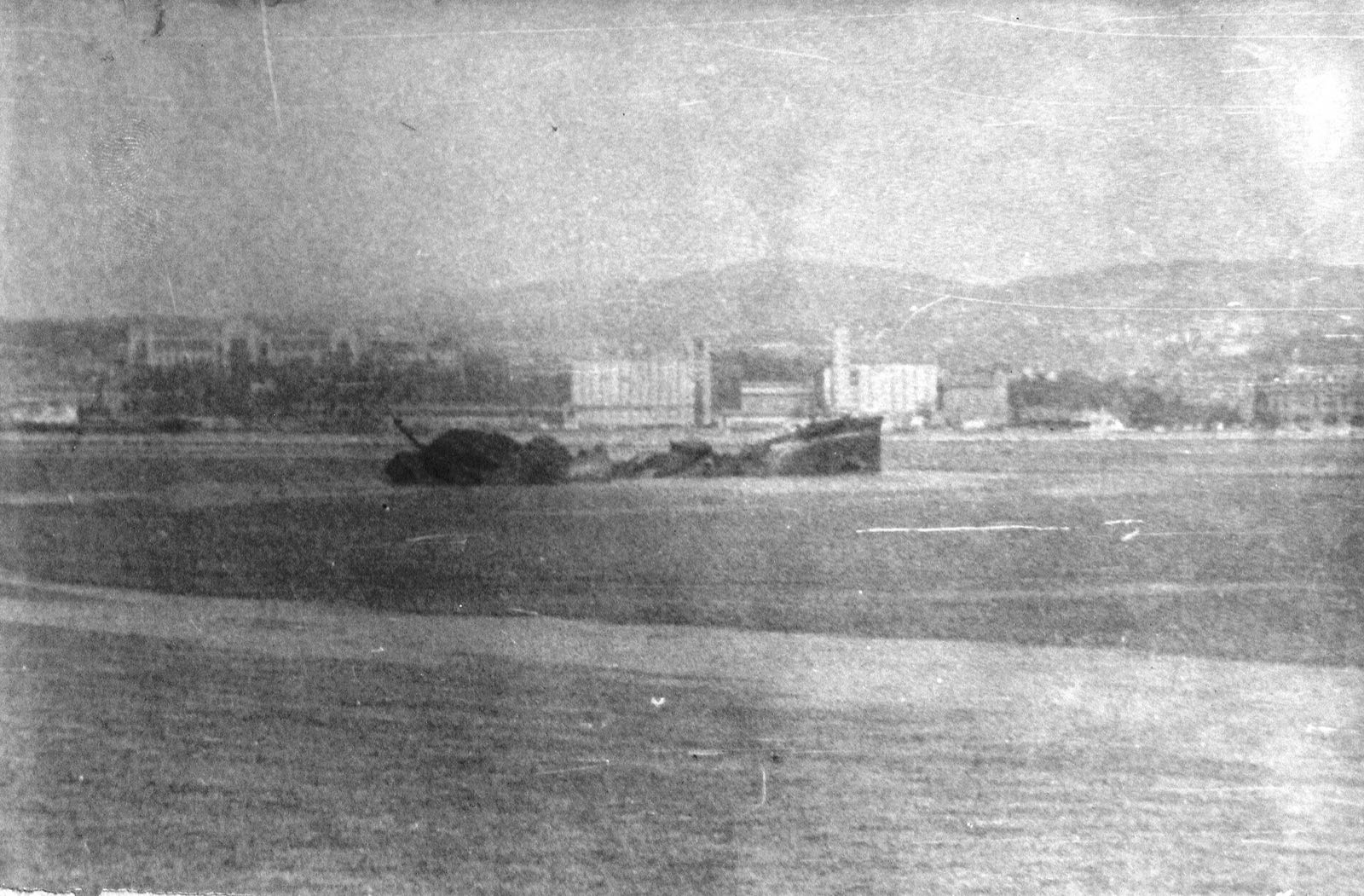
The Independența Disaster at the Bosphorus, 1979
The Independenta disaster was the collision and explosion of a Romanian tanker at the southern entrance of the Bosphorus on 15 November 1979.
The Independenta disaster was the collision and explosion of a Romanian tanker at the southern entrance of the Bosphorus on the morning of 15 November 1979, when the Greek cargo ship Evriali ran into her off Haydarpaşa. Forty-three of the tanker's crew died, the ship burned until 14 December and the strait was closed to traffic for weeks.[1][2][3] The blast was heard from Bakırköy to Pendik.[1] It remains the largest accident the Bosphorus has seen.
1977-1979Romania's Largest Ship
Independența was launched at the Constanța yard on 28 May 1977 and delivered in 1978. She was a tanker of 164,004 DWT, 283 metres long and 46 metres in the beam, and the largest ship in Romania's merchant fleet.[3] In November 1979 she loaded at Es Sider in Libya. ITOPF records 93,800 tonnes of crude and 260 tonnes of fuel oil bunkers on board, so she was sailing below capacity.[2][3]
She was bound for Constanța, which meant going through the Bosphorus to reach the Black Sea, and this would have been her nineteenth passage. To wait for a pilot she anchored about four miles off the Haydarpaşa breakwater.[3][4] No traffic centre watched the strait in those years.[1]
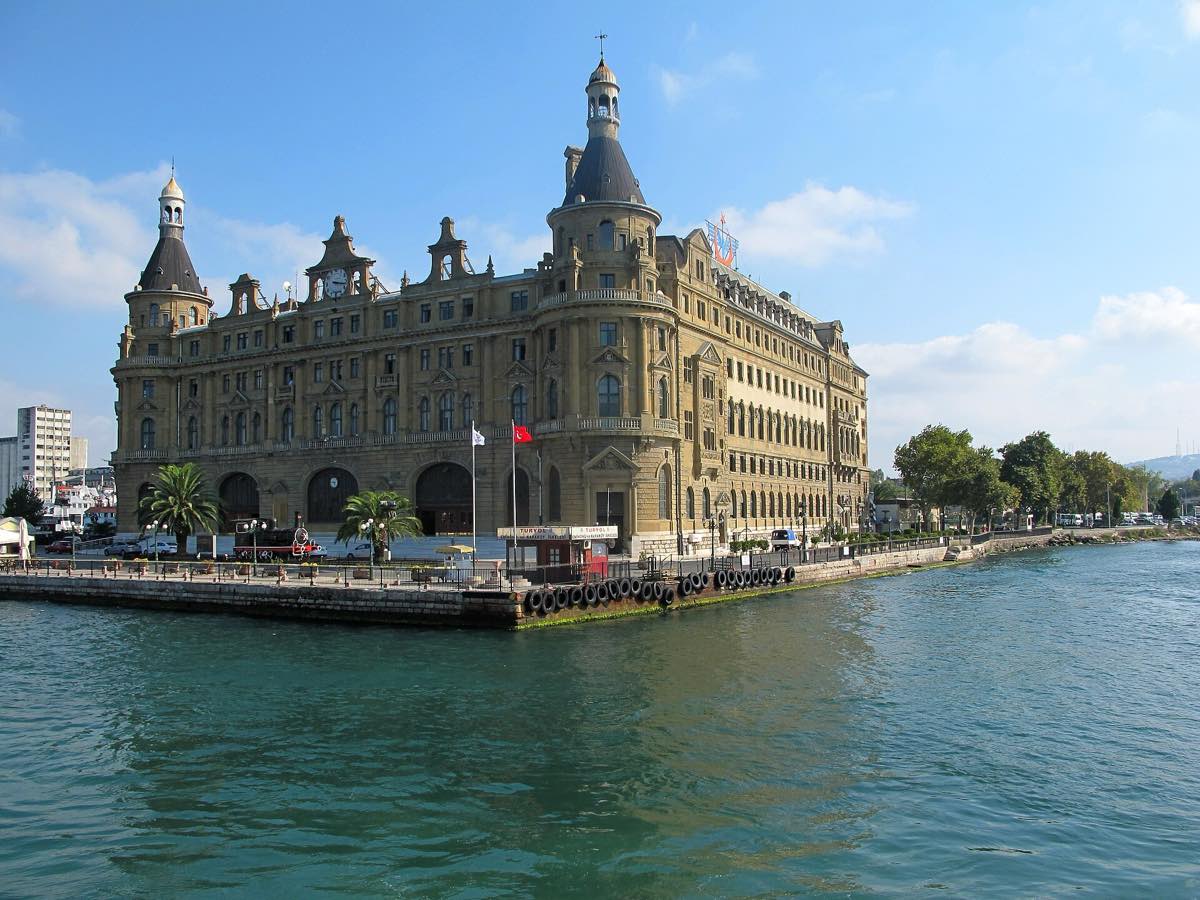
Evriali was coming the other way. The 10,000 DWT Greek ship was carrying 7,400 tonnes of steel from Mariupol to Italy. She had come in from the Black Sea, passed through the strait and dropped her pilot.[3]
November 1979The Collision and Three Explosions
Sources disagree on the time. Wikipedia's account gives 04:35, while accounts based on Turkish reports of the day give 05:30.[1][3][5] Evriali struck the tanker's starboard side between tanks 3 and 4. One account has the departing pilot leaving her on a course of 260 degrees and the ship turning to 160 instead.[3] Neither ship had a pilot aboard at that moment, and weather and visibility did not stand in the way of navigation.[1]
The first explosion came with the impact, the second about three minutes later and the third at 04:47.[3] One Turkish source says the tanker blew up 45 minutes after the collision, a detail that varies from source to source.[6] The blast shattered windows in houses overlooking the strait, and ITOPF records reports of damage to buildings up to six kilometres away.[1][2]
Part of the crew stayed aboard after the tanker caught fire. According to the marine surveyor Ünal Bayram, the worst mistake was the crew's belief that they could put the fire out themselves, and it cost lives.[6] Most of those who jumped did not survive either, because burning oil was spreading on the water and a south-easterly wind was pushing it towards the shore. Those who went in on the upwind side were picked up by boats.[3][4]
The death toll is 43 in Turkish sources and 42 in the records of ITOPF and France's spill agency Cedre. Cedre has 44 people on board and two survivors, while others speak of three. Burned bodies washed ashore for days.[2][3][4][6]
The tanker broke in two and her stern sank. The bow drifted, listing, and grounded about half a mile off Haydarpaşa harbour. The fire on Evriali was brought under control the same day and she went aground on the European shore.[3][4]
December 1979Twenty-Nine Days of Fire
The Turkish Navy attacked the fire and sprayed dispersant, then pulled back because of its intensity. The risk of another explosion kept crews from getting close. Booms went round the burning hull and sensitive sites, with Istanbul and Haydarpaşa harbours protected first.[2][3][4] The shipowner brought in equipment from Britain with ITOPF's help, and the Turkish government asked ITOPF for experts. Responsibility passed to the Marmara regional directorate on 19 November.[2][3]
After that it was a matter of waiting. Further explosions on 18 November released more oil. A light leak continued from 17 to 27 November. A big explosion followed at 22:40 on 6 December. The fire burned itself out on 14 December when there was nothing left to burn.[2][3][4] Taşlı's study gives 29 days and the Turkish press 27. Hundreds of people watched from the customs yard at Harem, Moda Point and Kalamış Bay.[1][6][7]
The tanker burned from 15 November to 14 December.
Airborne particulates reached four times the permitted limit during the fire. Beaches and shore structures along the Marmara and the strait were coated in oil. About 50 tonnes got into Haydarpaşa harbour in spite of the boom across its mouth. The mass balance is unclear. One calculation has about 30,000 tonnes burned and 64,000 spilled, with the light fractions evaporating and the rest sinking over a stretch of seabed of about 5.5 km. ITOPF says most of the oil was consumed in the fire and shoreline contamination stayed comparatively light.[1][2][3] Its experts visited over the following nine months and assessed claims for the P&I club.[2]
The Trial and the Question of Fault
Evriali's 29-year-old master, Alekos Adamopoulos, and seven of his crew were arrested. The charges were carelessness, negligence, breaking international navigation rules and endangering Istanbul. He was sentenced to 20 months and released after the seven he had spent in custody, the remainder converted into an $850 fine.[3][4]
The expert report found major fault with Evriali and minor fault with Independenta.[1][7] No detailed accident report has ever been made generally available. A root cause study published in 2024, working from newspaper reports and witness accounts, concluded that human error was the cause and named failure to follow the collision rules and poor communication as the main factors.[1] Rumours of sabotage for the insurance money circulated for a long time, because the Romanian owner Navrom had claimed millions of dollars. Lloyd's Register surveyors inspected the wreck for the insurers, and sabotage was never proved.[3]
1983-1987The Wreck Off Haydarpaşa
After the fire the blackened hull stayed off Haydarpaşa for years, in water used by local ferries, and Istanbul came to treat it as part of the view.[6] A ferry hit it in 1983. Local salvors then took it apart and the pieces went to a yard at Tuzla, a move one Turkish source dates to 1987.[2][3][7]
Independența was the first of five Romanian supertankers from Constanța. Unirea sank off Bulgaria in the early 1980s. Biruința later became Iris Star and on 27 July 2000 lost power in the Bosphorus and drifted towards Kandilli Point, escaping without major damage. Libertatea was scrapped in 2005, and Pacea was never finished and went to Czechoslovakia against Romania's foreign debt.[3]
1994-2003Traffic Rules in the Strait
The rules for passing through the strait stayed the same for years after the accident. On 13 March 1994 the Cypriot tanker Nassia, with about 98,600 tonnes of crude, collided with Shipbroker at the northern end of the strait. Cedre records 24 dead and 10 missing. The fire lasted days and the northern entrance was closed.[8] Turkey issued traffic regulations for the straits that same year and renewed them in 1998.[9] The Turkish Straits Vessel Traffic Service, recommended by the National Security Council in December 1995, went into operation in 2003.[1][10]
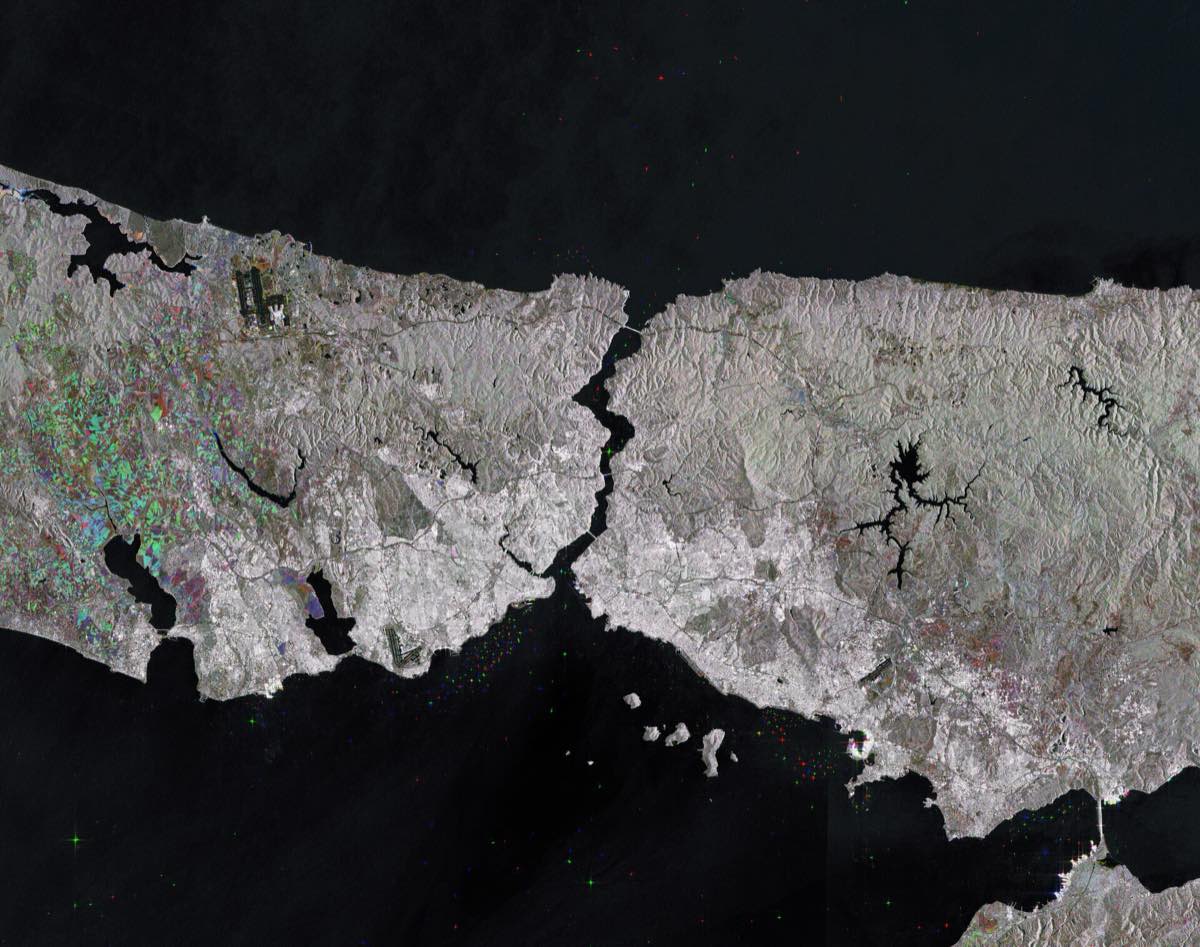
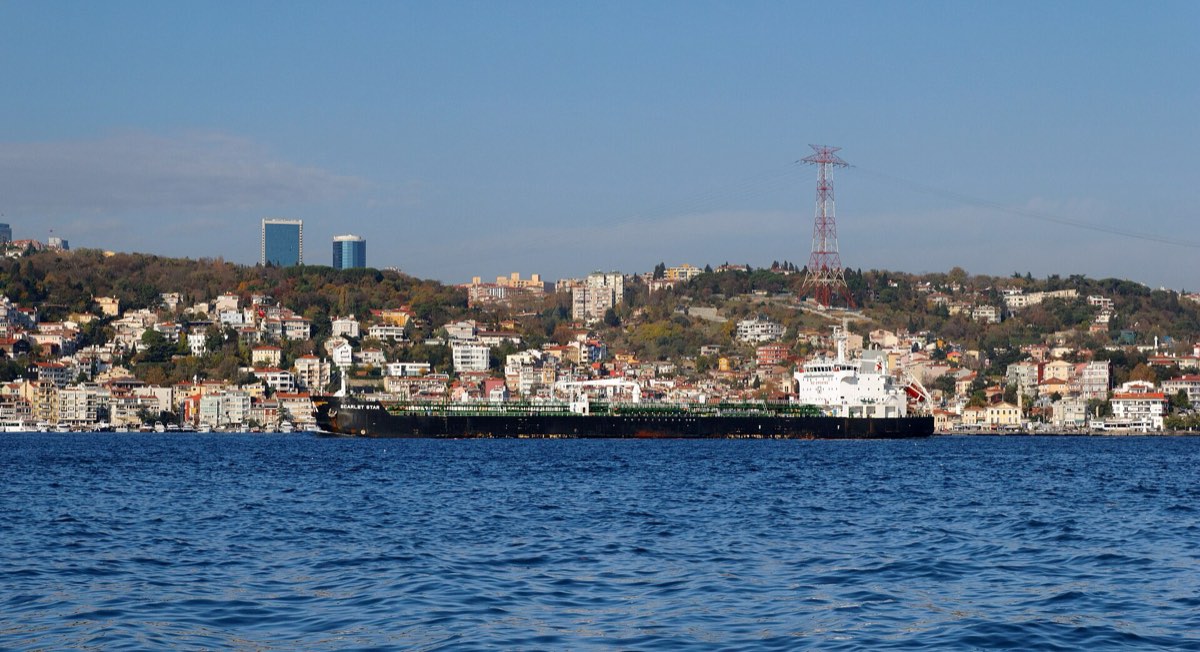
Today a tanker reports in advance and passes in the order set by the traffic centre, and the strait sees more than 8,000 tanker voyages a year.[1] Cedre also describes a study using NOAA's GNOME model to simulate how spilled oil would drift in the strait, so that responders would know which shore to protect first.[4] Details of ports and anchorages are on the Istanbul port page.
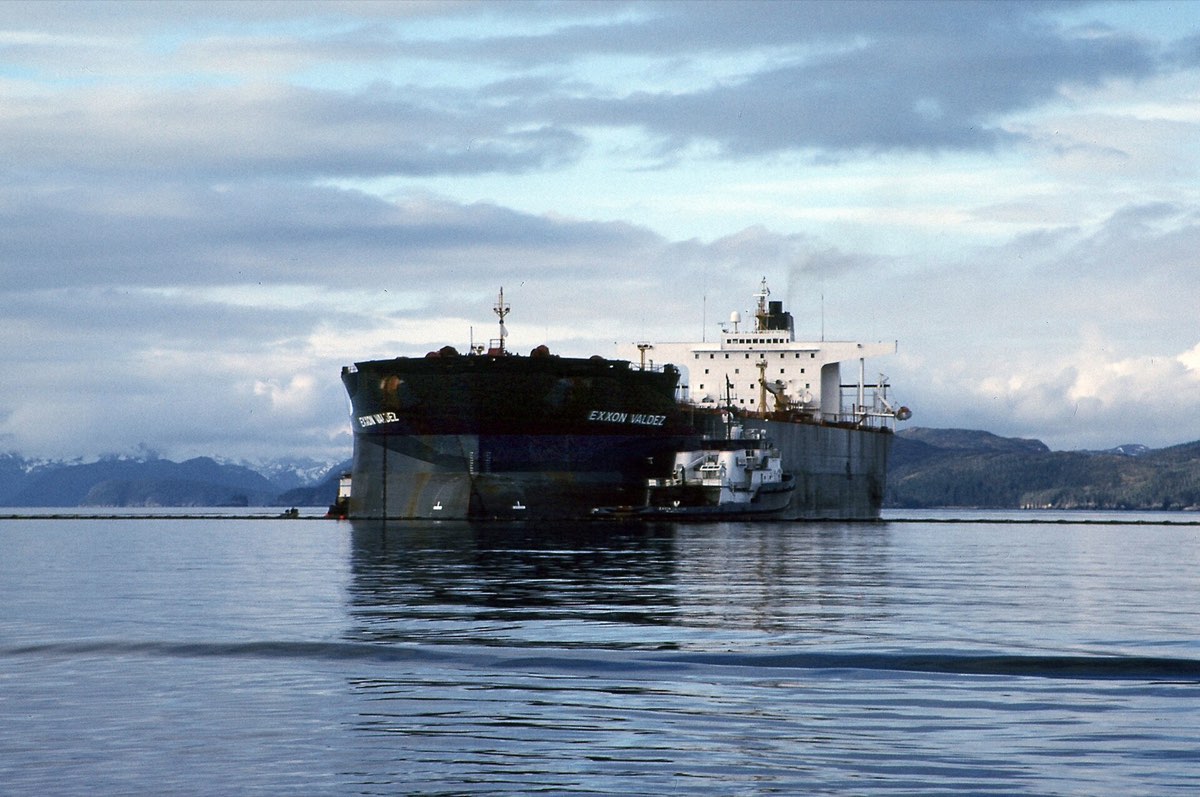
In cargo lost, Independenta was about three times Exxon Valdez. The United States passed a new oil pollution law within a year of the Alaska accident, while the Bosphorus got its traffic regulations only in 1994, after Nassia.
Frequently asked questions
What was the Independenta disaster?
The collision and explosion of a Romanian tanker at the southern entrance of the Bosphorus on 15 November 1979.
How many people died on Independenta?
Turkish sources say 43, ITOPF and Cedre 42. The number of survivors is two or three depending on the source.
How long did Independenta burn?
From 15 November to 14 December 1979, about 29 days. The fire could not be put out and died when the oil in the tanks was gone.
Sources
- Burhan Taşlı. Root Cause Analysis of İstanbul Strait Disaster M/T Independenta Accident by Fishbone Method, Journal of Maritime Research: Amphora, June 2024.
- ITOPF. Independenta, Bosphorus, Turkey, 1979.
- Wikipedia. MT Independența.
- Cedre. Independenta, incident information sheet.
- Devrim Yaylalı. The Death of MT Independenta, 15 November 2019.
- Çağrı Saçaralp. İstanbul Boğazı'ndaki en büyük tanker faciasından akılda kalanlar, GZT, 15 November 2018.
- Pınar Bağçeci. Independenta faciasının üzerinden 43 yıl geçti, TRT Haber, 2022.
- Cedre. Nassia, incident information sheet.
- OCIMF. Guidelines for Transiting the Turkish Straits, 2021.
- Assessment of the effect of maritime traffic regulations in the Istanbul Strait on accident rates, Istanbul Bilgi University thesis.
 Next part
The Night on Bligh Reef
Exxon Valdez, 1989