IMO Number and How to Verify It
An IMO number is a ship's permanent seven digit ID. Its format, a worked check digit example, which ships need one, how to look it up and the organisation behind the name.
An IMO number is a ship's permanent seven digit identity, written with the letters IMO in front, as in IMO 9576997. It stays with the hull through every change of name, flag and owner, and it is never reissued to another vessel, even after the ship has gone for scrap.[1][2] The first six digits are a serial and the seventh is a check digit that catches most typing errors. S&P Global allocates the numbers free of charge on behalf of the International Maritime Organization (IMO).
Format and Origin of the Number
The series is older than the IMO scheme itself. Lloyd's Register began giving ships permanent numbers in its printed register in 1963 and moved them to seven digits in 1969. When the IMO Assembly adopted resolution A.600(15) in 1987, it took that series as the basis.[3] The purpose was to make a ship traceable across renamings and reflaggings and to make maritime fraud harder. Casualty records, inspection results and class history can all hang on one number, so a new name on the stern does not erase what came before.
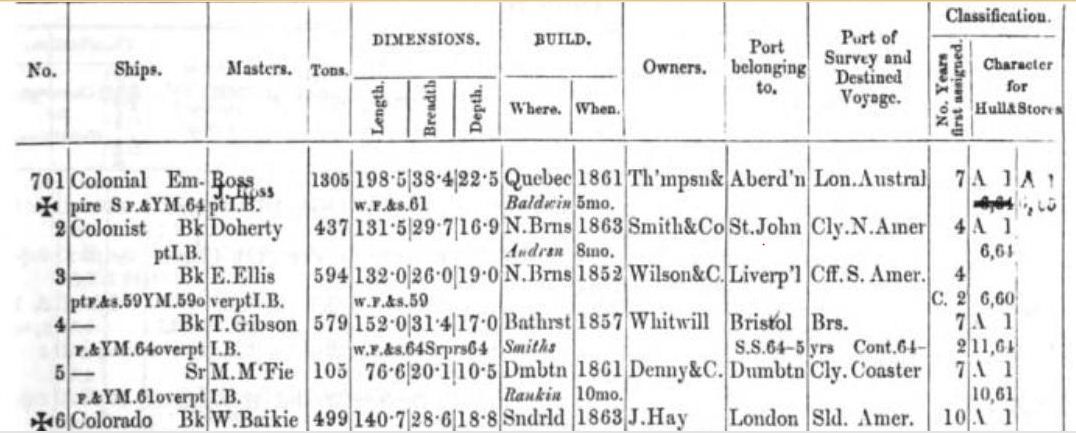
Because the last digit is calculated, the range from 1000000 to 9999999 yields about 900,000 valid numbers. S&P Global reported 453,524 of them allocated by 30 September 2022.[3] The highest number, 9999993, went out in March 2023, and new allocations now start with a 1.[4] The opening digit is therefore no reliable guide to a ship's age.
Calculating the Check Digit
Multiply the first six digits, left to right, by 7, 6, 5, 4, 3 and 2. Add the products. The last digit of the sum must equal the seventh digit of the number.[4] Here is the working for IMO 9576997.
| Position | 1 | 2 | 3 | 4 | 5 | 6 | Sum |
|---|---|---|---|---|---|---|---|
| Digit | 9 | 5 | 7 | 6 | 9 | 9 | |
| Weight | 7 | 6 | 5 | 4 | 3 | 2 | |
| Product | 63 | 30 | 35 | 24 | 27 | 18 | 197 |
The sum is 197, its last digit is 7, and the number ends in 7, so it passes. If the fifth digit is mistyped as 8, giving 9576897, the fifth product falls to 24, the sum to 194 and the calculated check digit to 4, which does not match, so the error is caught.
Some errors slip through. A difference of 2 in the third digit, which carries a weight of 5, moves the sum by exactly 10 and leaves the last digit untouched. Write 9556997 for 9576997 and the sum becomes 187, still ending in 7. The same blind spot covers any even difference in the weight 5 position and a difference of 5 in the positions weighted 2, 4 or 6. Positions weighted 7 and 3 catch every single digit error. Swapping two neighbouring digits that differ also changes the result, so transpositions fail the test.
A pass proves only that the number is well formed. It does not show that the number was ever issued, or that it belongs to the ship in question. That takes a check against an official record.
Legal Basis and Scope
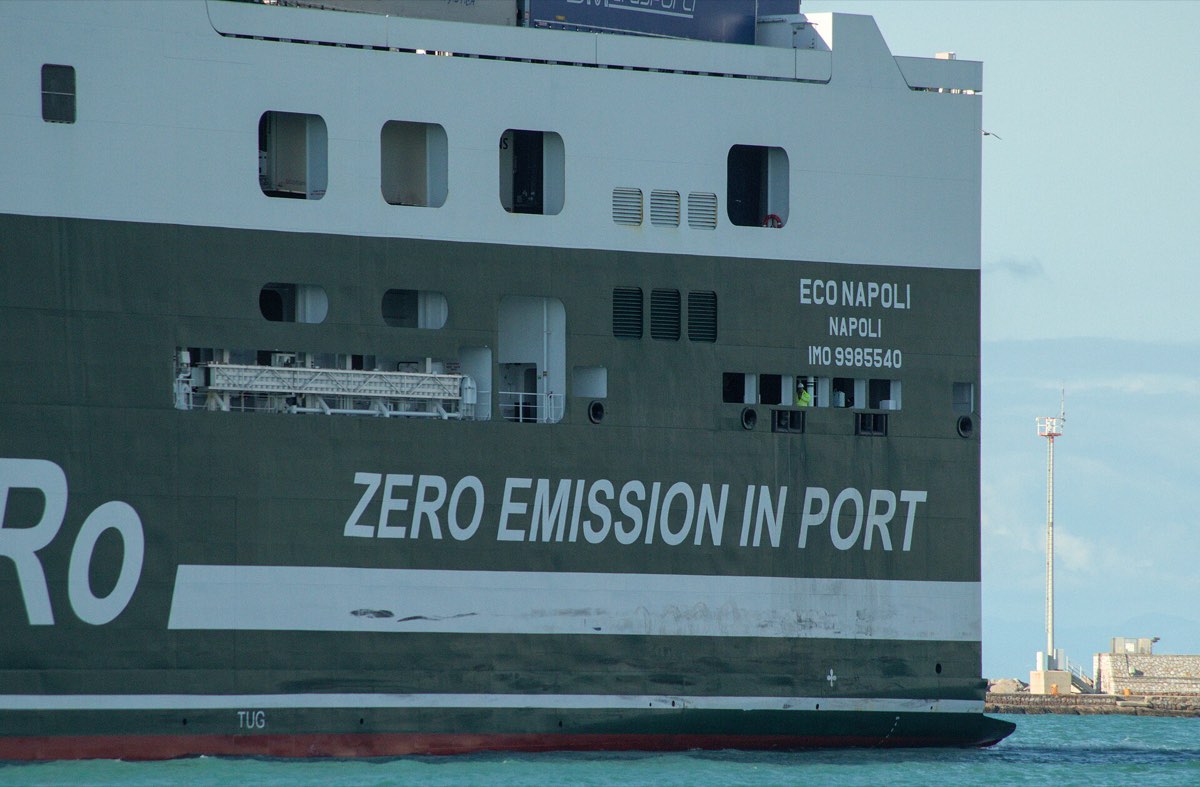
The 1987 scheme was a recommendation. Regulation XI-1/3 was added to SOLAS in May 1994 and made the number mandatory for certain ships from 1 January 1996. The Diplomatic Conference on Maritime Security of December 2002 added the requirement to mark it permanently on the hull or superstructure.[1] Resolutions A.1078(28) and A.1117(30), the latter from December 2017, widened the voluntary scope, mainly to bring in fishing vessels.[3] The text in force today is A.1215(34), adopted on 3 December 2025. It revoked A.1117(30) and merged the ship scheme with the company scheme.[2]
| Group | Status |
|---|---|
| Passenger ships of 100 GT and upwards | Mandatory (SOLAS XI-1/3) |
| Cargo ships of 300 GT and upwards | Mandatory (SOLAS XI-1/3) |
| Other ships of 100 GT and above, including steel and non-steel fishing vessels | Voluntary |
| Passenger ships under 100 GT, high-speed passenger craft and mobile offshore drilling units on international voyages | Voluntary (linked to SOLAS V/19-1) |
| Motorised fishing vessels of at least 12 m overall length authorised to work beyond national waters | Voluntary |
Source: IMO, A.1215(34), Annex, paragraphs 2 and 4.[2]
The resolution excludes ships without mechanical propulsion, pleasure yachts, special service ships such as lightships and search and rescue vessels, hopper barges, floating docks and similar structures, warships and troop ships, and wooden ships other than fishing vessels. Although fishing vessels are voluntary under the scheme, several regional fisheries bodies and the European Union require the number anyway.[3]
Allocation and Marking
A number is allocated at the time of build or when a ship first enters a register, and only on request. Owners, operators and shipyards can all apply. The applicant should tell the flag administration within one month, and there is no fee.[2] A retired number is not recycled.[3]
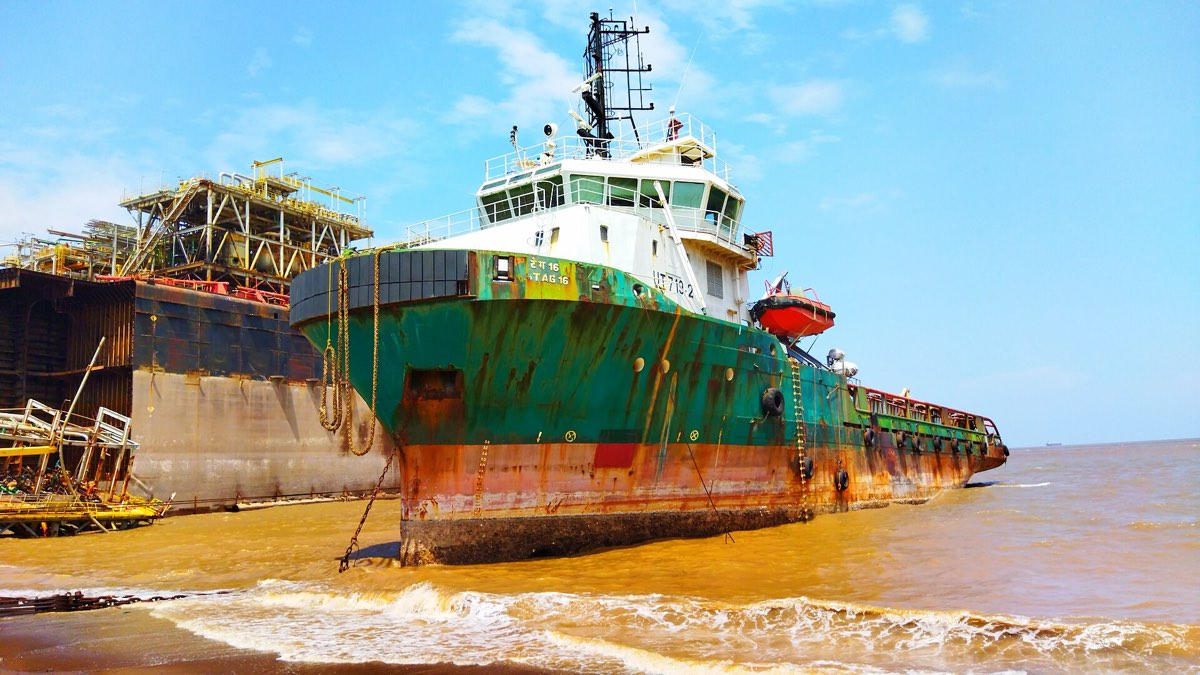
The number appears in three places. It is marked permanently and visibly on the hull or superstructure, and since 1 July 2004 passenger ships also carry it on a horizontal surface that can be read from the air. It is recorded inside the ship. And it appears on the certificate of registry and on certificates issued under IMO conventions, with class certificates recommended to follow suit.[2][4] A bunker delivery note names the ship and gives its IMO number too. In ship registration, the number is what ties the old registry entry to the new one.
Looking Up a Number
The official source is the Ship and Company Particulars module of IMO's Global Integrated Shipping Information System (GISIS). IMO also points to Equasis as a free public lookup.[1] Under A.1215(34), each number in GISIS carries a status of "in service" or "not in service". Ships that member states have declared fraudulently registered, and ships under UN sanction, are published there as well, and flag states are expected to review the data periodically and report inconsistencies.[2]
This matters more than it did a decade ago, because some ships now disguise themselves with a number belonging to another vessel. Such a number passes the check digit test without trouble. Confirming identity means comparing the marking on the hull, the certificates and the GISIS record. The legal side of the false flag problem is covered under flag state.
IMO Number, MMSI and Call Sign
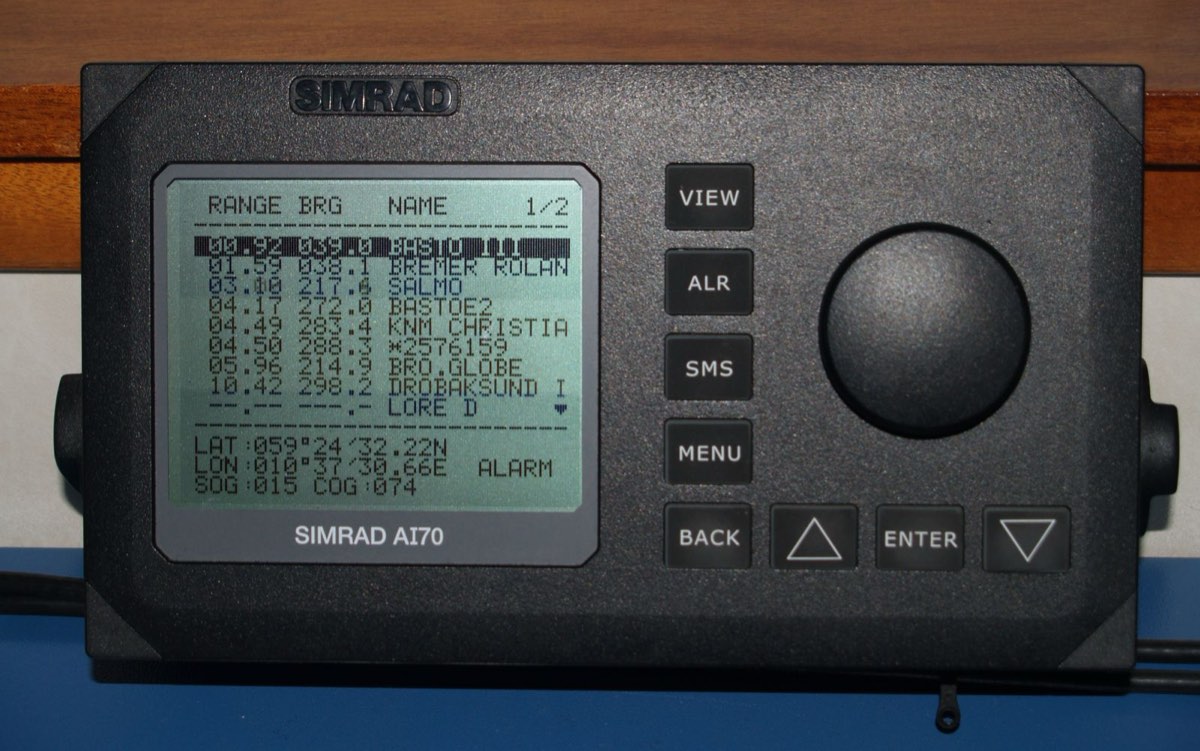
These three get confused constantly, and each does a different job. The IMO number identifies the ship. The MMSI (Maritime Mobile Service Identity) is a nine digit radio identity whose first three digits indicate the flag, so it usually changes when the flag does. The call sign is another radio identity issued by the flag administration.
| Identifier | Format | Issued by | On change of flag | Example (Kiran Bosphorus) |
|---|---|---|---|---|
| IMO number | 7 digits | S&P Global for IMO | Unchanged | 9576997 |
| MMSI | 9 digits | Flag administration | Usually changes | 229787000 |
| Call sign | Letters and digits | Flag administration | Changes | 9HA3609 |
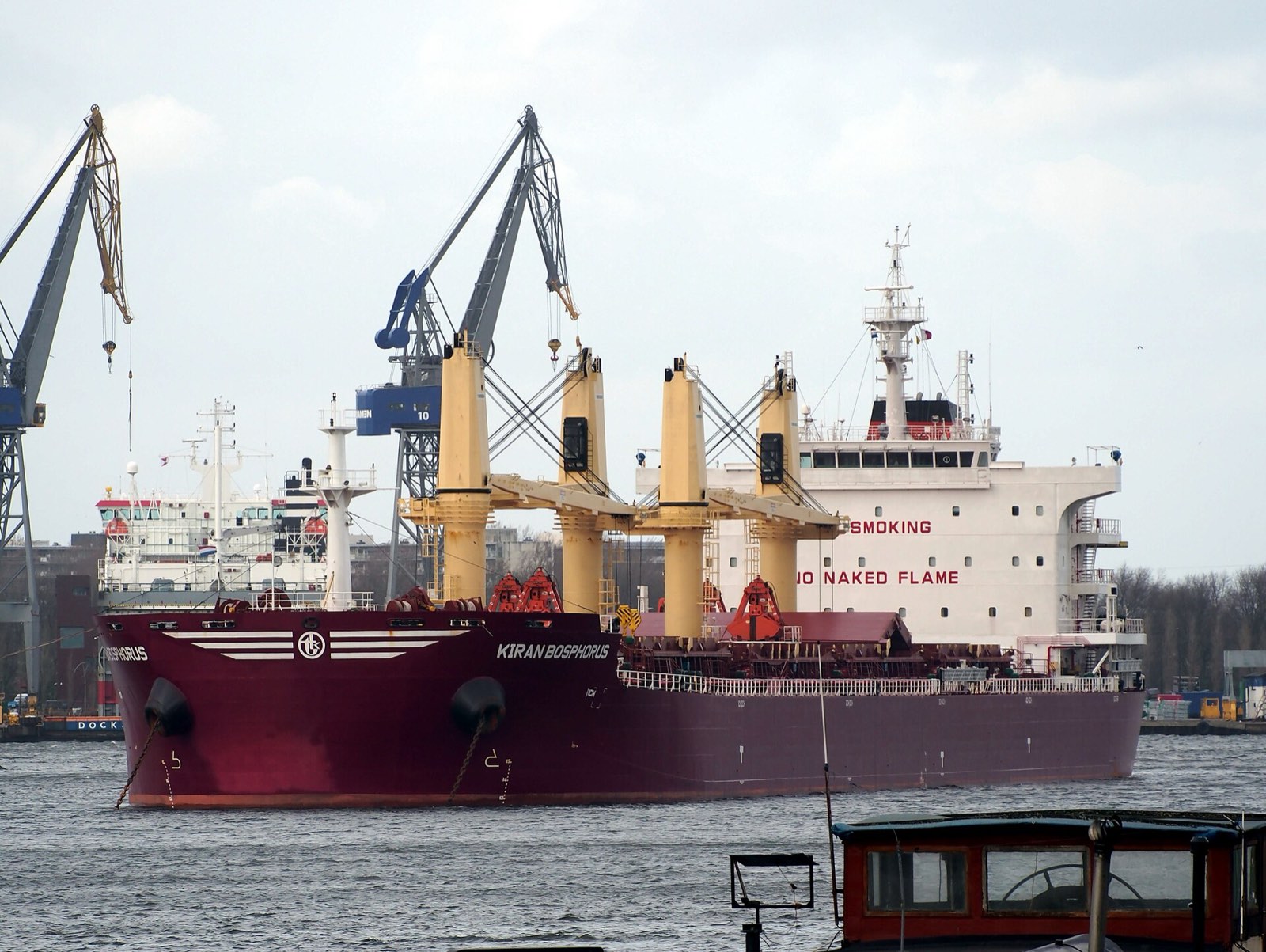
Example values come from the Wikimedia Commons record of the ship in the cover photo, dated 2015.[5]
The commonest paperwork slip is an MMSI entered in the IMO number field, and the digit count gives it away at once. Fuel supply needs the same care, since more than one ship can share a name. A bunker enquiry gives the ship's name with her IMO number, the port, ETA, product and quantity.
Company and Registered Owner Numbers
Companies get numbers too. Resolution MSC.160(78) of 2004 introduced a permanent number for each company and registered owner managing ships of 100 GT and above on international voyages, and SOLAS regulation XI-1/3-1 made it mandatory from 1 January 2009. It appears on ISM certificates, in the Continuous Synopsis Record and on the International Ship Security Certificate. When two companies merge, the larger keeps its number and the smaller one's is frozen.[1]
Its check digit uses a different formula. Multiply the first six digits by 8, 6, 4, 2, 9 and 7, add them up, take the remainder after dividing by 11, subtract that from 11 and keep the last digit. For IMO 2041999 the sum is 178, the remainder is 2, and 11 minus 2 gives 9.[4] The ship formula gives a false failure on a company number.
The International Maritime Organization
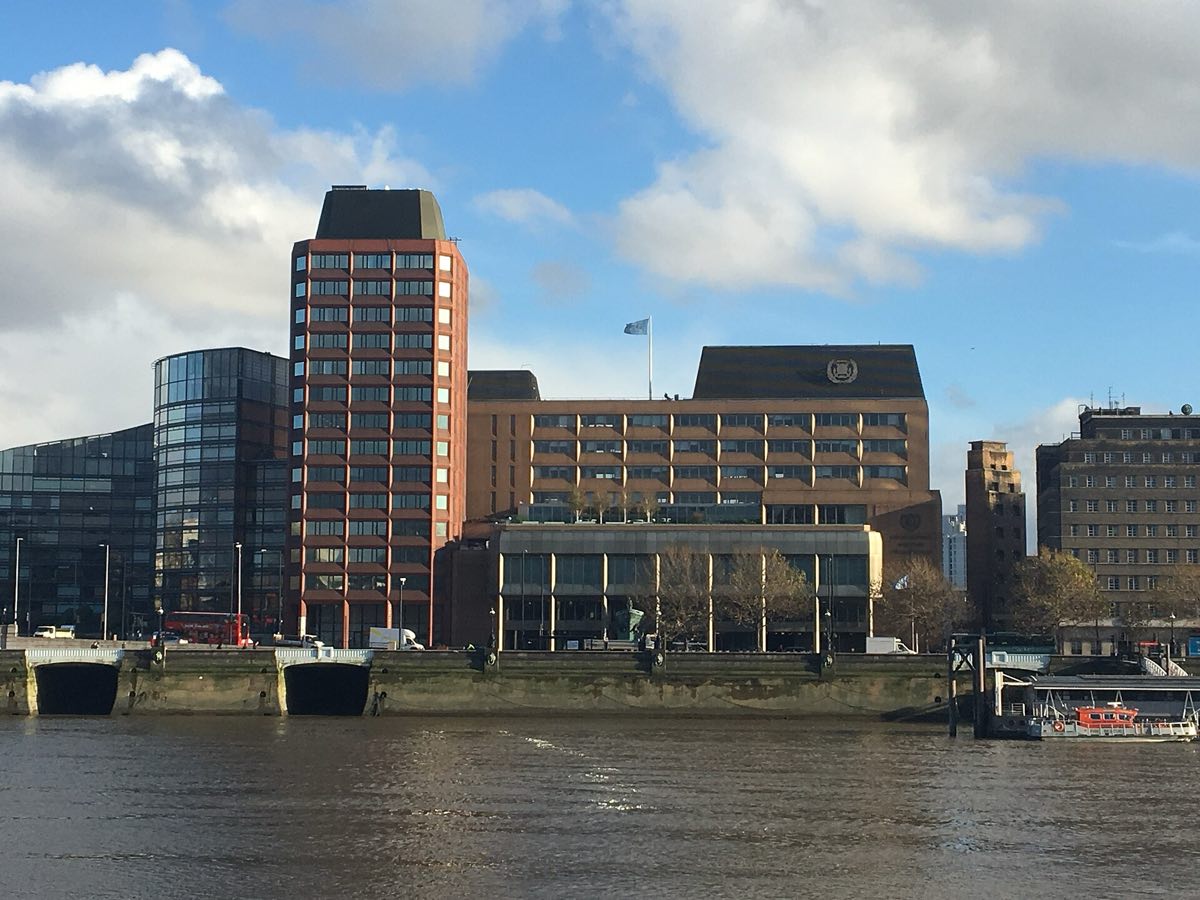
The same three letters name the United Nations agency for shipping. Its founding convention was adopted in Geneva in 1948 and entered into force in 1958, and the organisation first met in 1959. It was called the Inter-Governmental Maritime Consultative Organization (IMCO) until 1982.[6] It has 176 member states and three associate members, the Faroes, Hong Kong and Macao. Kyrgyzstan was the latest to join, in 2024.[7]
IMO writes and updates conventions. Its first big task was the 1960 version of SOLAS. MARPOL followed in 1973 as the response to tanker pollution and was modified by a 1978 Protocol.[6] For the fuel market the best known rule is the IMO 2020 sulphur limit in MARPOL Annex VI. Enforcement sits with governments: the flag state oversees its ships and port state control checks them on arrival. IMO has no inspectors of its own and cannot levy fines.
How the Organisation Is Run
The Assembly of all members meets every two years, approves the work programme and budget and elects the Council. For 2026 and 2027 the Council has 40 seats: 10 for states with the largest interest in international shipping services, 10 for those with the largest interest in seaborne trade, and 20 for states with special maritime interests that together represent the main regions of the world. Amendments raising the Council to 52 seats have been adopted.[8]
Technical work runs through five committees, covering maritime safety (MSC), marine environment protection (MEPC), legal matters, technical cooperation and facilitation, with seven sub-committees supporting the MSC and MEPC. About 300 international staff work in the London secretariat under the Secretary-General, Arsenio Dominguez of Panama, in post since 1 January 2024.[8]
The Net-Zero Framework
The biggest open file is the Net-Zero Framework, which combines a carbon price with a fuel standard. An extraordinary MEPC session on 14 to 17 October 2025 adjourned the adoption vote for 12 months, on a vote of 57 to 49.[9][10] The timetable set after MEPC 84 has MEPC 85 on 30 November to 3 December and the adjourned session resuming on 4 December 2026.[11] As of 3 November 2026 the framework has not been adopted.
Frequently asked questions
What is an IMO number?
A permanent seven digit identity for a ship. It does not change with her name, flag or owner.
How do I look up an IMO number?
Use IMO's GISIS database or Equasis. The check digit calculation only tests for typing errors and does not confirm a ship's identity.
Does the IMO number change when a ship is sold?
No. It stays with the ship and is never given to another vessel.
Must every ship have an IMO number?
No. It is mandatory for passenger ships of 100 GT and upwards and cargo ships of 300 GT and upwards. Pleasure yachts and warships fall outside the scheme.
What is the International Maritime Organization?
The UN's specialised agency for shipping. It is based in London and has 176 member states and three associate members. It drafts conventions such as SOLAS and MARPOL, and flag and port states enforce them.
Is an MMSI the same as an IMO number?
No. The IMO number is a permanent seven digit ship identity. The MMSI is a nine digit radio identity that usually changes with the flag.
Sources
- International Maritime Organization. IMO Identification Number Schemes.
- International Maritime Organization. Resolution A.1215(34), Integrated IMO Identification Number Scheme, 3 December 2025.
- International Maritime Organization, S&P Global. IMO Ship Numbering FAQ.
- Wikipedia. IMO Number. Used as a secondary source for the check digit formulas and numbering details.
- Wikimedia Commons. Kiran Bosphorus, IMO 9576997, MMSI 229787000, Call Sign 9HA3609, file record, 31 March 2015.
- International Maritime Organization. Brief History of IMO.
- International Maritime Organization. Member States.
- International Maritime Organization. Structure of IMO.
- International Maritime Organization. IMO Net-Zero Shipping Talks to Resume in 2026, 17 October 2025.
- Ship & Bunker. IMO's MEPC Meeting Votes to Delay Adoption of Net-Zero Framework, October 2025.
- gCaptain. IMO Climate Talks Stay Alive as Carbon Plan Survives U.S. Pushback at MEPC 84, May 2026; Datamar News. IMO Net Zero Framework Survives Assault but Adoption Remains Uncertain, 2026; Ammonia Energy Association. MEPC84: Support for Net Zero Framework Stabilizes, 2026.