Mediterranean ECA and the 0.10% Sulphur Limit
The timetable and coordinates of the Mediterranean emission control area, the position in Turkish waters, ways of complying, records and cost.
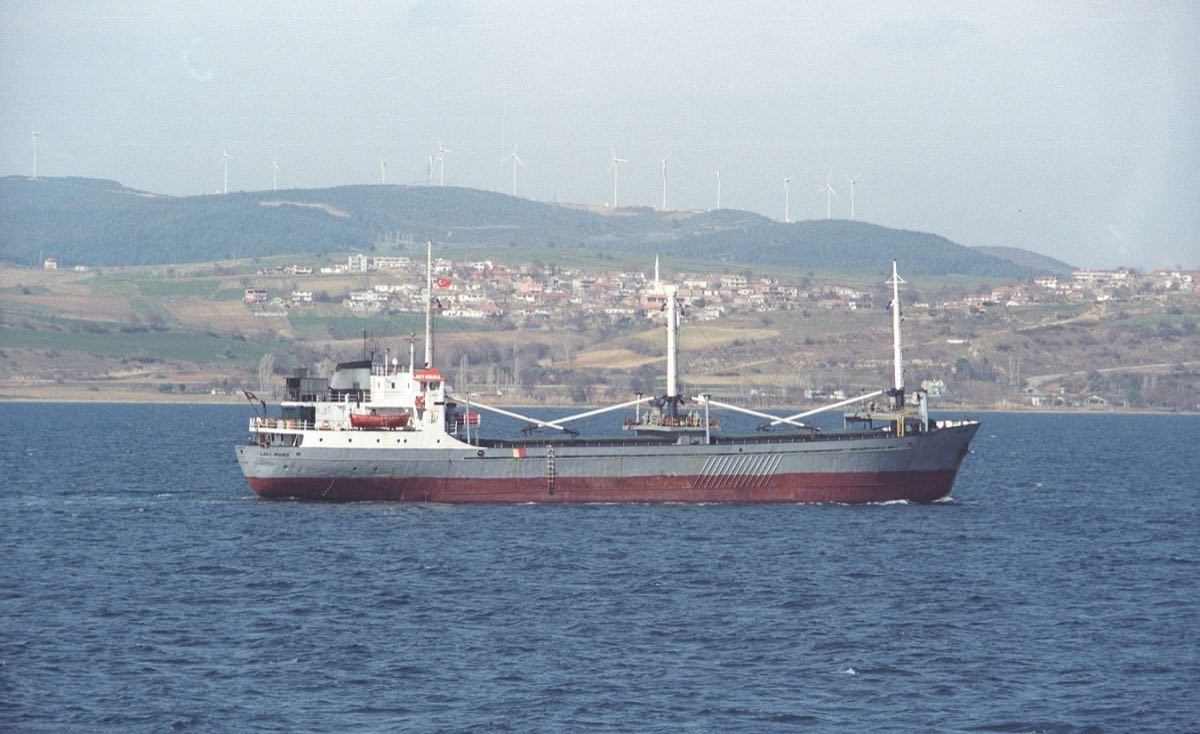
The sulphur limit for ship fuel in the Mediterranean has been 0.10% by mass since 1 May 2025. It came down from 0.50% when the sea was designated an emission control area (ECA) under MARPOL Annex VI. The area runs from the western entrance of the Strait of Gibraltar to a line across the Dardanelles between Mehmetçik Burnu and Kumkale Burnu in the north-east and to the northern entrance of the Suez Canal in the south-east. The Sea of Marmara, the Bosphorus and the Black Sea are outside it. Turkish national rules apply independently of that boundary.
Adoption and Timetable
The decision was taken at a meeting of the Barcelona Convention parties in December 2021. France submitted a joint proposal to IMO on 4 February 2022 on behalf of the convention's 22 parties, EU member states and the European Commission.[2] The Marine Environment Protection Committee (MEPC) adopted the amendment by resolution MEPC.361(79) on 16 December 2022. It was deemed accepted on 1 November 2023 and entered into force on 1 May 2024.[1]
Twelve months separate entry into force from the start of the fuel limit. Under Regulation 14.7, ships are exempt from the limit in a newly designated ECA for that period, which is why 0.10% took practical effect on 1 May 2025.[1] The designation covers sulphur oxides and particulate matter and does not extend to nitrogen oxides. The history of the global limit is told in IMO 2020 Sulphur Limit and How It Applies.
Boundaries of the Area
The IMO text describes all the waters bounded by the coasts of Europe, Africa and Asia within three lines.[1]
| Boundary | Description | Coordinates |
|---|---|---|
| West | Western entrance of the Strait of Gibraltar, between Cape Trafalgar and Cape Spartel | 36°11' N, 6°02' W and 35°48' N, 5°55' W |
| North-east | Dardanelles, between Mehmetçik Burnu and Kumkale Burnu | 40°03' N, 26°11' E and 40°01' N, 26°12' E |
| South-east | Northern entrance of the Suez Canal, excluding a four-point area off Port Said | Between 31°29' N and 31°14' N, 32°16' E and 32°32.62' E |
Source: MEPC.361(79), amending Appendix VII of MARPOL Annex VI.[1]
The wording has practical consequences. Because the western line lies beyond the strait, the whole Strait of Gibraltar and the ports of Gibraltar and Algeciras are inside the ECA. The north-eastern line coincides with the southern limit of the Dardanelles in the Turkish Straits regulation.[3] The area off Port Said is left out, so a ship inside it is outside the ECA and comes under 0.10% once she leaves it.
Turkish Waters and the National Rule
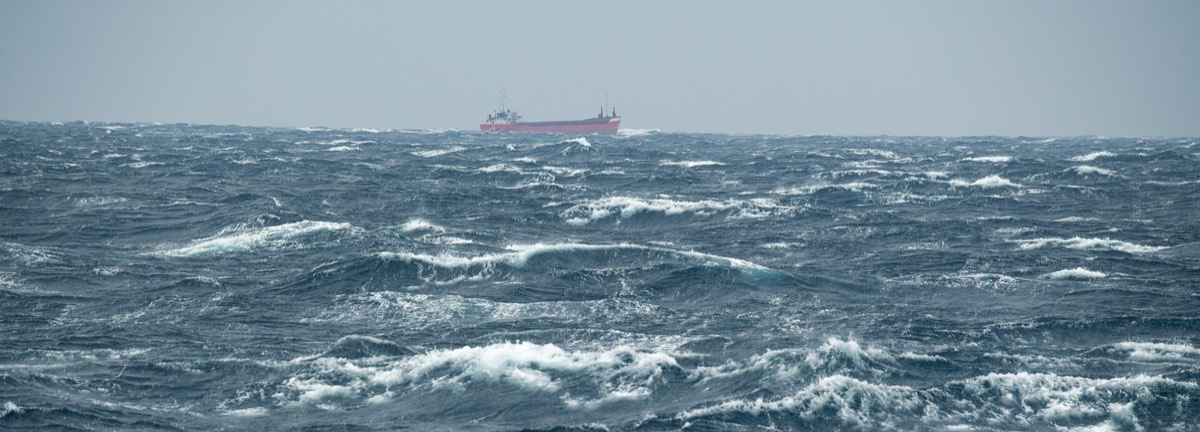
The Aegean and Mediterranean coasts of Türkiye lie inside the ECA, so a ship bound for Aliağa, Izmir or Mersin is under the 0.10% limit. North of the Dardanelles line, the rest of the strait, the Sea of Marmara and the Bosphorus remain under the global 0.50% limit.[1] Türkiye is a party to the Barcelona Convention and was among the states party to MARPOL Annex VI when the ECA was approved.[2]
A national rule applies in addition. Article 7 of the regulation on sulphur in certain fuels bans fuel above 0.1% for ships at berth.[4] Ships due by published timetable to stay moored or anchored for less than two hours are excluded, as are ships at berth with engines stopped and on shore power.[4] A letter from the Maritime Affairs General Directorate dated 31 January 2020 extends the limit to ships moored or anchored for more than two hours in inland waters and harbour master areas, and gives 0.5% for ships transiting the Straits.[5]
| Place and situation | MARPOL limit | National rule |
|---|---|---|
| Aegean and Mediterranean, under way | 0.10% | The ECA limit governs |
| Dardanelles, Marmara, Bosphorus, in transit | 0.50% | 0.5% for transiting ships |
| At berth in a Turkish port | Depends on area | 0.1% |
| Moored or anchored over two hours in a harbour master's area | Depends on area | 0.1% |
| Black Sea, under way | 0.50% | No further limit |
Source: MEPC.361(79); Regulation Article 7; the Directorate's letter.[1][4][5] For Istanbul and nearby ports, the table shows that fuel choice depends on what a ship is doing as well as where she is.
On enforcement, the 2026 tariff reported by the American Club sets fines for fuel above the IMO limits. Its figures double for the Sea of Marmara, the Bosphorus, the Dardanelles and Izmit Bay.[6]
Ways of Complying
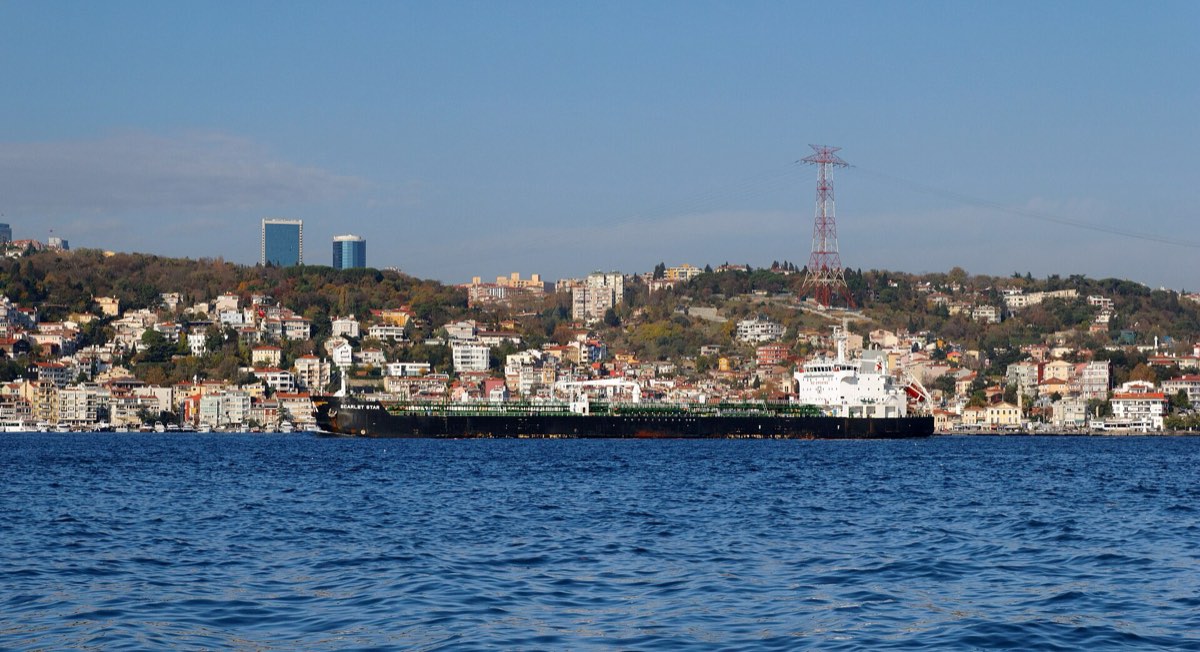
Ships have three main options. The first is distillate, since MGO meets the limit when the order specifies 0.10% sulphur. The second is ULSFO, a residual or blended fuel that uses the ship's existing heating and separator arrangements. The third is a scrubber, treated as an equivalent method under Regulation 4, which lets a ship burn HSFO and remove the sulphur from her exhaust. DNV data quoted by Argus put the share of vessels fitted with scrubbers at only about 5%, so for most of the fleet the answer lies in the fuel.[7] VLSFO at 0.50% cannot be used in the area by a ship without a scrubber.
Argus reports that the ECA raised MGO demand in Mediterranean ports and that ULSFO supply has expanded at Algeciras, Malta, Piraeus and Istanbul, while most ULSFO goes to ferries on contract.[7] Scrubber wash water counts as a fined discharge under the Turkish tariff, which a scrubber-fitted ship must allow for in the Marmara.[6] Types of Marine Fuel and Their Properties compares the fuels.
Changeover and Records
A ship using separate fuels must carry a written procedure under Regulation 14 showing how the changeover is done. It must allow enough time to flush the fuel service system of all fuel above the limit before she enters the ECA. When a changeover is completed before entry, or begun after exit, the volume of low-sulphur fuel in each tank and the date, time and position of the ship are recorded.[2] A southbound ship finishes before the Dardanelles line, and a northbound ship starts only after crossing it.
REMPEC's guidance names three technical risks: thermal shock to injection components, pump failure or seizure caused by low distillate viscosity, and filters clogged by incompatible fuels.[2] Port State control starts with the paperwork, examining the bunker delivery note, record books, changeover procedure and certificates, and takes samples where there are clear grounds.[8] On the delivered sample 0.10% applies as written. In-use and on-board samples are treated as compliant up to 0.11% to allow for test precision.[8]
Route Examples
A few routes show how the rules work together. A ship without a scrubber leaving the Black Sea for Gibraltar may pass the Bosphorus and the Marmara on 0.50% fuel. She changes to low-sulphur fuel before crossing the Dardanelles line and burns 0.10% across the Mediterranean. Once past the line between Trafalgar and Spartel she may return to 0.50% fuel and record the start of that changeover.
A ship calling at Mersin is under the ECA limit under way, at anchor and at berth, so Article 7 calls for no additional fuel in practice. A ship bound for Izmit Bay may sail the Marmara on 0.50% but changes to 0.1% at berth or when anchored for more than two hours. A ship arriving at Port Said leaves the ECA on entering the excluded area off the port. One voyage can therefore involve several changeovers, each with its own tank plan and its own records.
Cost and Fuel Availability
REMPEC's guidance, drawing on a Plan Bleu study, gives the effect of the ECA on shipping cost as $0.16 to $1.31 per tonne of cargo, depending on the length of the ship's passage in the Mediterranean.[2] For an individual ship the sum is more direct: tonnes consumed inside the ECA multiplied by the price difference between the two fuels. A passage burning 130 tonnes of MGO would need about 137 tonnes of heavy fuel for the same energy (130 × 42.7 / 40.5), because MGO carries about 5% more energy per tonne.[9] The extra cost comes from pricing those two tonnages. Prices move by day and by port, so the calculation belongs in the voyage plan with current quotations.
The same guidance states that refinery capacity and production are sufficient to meet demand for 0.10% fuel in the area.[2] Regulation 18 leaves a ship unable to obtain compliant fuel the route of a fuel oil non-availability report (FONAR). She informs her flag administration and the competent authority at the destination and documents her attempts to buy. A FONAR is not an exemption, however, and where claims are poorly supported or repeated, the port State control officer may ask for further documents.[2][10]
Coastal States Outside Annex VI
REMPEC records that when the ECA was approved, 15 of the 22 parties had joined MARPOL Annex VI. Coastal states that had not yet ratified it included Algeria, Bosnia and Herzegovina, Egypt, Israel, Lebanon and Libya.[2] MEPC.361(79) invited coastal states to ratify by the date of entry into force.[1] That list reflects the position when the guidance was published. A ship calling at a port in a non-party state remains bound by the obligations of her flag state, since the rule also reaches ships through their flag.
Next Areas
The 0.10% areas today are the Baltic Sea, the North Sea, North America, the United States Caribbean Sea and the Mediterranean.[10] Canadian Arctic waters and the Norwegian Sea follow on 1 March 2027.[10] In the North-East Atlantic the amendment enters into force on 1 September 2027 and the fuel limit starts twelve months later, on 1 September 2028.[11]
The products supplied by Bunkerist are listed on the Fuel Oil and Gas Oil page.
Frequently asked questions
What is the Mediterranean ECA?
The sulphur limit for ship fuel in the Mediterranean has been 0.10% by mass since 1 May 2025.
Is the Sea of Marmara inside the ECA?
No. MEPC.361(79) draws the line at the southern end of the Dardanelles. The global 0.50% limit applies in the Marmara, with the Turkish national rule on top.
Can a ship enter the Mediterranean on VLSFO?
A ship without a scrubber cannot burn it in the area, since 0.50% sulphur does not meet the 0.10% limit.
Is the port of Gibraltar inside the ECA?
Yes. The western boundary runs between Cape Trafalgar and Cape Spartel, so the strait and the port are inside.
Sources
- IMO. Resolution MEPC.361(79), 16 December 2022.
- REMPEC. Guidance on the Med SOx ECA under MARPOL Annex VI.
- Republic of Türkiye. Turkish Straits Maritime Traffic Regulation, Official Gazette, 15 August 2019, No. 30859.
- Republic of Türkiye. Regulation on Reducing the Sulphur Content of Certain Fuels, Official Gazette, 6 October 2009, No. 27368, Article 7.
- Istanbul Chamber of Shipping. Circular 115 on Scrubbers and Fuel Use in Territorial Waters, 3 February 2020.
- American Club. Environmental Pollution Fines in Turkey: An Update, 16 December 2025.
- Argus Media. Viewpoint: European VLSFO Demand to Fall in 2026, 31 December 2025.
- Steamship Mutual. How Will Compliance with MARPOL Annex VI Be Determined, 26 October 2022.
- European Commission. Guidance on the FuelEU Maritime Regulation for Shipping Companies, 8 October 2025.
- IMO. IMO 2020: Cutting Sulphur Oxide Emissions.
- DNV. North-East Atlantic Joins the Expanding Network of ECAs, 2026.